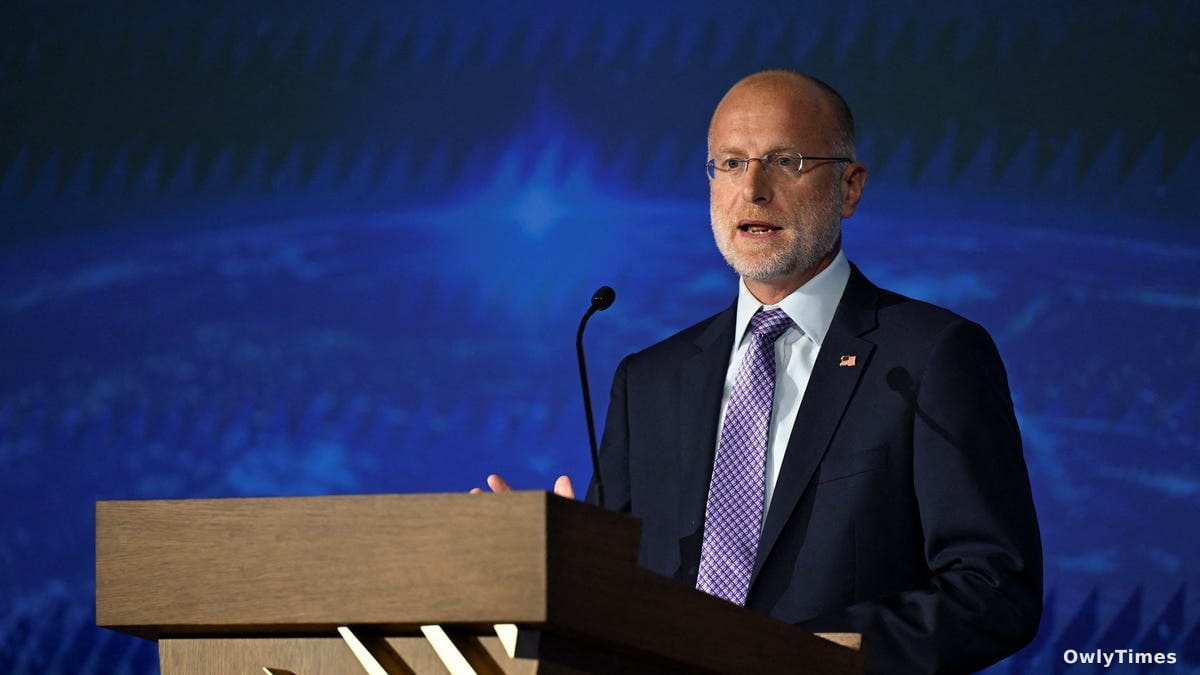

Is the Federal Communications Commission about to trade its role as regulator for that of political enforcer? That’s the question hanging over Washington as Brendan Carr, the FCC’s chairman, threatens broadcasters with license reviews over coverage he – and, more pointedly, Donald Trump – deem unfavorable. The real story here isn't about ensuring journalistic integrity; it’s about a blatant attempt to weaponize regulatory power against the press, a tactic that fundamentally misunderstands – and actively undermines – the First Amendment.
The current flare-up began with a March 14th post on X (formerly Twitter) from Carr, responding to Trump’s complaints about war coverage. Carr warned broadcasters they had a chance to “correct course” before their license renewals, implying that unfavorable reporting could jeopardize their ability to operate. Trump quickly amplified the message, declaring himself “thrilled” with Carr’s efforts. This isn’t some abstract debate about media bias; licenses for broadcast television in Washington D.C., Maryland, Virginia, and West Virginia are up for renewal on October 1, 2028, and radio licenses in those jurisdictions expire a year earlier. That timeline gives this threat a very real, and potentially chilling, weight.
Reporting from USA Today informs this analysis.
But the idea that Carr could actually revoke licenses based on political disagreement is, according to legal experts, a legal fantasy. Robert Corn-Revere, chief counsel at the Foundation for Individual Rights and Expression, called it “exceptionally rare” for a broadcaster to lose their license, and unprecedented to do so on partisan grounds. The Communications Act of 1934, and the First Amendment itself, would provide robust legal defenses for broadcasters facing such challenges. Even past instances of demonstrable wrongdoing, like NBC rigging a crash test in the 1990s, resulted in only an admonishment from the FCC. This isn’t about upholding standards; it’s about intimidation.
This latest move is particularly jarring given Carr’s previous statements. In 2019, he explicitly stated the FCC “does not have a roving mandate to police speech in the name of the ‘public interest.’” That position now appears to have been entirely reversed, a shift that David Keating, President of the Institute for Free Speech, likened to the tactics used by the Parents Television Council in the early 2000s – equally “politically motivated” attempts to leverage license renewals for ideological ends. The hypocrisy is staggering, and the speed of the about-face is alarming.
The situation is further complicated by Carr’s recent actions regarding equal time rules. He initiated an “enforcement action” against ABC following an interview with a Texas state representative, and CBS preemptively pulled an interview due to concerns about triggering the rule. While technically adhering to the letter of the law, these actions demonstrate a pattern of heightened scrutiny and a willingness to intervene in editorial decisions. This isn’t about fairness; it’s about creating a climate of self-censorship. Jenna Leventoff, senior policy counsel at the American Civil Liberties Union, rightly points out that the FCC “can’t stop speech just because it doesn’t like it or because it doesn’t think that it’s true.” The FCC even affirmed this principle in 2020, refusing to investigate broadcasters for airing statements deemed false by Trump during the COVID-19 pandemic.
The potential consequences extend far beyond the networks directly targeted. Leventoff fears a “chilling effect,” where broadcasters preemptively avoid controversial topics to avoid attracting the FCC’s ire. This isn’t just a concern for media companies; it’s a threat to the public’s access to information. The legal process itself, even if ultimately unsuccessful, would be costly and time-consuming for any broadcaster targeted, effectively punishing them for exercising their First Amendment rights. As Corn-Revere succinctly put it, “the process is the punishment.”
So, what happens next? Expect a lot of posturing, a flurry of angry tweets, and perhaps some carefully worded letters from the FCC. But the real test will come in 2027 and 2028, when those license renewals loom. Watch closely to see if Carr actually attempts to block renewals based on coverage he dislikes. If he does, prepare for a protracted legal battle that will likely end with the courts firmly rebuking the FCC – but not before inflicting significant damage on the principles of a free press. The question isn’t if this is a dangerous precedent, but when a future administration, emboldened by Carr’s actions, will attempt to fully weaponize the FCC against dissenting voices.





