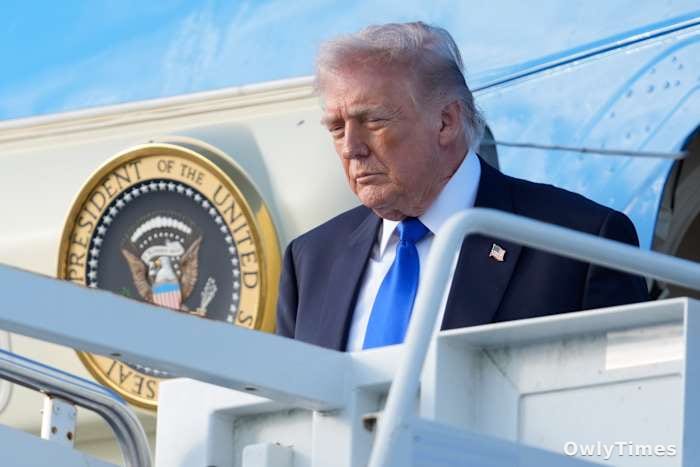

The strategic calculus behind President Donald Trump’s scheduled appearance at the annual White House Correspondents’ Association dinner is not found in the joviality of the event, but in the projection of dominance. By entering a space traditionally used for presidential self-deprecation and press camaraderie, the administration is effectively reclaiming the stage from an institution it has spent the better part of a second term actively sidelining. This move serves to normalize a relationship defined by high-stakes litigation and restricted access, forcing a public reconciliation that favors the executive’s narrative of control over the press’s traditional role as a neutral observer.
The Calculus of Institutional Access
The presence of the president creates an immediate tension for the organizations that cover him. For the administration, the benefit is clear: by appearing, the president dictates the tenor of the evening and blunts the narrative of being "at war" with the media. For the press corps, the calculus is more fraught. Many reporters view the dinner as a vital networking opportunity to secure the sources and background conversations that drive future reporting. However, the cost of this proximity is the implicit endorsement of an administration that has, by its own admission, pursued legal battles against The New York Times, The Wall Street Journal, and The Associated Press.
The divide is exemplified by the decision of institutions like the Times to abstain from the dinner for over a decade. As Kelly McBride, an ethics expert at the Poynter Institute, noted, the event has shifted from a night of camaraderie between adversaries to a "bad look." This contradiction is now reaching a fever pitch, underscored by a petition from nearly 500 retired journalists urging the association to stand against the administration's ongoing efforts to restrict press freedoms.
Navigating the Professional Divide
The invitation extended by the AP to Taylor Budowich, a former White House deputy chief of staff, highlights the uncomfortable tightrope journalists are walking. Budowich was a named defendant in a lawsuit filed by the AP following the administration’s decision to limit access to the president over a dispute regarding the naming of the Gulf of Mexico. By hosting a figure who helped orchestrate policies that actively curtailed their own reporting capabilities, the AP is testing the limits of its nonpartisan, fact-based mandate.
This dynamic mirrors the broader, historical struggle between the executive branch and the press during periods of extreme polarization. When the lines between "newsmakers" and "news gatherers" blur, the public’s perception of the First Amendment as a check on power is tested. Weijia Jiang, the WHCA president and a reporter for CBS News, has framed the gathering as a necessary reminder of the free press's endurance during America’s 250th birthday. Yet, the administration’s animus—manifested in everything from berating individual reporters to restricting Pentagon access—suggests that the president’s attendance is less about celebrating press freedom and more about maintaining visibility on his own terms.
The Entertainment of Friction
The decision to hire mentalist Oz Pearlman as the featured entertainment, rather than a comedian, acts as a tactical buffer. Comedians have historically used the podium to roast the president, a tradition that has consistently invited presidential ire. By pivoting to a performance that relies on audience participation and psychological illusion, the association may be attempting to de-escalate the potential for public conflict.
Whether the dinner serves as a genuine bridge or merely a stage for further friction will be revealed by the conduct of the attendees. The next reading of the administration’s press relations will be found in the seating charts and the willingness of officials to engage with the reporters they have spent months vilifying in court and in public statements. As the event unfolds, the most telling metric will be which news organizations choose to prioritize access over optics, and whether the president’s presence successfully recalibrates the power dynamic between his office and the press gallery.





