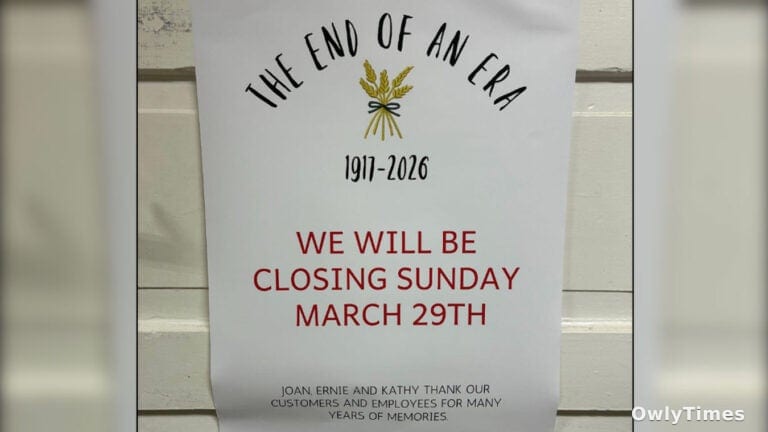

A Century of Crumbs: Framingham Baking Co.’s Closure Signals a Broader Shift in Local Food Economies
A 107-year run. That’s how long Framingham Baking Co. sustained a family legacy and a local institution in Massachusetts, before announcing its closure on March 29th. While the outpouring of nostalgia on social media is understandable – customers lamenting lost childhood memories and pleading for the pizza recipe – the bakery’s demise isn’t simply a sentimental loss. It’s a stark illustration of the financial pressures facing independent, multi-generational food businesses in a rapidly consolidating market, and a warning sign for communities reliant on their unique character. Follow the money, and a clear picture emerges: maintaining a viable business in 2024, even with a loyal customer base, requires capital investment and operational agility that many legacy businesses simply don’t possess.
Source material: boston.com.
The Rising Cost of Staying Local
Framingham Baking Co.’s story isn’t unique. According to data from the Small Business Administration, the average lifespan of a small business is roughly 8.5 years. Reaching the century mark, as this bakery did, is increasingly rare. The owners’ October Facebook post – a direct appeal for “suggestions on how to improve our business or in interest in becoming the next stewards” – reveals a critical point: they weren’t necessarily ready to close, but lacked a clear path to continued profitability. This isn’t a failure of product or community connection; it’s a failure of succession planning compounded by escalating operational costs. Ingredient prices have risen 17.3% year-over-year as of February 2024, according to the Producer Price Index, and labor costs in Massachusetts have increased by 6.8% in the same period. These aren’t abstract figures; they translate directly into thinner margins for businesses like Framingham Baking Co., where pricing power is limited by local market expectations.
Beyond Pizza: The Diminishing Returns of Regional Specialties
The bakery’s signature 18-square-slice sheet pizza, offered in over two dozen flavors, was a key differentiator. But specialization, while valuable for brand identity, can also create vulnerabilities. While the bakery enjoyed a devoted following, scaling that regional specialty to compete with national pizza chains – or even adapting it to modern delivery models – likely required significant investment. Consider the contrast with Domino’s Pizza, which reported a 1.3% increase in same-store sales in Q4 2023, driven by technology investments in online ordering and delivery efficiency. Framingham Baking Co., operating with a traditional business model, simply couldn’t match that level of capital expenditure. The comments section of their closure announcement, filled with requests for the recipe, underscores this point: the product was beloved, but its accessibility and convenience couldn’t keep pace with evolving consumer habits.
The Succession Problem and the Value of Intangible Assets
The absence of a clear successor is a recurring theme in the closure of family-run businesses. Transferring ownership isn’t simply a financial transaction; it’s a transfer of institutional knowledge, relationships with suppliers, and an understanding of the local community. These “intangible assets” are difficult to quantify, but crucial to long-term success. The owners’ willingness to consider a takeover suggests they recognized this value, but finding a buyer willing to preserve the bakery’s legacy – and capable of navigating the financial challenges – proved unsuccessful. This highlights a systemic issue: the lack of accessible financing and support programs specifically designed to facilitate the transfer of ownership for small, family-owned food businesses.
What This Means for Your Wallet
The closure of Framingham Baking Co. isn’t just about losing a local bakery. It’s about the erosion of community character and the increasing concentration of the food industry in the hands of a few large corporations. This translates to less choice for consumers, potentially higher prices, and a homogenization of the culinary landscape. Watch for a continued trend of independent bakeries and specialty food shops struggling to compete, particularly in areas with rising real estate costs and labor shortages. The question isn’t if more local institutions will close, but what will replace them – and whether those replacements will offer the same sense of community and connection that Framingham Baking Co. provided for over a century.





