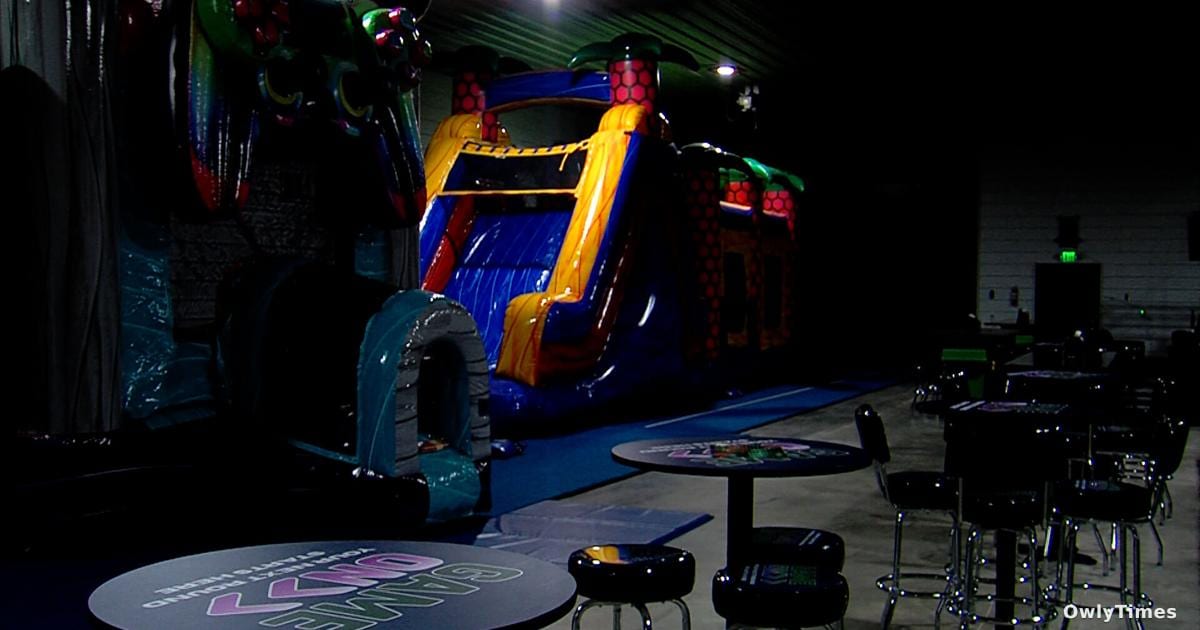

The scent of freshly inflated vinyl and the excited shrieks of children filled the former tumbling studio on Friday, marking the debut of Game On Shelbyville. It wasn’t just the opening of a new business; it was a deliberate attempt to rewrite the social script of a rural Illinois town, a place where Kris Metzger noticed a growing void in shared experiences. In a culture increasingly fractured by screens and polarized by distance – both physical and emotional – the Metzger family is betting that a little friendly competition and a build-your-own stuffed animal station can bring a community back together.
A Community’s Quiet Crisis of Connection
Shelbyville, population roughly 5,000, isn’t alone in facing this challenge. Across the country, small towns are grappling with a decline in communal spaces and activities, often overshadowed by the allure of big-city entertainment. The Metzgers, however, saw this not as a business obstacle, but as a civic opportunity. “Being in Shelbyville, that’s just been something that we have struggled with for families, something to do,” Kris Metzger explained to WAND TV, articulating a frustration echoed in countless similar communities. This isn’t about offering a luxury; it’s about addressing a fundamental need for accessible, affordable, and engaging local recreation. The fact that the business blossomed from a personal observation – a need she “saw firsthand” – speaks to a deeper trend: entrepreneurs increasingly identifying and solving hyperlocal problems.
From Tumbling Mats to Topgolf Tech
The transformation of the space itself is a story of resourceful adaptation. What was once a tumbling studio, a place focused on individual skill, is now a multi-use entertainment center designed for collective fun. Jake Metzger emphasized the family involvement in the project, noting how the initial brainstorming evolved into a concrete vision with input from their children. This collaborative approach is reflected in the diverse attractions: “Party Pals,” a customizable stuffed animal experience, caters to younger children, while golf and multi-sport simulators – inspired by venues in Chicago and St. Louis – offer a more sophisticated experience. The simulators, capable of hosting 15 to 20 different games, represent a significant investment, bringing big-city tech to a small-town audience. This isn’t simply replicating entertainment options; it’s democratizing access to them.
Drawn from wandtv.com.
Beyond the Scoreboard: Reclaiming Family Time
The Metzgers aren’t just selling games; they’re selling a feeling. Kris Metzger’s core motivation – “I just want them to become united again as a family and enjoy that family moment that we’ve lost over time” – cuts to the heart of a cultural anxiety. We live in an age of unprecedented connectivity, yet many feel increasingly disconnected from those closest to them. The deliberate call to “put their phones down” isn’t a quirky request; it’s a direct challenge to the pervasive influence of technology on our relationships. Early feedback from soft openings, as Jake Metzger noted, confirms this impact: witnessing people “put their phone down and get on the obstacle course and interact” is a powerful validation of their vision. This observation is particularly poignant given recent studies showing a correlation between increased screen time and decreased family interaction.
The Ripple Effect of Rural Recreation
Game On Shelbyville’s success, or even its sustained operation, will be a bellwether for similar initiatives in rural communities. The business model – blending affordable entertainment with a focus on family reconnection – is easily replicable. But the real test will be whether it can overcome the economic headwinds facing small towns and compete with the convenience of at-home entertainment. Will other communities recognize the value of investing in shared experiences, or will the trend continue towards individualized, screen-based leisure? The question isn’t just about the future of family fun; it’s about the future of community itself. Will we actively cultivate spaces for connection, or allow the digital world to further erode the bonds that hold us together?