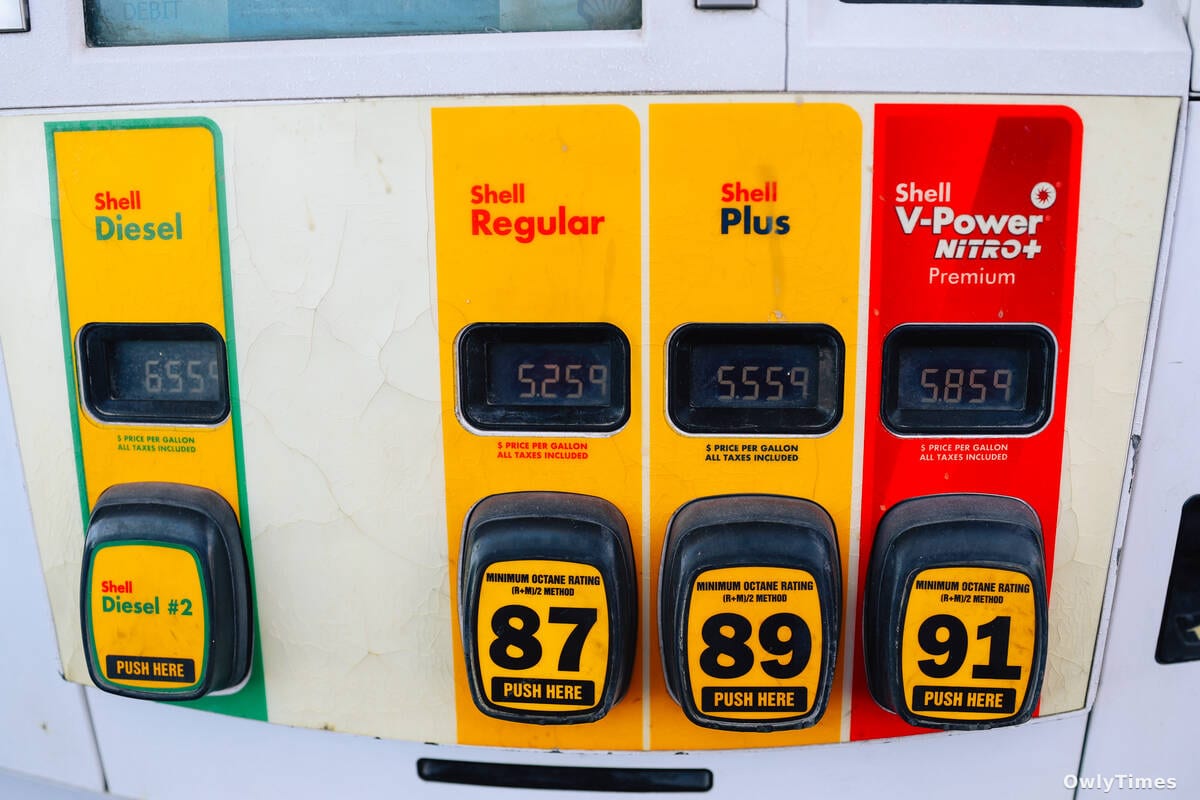

$5.06 per gallon represents the current average price for unleaded gasoline in Las Vegas, a figure that highlights the widening gap between retail market rates and the strategic pricing models utilized by warehouse retailers. This latest data point from AAA, recorded on Friday, April 24, 2026, marks a clear acceleration in fuel costs, up from the $4.99 average observed just one week prior. For Southern Nevada residents, this shift has transformed routine refueling into a calculated financial maneuver, turning membership-only warehouse clubs into the primary frontline of consumer defense against rising energy expenditures.
The Warehouse Arbitrage
Follow the money and you will see that warehouse giants are leveraging thin fuel margins to capture high-volume consumer traffic. On Friday, Sylvia Irvin demonstrated this trend by filling her tank to exactly $50 at the Costco location on St. Rose Parkway, where unleaded was priced at $4.49 per gallon. This price point serves as a significant discount compared to the citywide average. By offering fuel at rates consistently lower than traditional stations, retailers like Costco and Sam’s Club on Serene Avenue create a powerful incentive for membership retention.
The strategy is not accidental; it is a core component of these retailers' broader business architecture. According to a March quarterly filing from Costco covering the period from November to Feb. 15, gas is a strategic part of their net sales. The company explicitly stated that they believe their gasoline business enhances traffic in their warehouses. Even as these stores operate on lower profit margins compared to conventional gas stations, the influx of customers at the pump creates a reliable pipeline of foot traffic into their retail aisles.
Consumer Behavior Shifts Under Pressure
The escalating cost of fuel is forcing a tangible change in how Southern Nevada households manage their discretionary budgets. Kaila Gay, observed at the Costco Business Center off Martin Luther King Jr. Boulevard on Thursday, described a strategy of rationing fuel purchases to reach warehouse locations rather than opting for convenience at stations like Circle K. This behavior reflects a wider economic tightening, as families report reducing dining out and increasing carpooling to offset transportation costs.
The pressure is mounting as regional fuel prices continue their upward trajectory. On March 2, shortly after the onset of the conflict in the Middle East, gas prices in Southern Nevada were $3.70 per gallon. The current $5.06 average places Nevada at the No. 5 spot in the country for unleaded and diesel costs, trailing only behind California. While these figures remain below the record high of $5.61 per gallon for Las Vegas set on June 16, 2022, the velocity of the current increase is placing significant strain on local household liquidity.
The Limits of Fuel-Driven Growth
While warehouse stores rely on gas to drive volume, the model is not immune to broader market volatility. Walmart’s annual report, covering the period from Jan. 31, 2025, to Jan. 31, 2026, noted that Sam’s Club growth was partially offset by lower fuel sales. This indicates that while fuel is a potent tool for traffic generation, it remains a volatile variable susceptible to supply chain disruptions and geopolitical instability, similar to the factors that contributed to the 2022 record highs.
For the average consumer, the next reading of the AAA weekly price average will serve as a primary indicator of whether the current cost of commuting will stabilize or continue to erode disposable income. With fuel prices dictating the cadence of household spending, the ability to secure gasoline at a discount is no longer merely a convenience; it is a necessary component of personal financial stability.