
Is the biggest bottleneck in modern medicine the technology itself, or the sheer friction of using it? In Silicon Valley, we love to obsess over the "what"—the raw processing power of a new chip or the pixel density of a sensor. But for the radiologist buried under a mountain of scans or the researcher trying to bridge the gap between a lab discovery and a patient’s bedside, the "how" is where the real battle is fought.
The real story here isn't just about faster magnets or sharper images—it’s about the quiet, desperate attempt to turn MRI machines from cumbersome, specialized monoliths into streamlined, AI-native platforms that actually play nice with human workflows.
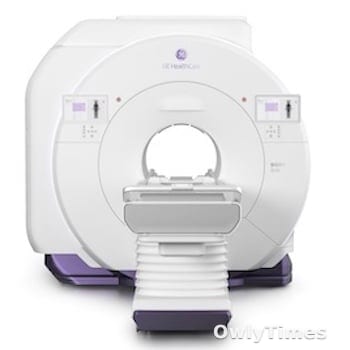
At the International Society for Magnetic Resonance in Medicine (ISMRM) 2026 Annual Meeting on May 11, 2026, GE HealthCare unveiled a series of updates that highlight this shift toward operational fluency. The centerpiece is SIGNA One, an AI-powered ecosystem designed to do for MRI workflow what a clean user interface did for the smartphone: hide the complexity. With features like one-click switching between clinical and research modes, the system attempts to solve the "context switching" tax that plagues research hospitals, where staff often struggle to toggle between diagnostic duty and scientific exploration.
The AI Acceleration Frontier
The technical headline is the expansion of Sonic DL, a deep-learning acceleration technique currently pending U.S. FDA 510(k) status for 2D imaging. When we talk about AI in healthcare, we often default to diagnostic accuracy, but speed is the more pressing issue for the average patient. By applying deep learning to 2D imaging beyond cardiac applications, GE HealthCare aims to bring these benefits to up to 85% of MR exams.
This is a massive shift in scale. By pairing this with AIR Recon DL—which is now gaining support for Zero Echo Time (ZTE) and Silenz low-acoustic noise imaging—the company is essentially trying to solve the "noise vs. time" trade-off. Historically, you could have a fast scan or a clear scan; now, the goal is to make the fast scan the high-quality one, potentially rendering the "claustrophobic" nature of traditional long-duration MRIs a relic of the past.
Sustainable Physics and Helium Independence
Beyond the software, there is a tangible move toward fixing the physical liabilities of hospital infrastructure. The introduction of the SIGNA Sprint with Freelium represents a departure from the reliance on liquid helium, a resource that has historically tethered MRI suites to complex vent-pipe architectures.
By achieving "helium independence" with less than 1% helium usage compared to conventional magnets, this hardware update addresses the operational overhead of running a radiology department. For an ordinary patient, this won’t be visible as a "feature," but it is the kind of engineering that keeps costs from spiraling and ensures that high-end imaging can be deployed in more diverse clinical environments without requiring a massive overhaul of building infrastructure.
Closing the Gap Between Lab and Bedside
The most intriguing development is the installation of the MAGNUS prototype, a head-only scanner, at King’s College London and West China Hospital. Dr. Steve Williams of King’s College London notes that this platform is accessing brain structures previously out of reach.
While the tech is currently in the investigational phase, the strategy here is clear: GE HealthCare is trying to build a closed-loop system where research insights from tools like SIGNA Studio can be pushed directly into clinical workflows via the icobrain platform integration. The next reading of the U.S. FDA 510(k) status for the 2D-imaging version of Sonic DL will show whether this push for rapid, AI-driven standardization can clear the regulatory bar and move from the research lab to the local clinic.