
Is the future of the smartphone operating system just a massive, bloated container for an ever-expanding suite of AI models? If the brief, accidental appearance of a new Google app is any indication, we are rapidly moving toward a world where your phone’s primary function is to host a digital brain that consumes gigabytes of storage just to handle your grocery list.
The real story here isn’t that a new app called COSMO accidentally slipped onto the Google Play Store on May 1, 2026; it’s the quiet shift toward local, on-device artificial intelligence that actually respects your battery life. While most of the AI hype cycle has been obsessed with cloud-based processing—where your data is shipped off to a server farm, crunched, and sent back—the discovery of COSMO reveals that Google is aggressively pushing for a "local-first" future.
The Weight of On-Device Intelligence
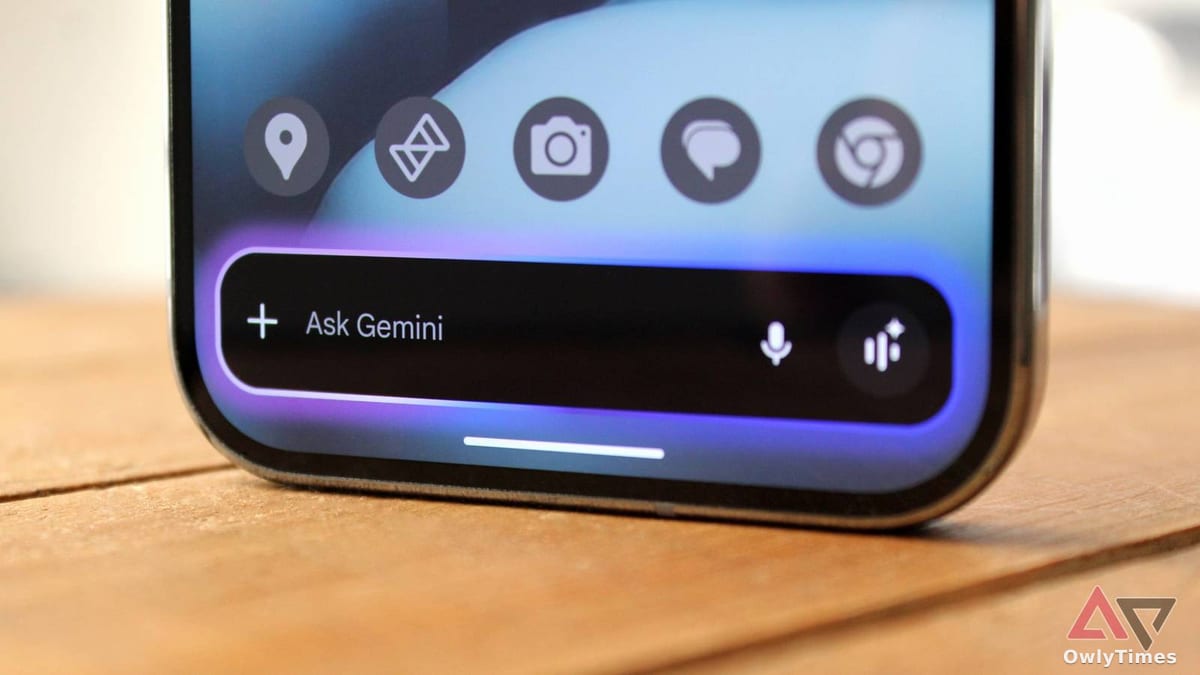
When 9to5Google first spotted the application, the most striking detail wasn't its feature set, but its sheer footprint. The app weighs in at a little over 1GB, a significant amount of space for a utility that ostensibly performs basic tasks like List Tracker, Document Writer, Event Suggester, Deep Research mode, and Conversation Summary. To put that in perspective, a standard productivity app rarely cracks 200MB; COSMO is massive because it is packing a Gemini Nano model directly into the installation package.
By moving the model from the cloud to your local hardware, Google is attempting to solve the classic "battery drain" problem that plagues current AI implementations. Cloud-based AI is efficient for the company, but it is an energy nightmare for your phone. By forcing the heavy lifting onto your device's own processor, Google is betting that the future of mobile convenience requires us to sacrifice significant storage capacity in exchange for faster, private, and offline-capable smart features.
Why the "Experimental" Tag Matters
The fact that COSMO was pulled from the Play Store almost immediately after its discovery suggests that this was likely an internal testing tool that escaped into the wild. We have seen this dance before with big tech companies; a developer pushes the "publish" button on a staging server, and suddenly the public gets a glimpse of the roadmap. For the ordinary user, this is a look at a future where your phone doesn't just "have" AI, but is fundamentally defined by it.
The inclusion of settings to toggle between a "local model," an "online model," or both is the most telling feature here. It indicates a hybrid approach where the AI acts as a flexible utility, scaling its intelligence based on whether you have a stable Wi-Fi connection or are sitting on a train with zero bars. It is a pragmatic, if slightly clunky, realization that AI is useless if it requires a perfect connection to function.
The Looming Shadow of the Next Big Reveal
We are currently caught in a waiting game between a finished product and a discarded experiment. Given that Google I/O is scheduled to take place in just a few weeks, the timing of this accidental leak is suspicious, to say the least. It is entirely possible that COSMO is the blueprint for the next generation of Android assistants, or it could be a failed prototype destined for the digital graveyard.
The next reading of the official agenda at Google I/O will show whether this 1GB AI experiment is the cornerstone of the company’s mobile strategy for the year or just another piece of vaporware that wasn't ready for the spotlight. Regardless of its fate, the trend is clear: Google is moving the intelligence off the servers and into your pocket, whether you have the storage space for it or not.