
Is the GOP’s Identity Crisis About to Derail Everything?
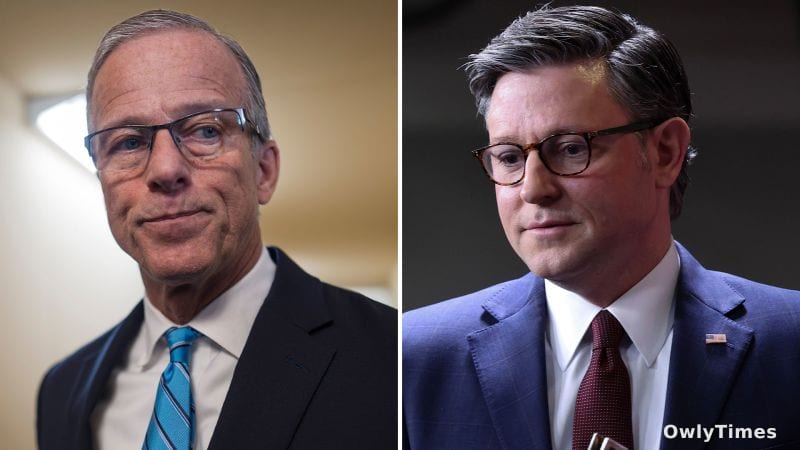
Everyone’s focused on the Department of Homeland Security shutdown, the finger-pointing, the political posturing. But the real story here isn't the shutdown itself—it's the accelerating disintegration of Republican party unity, and the precarious position that puts ordinary Americans in as a consequence. What started as a predictable standoff with Democrats has devolved into a public airing of grievances between Senate Majority Leader John Thune and House Speaker Mike Johnson, a fissure that threatens to paralyze Congress and leave critical issues unresolved just months before the midterm elections.
Reporting from CNN informs this analysis.
The current mess stems from Thune’s decision to exclude immigration enforcement funding from a deal to reopen DHS, a move intended to secure a quick resolution and avoid a prolonged shutdown. This decision, while seemingly pragmatic, triggered a revolt from House Republicans, who felt betrayed and abandoned. Now, with President Donald Trump publicly demanding full funding for ICE and Border Patrol, the GOP finds itself in a bizarre situation: running the longest DHS shutdown in history while simultaneously battling internal divisions and a president seemingly determined to force their hand. Trump’s recent Truth Social post, calling for GOP leaders to “figure out full funding for DHS by June 1” and bypass the Senate filibuster, underscores the escalating pressure and the increasingly erratic nature of the situation.
The tension isn’t just about policy; it’s about power. Johnson, emboldened by Trump’s support, is now publicly pressuring the Senate to adopt a hardline shutdown strategy, a rare and pointed rebuke of his counterpart across the Capitol. “We have got a dilemma,” Johnson stated on Fox News, “The Senate has to do their job and help us on this heavy lift.” This public campaign highlights a deepening schism between the two leaders, who previously navigated disagreements behind closed doors. Johnson’s focus on satisfying his right flank—a group far more conservative than Thune’s Senate caucus—is driving his aggressive tactics, while Thune finds himself increasingly isolated and targeted by MAGA influencers for his perceived unwillingness to dismantle the Senate filibuster.
The implications for everyday Americans are significant. The DHS shutdown already impacts border security, airport screenings, and disaster relief efforts. But the broader dysfunction within the GOP threatens to derail progress on other critical issues, including the reauthorization of vital intelligence community surveillance powers and a potentially massive Pentagon funding request. These aren’t abstract policy debates; they directly affect national security, economic stability, and the safety of communities across the country. Even centrist voices within the GOP, like Sen. Susan Collins, are hesitant to publicly support Thune, further illustrating the depth of the divide.
The push for a second “Trump megabill,” a sweeping partisan policy package utilizing reconciliation to bypass the filibuster, only exacerbates the problem. While some Trump officials acknowledge the risk of failure, the desire to appease the MAGA base and demonstrate continued loyalty to the former president appears to outweigh concerns about practicality. This strategy, however, risks alienating even moderate Republicans and setting the stage for further legislative gridlock. The fact that lawmakers in both chambers privately believe this approach is the only way to secure funding for Trump’s demands for more Iran funding—another looming challenge—highlights the increasingly desperate nature of the situation.
The real question now isn’t whether the DHS shutdown will end, but whether the Republican party can salvage any semblance of unity before the midterms. The current trajectory suggests a prolonged period of internal conflict, legislative paralysis, and ultimately, a diminished ability to address the pressing needs of the American people.
Here’s what to watch: In the coming weeks, keep a close eye on whether Trump will publicly endorse Thune, or continue to fuel the intraparty conflict. A full-throated endorsement from Trump could provide Thune with the political capital needed to weather the storm, but a continued barrage of criticism could further erode his standing and embolden his detractors. The outcome of this internal power struggle will determine not only the fate of the DHS funding bill, but also the future of the Republican party itself.





