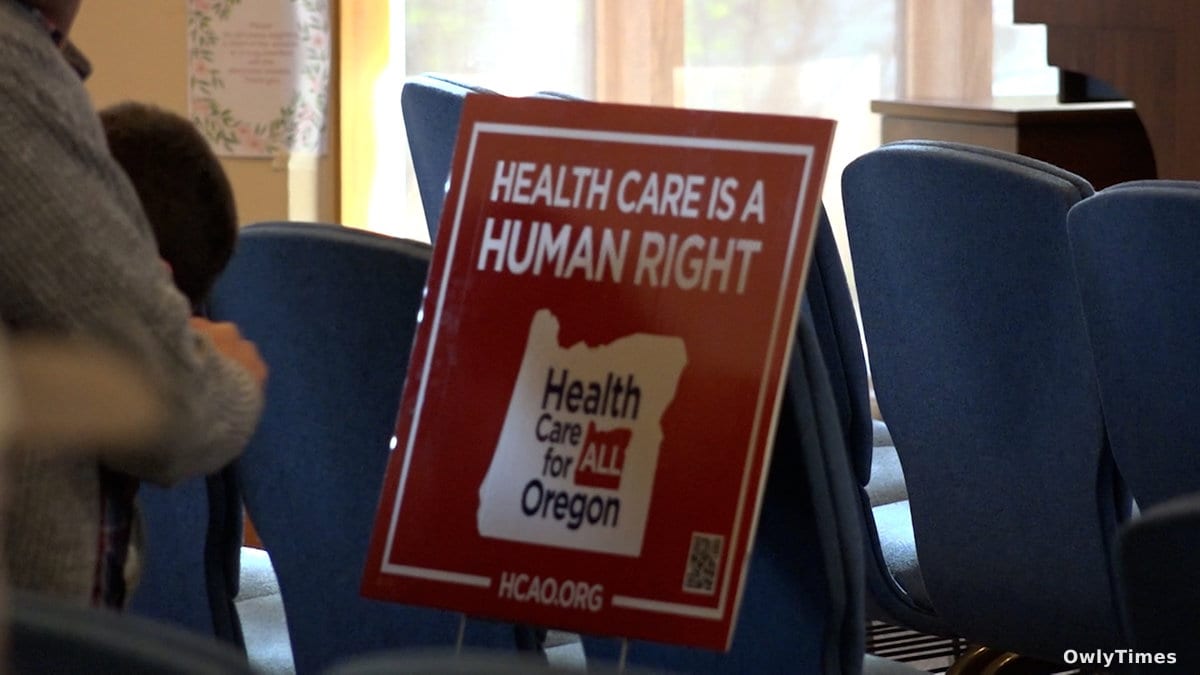

The American medical landscape is currently grappling with a fundamental question: how can a state reconcile the constitutional guarantee of accessible care with the reality of an industry where national health care spending reached nearly $5.6 trillion as of 2025? This tension was the focal point of a recent town hall at Trinity Episcopal Church, where residents and advocates debated the mechanics of moving toward a universal coverage model in Oregon. While the national conversation often focuses on federal mandates, the discussion in Central Oregon highlighted the localized, granular effort required to shift from a market-based system to one defined as a public right.
Bridging the Gap Between Rights and Implementation
The push for a statewide universal system is spearheaded by Health Care for All Oregon, an organization that has been actively pursuing legislative change since 2019. This effort gained significant legal and political momentum in 2023, following the successful passage of a constitutional amendment that formally declared access to affordable health care a right for Oregonians. However, the gap between declaring a right and building the infrastructure to sustain it remains the primary hurdle for policymakers.
The Universal Health Plan Governance Board is currently tasked with navigating this transition. Unlike broad policy statements, the board’s work involves studying specific pathways to consolidate coverage, theoretically reducing systemic costs while expanding access. For supporters, this is both an economic necessity and a social imperative. Margy Lim, a Bend resident who attended the session, framed the transition as a boon for the state’s economy, noting that the inability to pay should not preclude an individual from receiving medical treatment.
Distinguishing Vision from Policy Reality
It is important to differentiate the ambitious goals discussed at the town hall from the actual status of the legislative proposals. While headlines often characterize universal health care as an impending reality, the study conducted by the Governance Board serves as a preliminary roadmap rather than a finalized plan. The state is operating under the historical context of the Oregon Health Insurance Plan (OHIP), which launched in the 1990s and established a precedent for Oregon as a laboratory for health policy. Nick Campbell, chair of the Central Oregon chapter of Health Care for All Oregon, views the current efforts as the next iteration of this long-standing legacy.
However, a critical limitation to consider is the immense complexity of integrating disparate funding streams and delivery networks. As noted by attendee Greg Gisi, the path forward is far from straightforward. The sheer scale of the financial and administrative restructuring required to move from the current patchwork system to a unified statewide model presents a significant challenge that supporters and lawmakers have yet to fully resolve.
Legislative Hurdles and Future Milestones
Moving from public discourse to functional policy requires navigating a series of legislative approvals and difficult funding decisions that have not yet occurred. The organization has set an ambitious timeline, with the hope of seeing a functional universal system in place by 2032. This timeline serves as a measurable signal for observers; the progression of the Governance Board’s findings through upcoming legislative sessions will indicate whether the momentum seen in 2023 can translate into the fiscal and structural reality required for implementation. The next reading of the board’s progress reports will determine if the state remains on track to meet that 2032 objective.