
A Misunderstanding of Arctic Healthcare: Why Trump’s Greenland Offer Missed the Mark
The impulse to offer aid during a medical emergency is a fundamental one, yet the recent proposal by former President Donald Trump to dispatch a hospital ship to Greenland reveals a critical disconnect between perceived need and existing infrastructure. While framed as a humanitarian gesture, the offer – made via his Truth Social platform – highlights a pattern of unilateral decision-making and a misunderstanding of the robust, publicly funded healthcare system already in place in Greenland and Denmark. The incident isn’t simply a diplomatic faux pas; it’s a case study in how assumptions about healthcare access can overshadow on-the-ground realities, particularly in regions with distinct social models.
The initial impetus for Trump’s announcement appears to have stemmed from the Danish military’s swift and successful evacuation of a U.S. submarine crew member near Nuuk, Greenland’s capital. The Danish Joint Arctic Command detailed the rescue on Facebook, noting the crew member was transferred to a local hospital after being retrieved by a Seahawk helicopter. Trump, referencing his special envoy for Greenland and Louisiana Governor Jeff Landry, then declared a hospital ship was “on the way” to address unspecified widespread illness. However, this declaration was made without prior consultation with Danish authorities, as confirmed by Danish Defense Minister Troels Lund Poulsen to public broadcaster DR. This lack of communication is particularly noteworthy given the historically strong, albeit recently strained, alliance between the U.S. and Denmark, both NATO members.
The core of the issue lies in the fundamental differences between the U.S. and Danish/Greenlandic healthcare systems. Greenlandic Prime Minister Jens-Frederik Nielsen swiftly and directly rejected the offer, stating, “It’s a no thank you from here.” He pointedly highlighted that Greenland provides free healthcare to all citizens, a deliberate societal choice contrasting sharply with the U.S. system where access is often tied to insurance and financial resources. This isn’t merely a matter of pride; it’s a statement about core values. Danish Prime Minister Mette Frederiksen echoed this sentiment on Facebook, expressing gratitude for living in a country with universal healthcare access, implicitly contrasting it with the American model. The response wasn’t simply political posturing; it was a defense of a system demonstrably functioning to meet the needs of its population.
Reporting from Fortune informs this analysis.
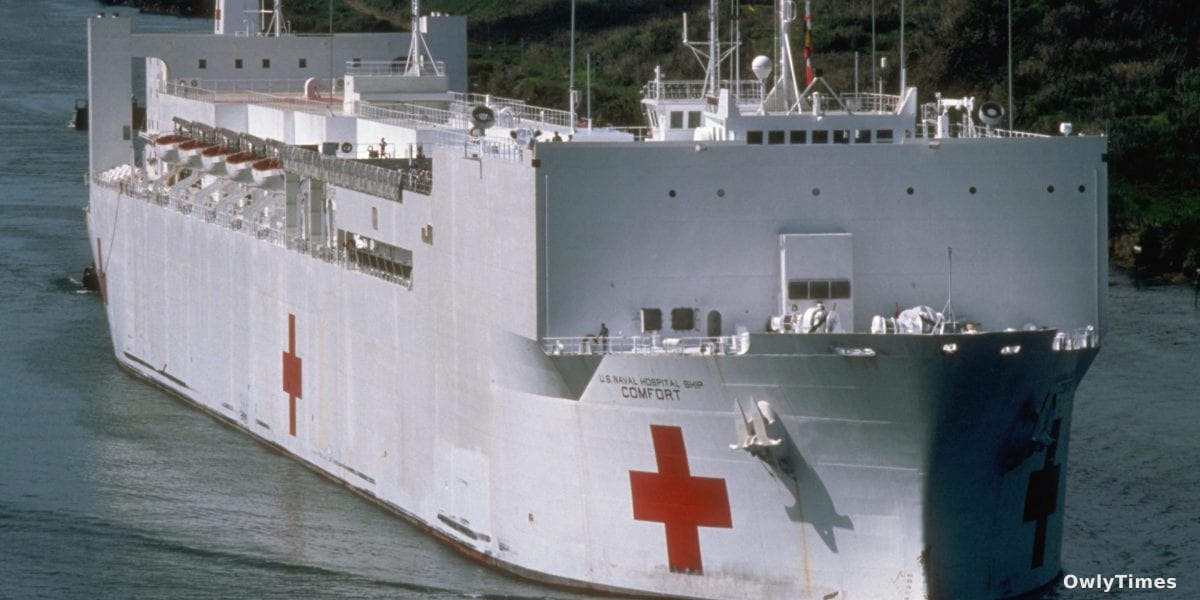
Adding another layer of complexity, the U.S. Navy’s two hospital ships, the USNS Mercy and USNS Comfort, are currently undergoing maintenance at a shipyard in Mobile, Alabama – a fact readily available through the shipyard’s own social media postings. This logistical reality further undermines the claim that a ship was imminently “on the way.” The Pentagon deferred questions to the White House, which did not respond to repeated requests for clarification. This chain of responses – or lack thereof – underscores a pattern of opaque communication surrounding the proposal, raising questions about the initial assessment that prompted it. Aaja Chemnitz, a Greenlandic politician in the Danish parliament, succinctly summarized the situation as “desperate” and unhelpful for long-term healthcare strengthening.
Looking ahead, this incident underscores the need for improved diplomatic protocols regarding offers of aid, particularly in areas where existing infrastructure is well-established. The focus should shift from unilateral gestures to collaborative discussions about specific needs and how the U.S. can support existing healthcare initiatives in the Arctic region. More importantly, this situation prompts a critical question: will future aid proposals be based on accurate assessments of local conditions, or will they continue to be driven by assumptions and communicated through social media pronouncements? The answer will determine whether the U.S. can rebuild trust and foster genuine partnerships in a strategically vital region.





