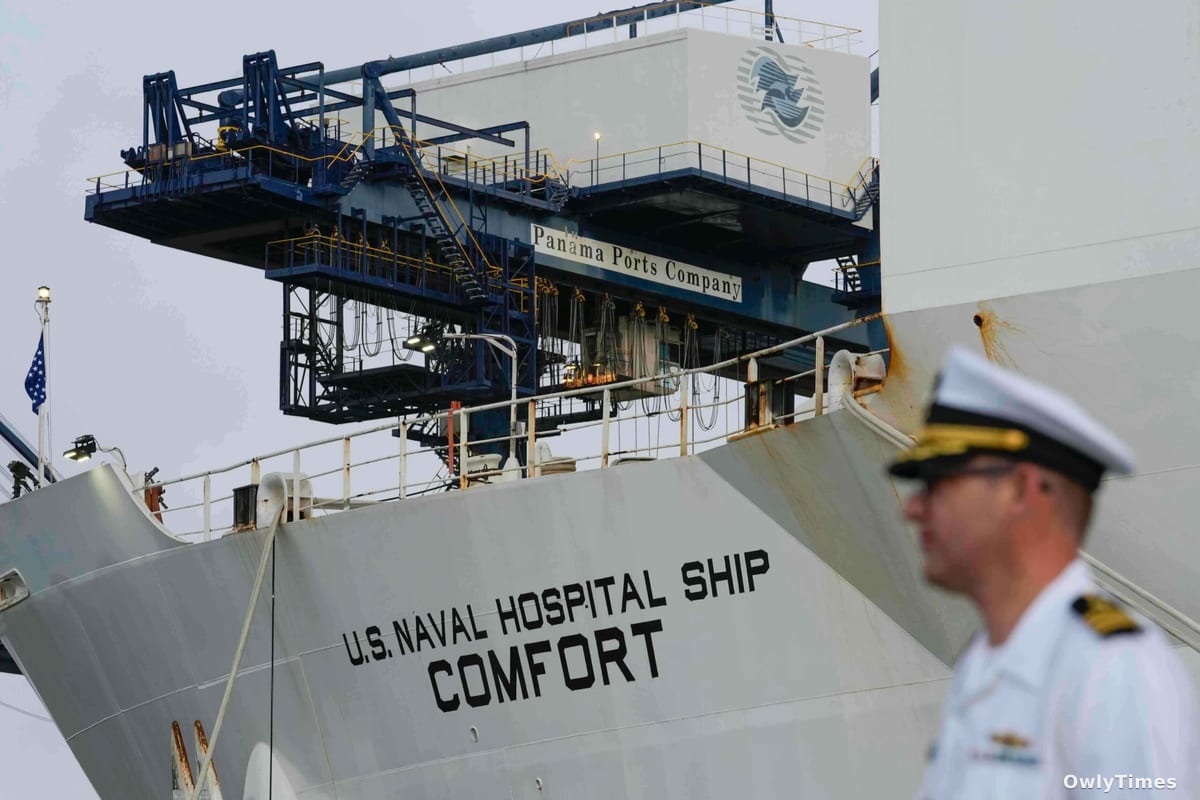

The impulse to offer aid during a perceived crisis is a fundamental human response, but effective assistance requires a clear understanding of the situation on the ground. President Donald Trump’s recent announcement of deploying a hospital ship to Greenland, made via his Truth Social platform, exemplifies the tension between well-intentioned offers and the complexities of global health realities. While the gesture itself isn’t inherently problematic, the underlying justification – a claim of widespread illness and inadequate care in Greenland – doesn’t align with available evidence, and raises questions about the motivations driving the proposal. It’s not simply a matter of correcting misinformation; it’s about recognizing how narratives of need can be constructed, and the potential consequences of acting on incomplete or inaccurate assessments.
The core of the issue lies in Trump’s assertion that “many people” in Greenland are “sick, and not being taken care of.” This claim, relayed alongside praise for Louisiana Governor Jeff Landry, his special envoy to the Arctic territory, lacks concrete support. No recent reports indicate a major health crisis in Greenland, and the statement doesn’t specify what illnesses prompted the concern. What the data does show is a nation navigating the predictable health challenges of a rapidly modernizing society. Greenland, with a population of roughly 57,000, operates a centralized healthcare system anchored by the Queen Ingrid Hospital in Nuuk, supplemented by regional health centers. Crucially, healthcare is free for citizens and permanent residents, encompassing everything from general practice to prescription medication and dental care – a system markedly different from the U.S. model pointedly highlighted by Greenlandic Prime Minister Jens-Frederik Nielsen in response to Trump’s post. Nielsen’s observation, “That is a deliberate choice — and a fundamental part of our society,” underscores a fundamental difference in societal values regarding healthcare access.
However, acknowledging a functioning healthcare system doesn’t equate to a system without challenges. The Center for Public Health in Greenland identifies “major public health challenges,” stemming from the island’s swift transition from a traditional hunting lifestyle to a modern, industrialized society. This shift has led to a rise in non-communicable diseases like obesity, diabetes, and cardiovascular disease – trends mirrored in many rapidly developing regions globally. Currently, a specific, pressing need exists for dentists in several remote towns – Aasiaat, Paamiut, and Nanortalik – as highlighted by Greenland’s Minister for Health and Persons with Disabilities, Anna Wangenheim, in a recent Facebook post. This localized shortage, while significant for those communities, doesn’t represent a systemic collapse of healthcare provision.
Reporting from wtop.com informs this analysis.
The logistical feasibility of Trump’s proposed deployment is also questionable. Both U.S. Navy hospital ships, the USNS Mercy and USNS Comfort, are currently undergoing extensive maintenance in Mobile, Alabama, and are not immediately available for deployment. Government contracts indicate the Comfort won’t be finished with repairs until April, and the Mercy requires further work in Oregon. Beyond the physical readiness of the ships, mobilizing them requires assembling a full complement of medical staff – a process that draws personnel and resources from existing hospitals, potentially creating strain elsewhere. The suggestion that a ship was “on the way!!!” simply doesn’t align with the documented reality of ongoing shipyard repairs.
Furthermore, Governor Landry’s claim of “basic services” lacking in Greenland’s smaller settlements warrants scrutiny. While access to specialized care can be limited in remote areas, Greenland utilizes telemedicine and patient transport to ensure citizens receive necessary treatment, even if it requires travel to the national hospital or, in complex cases, to Denmark. This is a pragmatic approach to healthcare delivery in a geographically challenging environment. It’s a situation not dissimilar to the challenges faced by rural communities within the United States itself. In fact, data from the University of North Carolina at Chapel Hill reveals that 152 rural hospitals in the U.S. have closed or cut inpatient services since 2010, a statistic that underscores the pervasive difficulties in providing equitable healthcare access, even within a wealthy, developed nation. Louisiana, Landry’s own state, faces significant healthcare provider shortages, with a majority of parishes lacking sufficient access to primary, dental, and mental health care.
The situation in Greenland isn’t a crisis demanding a dramatic intervention, but a developing nation steadily improving its healthcare infrastructure and grappling with the health consequences of societal change. Life expectancy in Greenland has increased by six years for men and five to six years for women since the 1990s, now exceeding the global average, a testament to the progress made despite the challenges. The next crucial research steps involve a more nuanced understanding of the specific health needs of Greenland’s remote communities, and a collaborative approach to addressing those needs – perhaps through targeted training programs for local healthcare professionals, or investment in telemedicine infrastructure. The question isn’t whether Greenland needs help, but what kind of help is genuinely beneficial, and how to deliver it in a way that respects the nation’s sovereignty and existing healthcare framework. Will future aid efforts prioritize genuine need assessment and collaborative partnerships, or will they be driven by political signaling and unsubstantiated claims? The answer will determine whether such gestures truly contribute to global health equity, or simply reinforce existing power dynamics.





