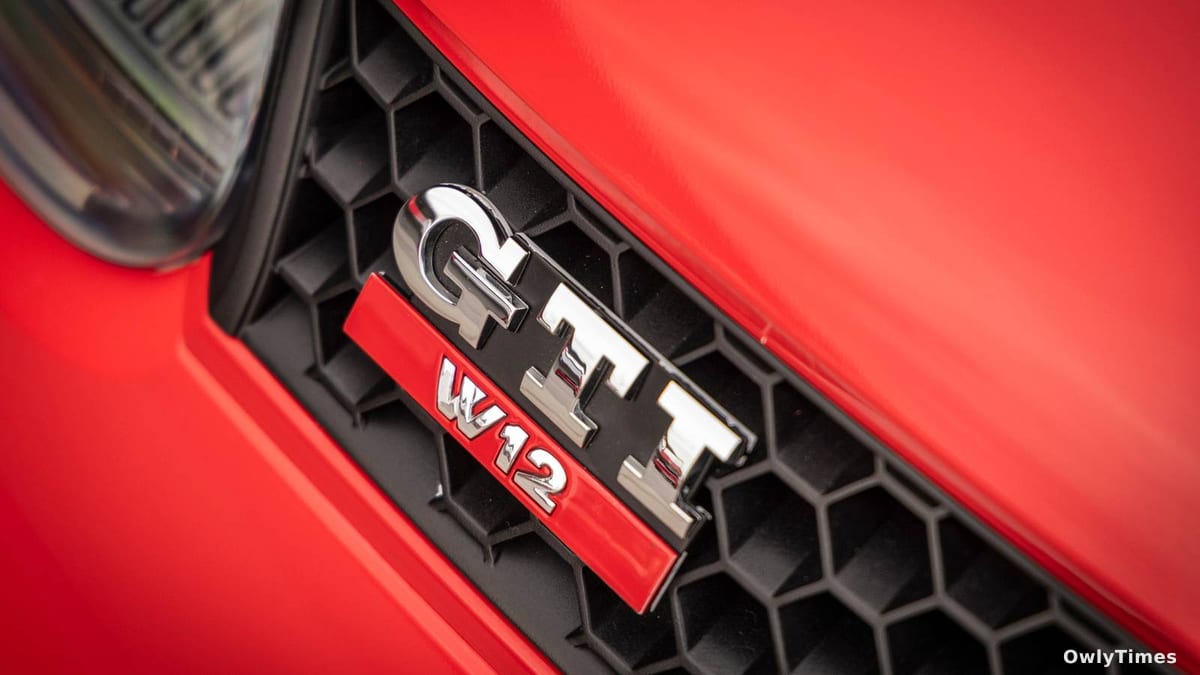

The air crackled with anticipation at Volkswagen’s anniversary celebration, but it wasn’t the latest electric concept drawing the crowds. It was a ghost from the past, resurrected in a vibrant coat of red: the Golf GTI W12-650. A concept so audacious, so utterly divorced from the practical spirit of the GTI, that it felt less like a car and more like a dare. This wasn’t just a cosmetic refresh; it was a reminder that Volkswagen, beneath its current push towards electrification and family-friendly SUVs, once harbored a wild, experimental heart. The reappearance of this 650-horsepower monster isn’t simply nostalgia; it’s a pointed question mark hanging over the future of performance, and a stark contrast to the realities facing the GTI in today’s market.
The Golf GTI W12-650, born in 2007, was a defiant statement. While the standard GTI of the era offered a respectable 200 horsepower, this concept crammed a twin-turbocharged 6.0-liter W12 – the same engine found in Bentley’s luxurious Continental GT – into the Golf’s compact frame. The result? A 0-62 mph time of just 3.7 seconds, a rear-wheel-drive layout, and a power output that redefined the very notion of a “hot hatch.” It was a technical marvel, requiring significant engineering to shoehorn the engine behind the front seats, sacrificing the rear bench in the process. But it was always understood as a one-off, a proof of concept, a “what if?” experiment. The sheer audacity of it, however, cemented its place in automotive legend.
Drawn from carbuzz.com.
Beyond the headlines of horsepower and torque, the W12-650 speaks to a different era in automotive development. The mid-2000s were a period of relative optimism, before the 2008 financial crisis forced manufacturers to prioritize efficiency and practicality. This allowed for projects like the W12 GTI – expensive, technically challenging, and ultimately unprofitable – to see the light of day. The W12 engine itself, a descendant of VW’s innovative VR6, found its way into over 100,000 production vehicles, powering everything from the Phaeton sedan to Bentley’s entire lineup. Its recent retirement from models like the Bentayga signals a shift away from complex, high-cylinder-count engines, even in the luxury segment. The W12-650, then, isn’t just a celebration of a wild concept; it’s a eulogy for a bygone engineering philosophy.
But the timing of this revival is particularly poignant. While the W12-650 basks in the glow of its 50th-anniversary celebration, the current generation Golf GTI is facing a sales slump in the crucial American market. Despite a 2025 refresh and critical acclaim, sales plummeted by 34.7% year-over-year, accounting for a mere 2.1% of VW’s total US sales. The Subaru WRX, a long-time rival, even outsold the GTI and its more potent sibling, the Golf R, combined. This isn’t a matter of the GTI losing its appeal; it’s a symptom of a broader trend. American consumers are overwhelmingly favoring SUVs and crossovers, with VW’s car division experiencing a staggering 26.6% sales decline in 2025. The company’s overall sales fell by 13%, largely driven by the struggles of its car lineup.
The contrast is jarring. Here’s a brand celebrating a history of performance innovation with a 650-horsepower fantasy, while simultaneously grappling with the reality that its core performance model is struggling to find buyers in a market dominated by larger vehicles. The W12-650 feels like a wistful glance backward, a reminder of a time when Volkswagen was willing to take risks and push boundaries. The current sales figures suggest a more cautious, pragmatic approach. The question now isn’t whether Volkswagen can build another W12-650 – it almost certainly won’t – but whether it can find a way to reignite the passion for performance hatchbacks in a world obsessed with SUVs. Will VW double down on electrification and performance EVs, or will they attempt to recapture some of that lost magic with future GTI iterations? The fate of the Golf GTI, and perhaps the future of Volkswagen’s performance identity, hangs in the balance.