
The Illusion of Choice: Haiti’s Election as a Pressure Release Valve
The sheer volume of parties registering for Haiti’s upcoming election – a record 280 by Thursday’s deadline – isn’t a sign of burgeoning democracy, but a strategic maneuver by Haiti’s political class to appear responsive to international pressure for a return to constitutional order. While hopeful rhetoric about allowing “the population to breathe,” as voiced by Abel Decollines of the newly formed CAHDOA party, fills the air, the registration surge is best understood as a scramble for legitimacy in a power vacuum, a calculated attempt to manage expectations while the underlying conditions for a free and fair election remain absent. The international community, particularly the United States and CARICOM, has consistently called for elections as the solution to Haiti’s multifaceted crisis, effectively creating a political imperative that overshadows the practical realities on the ground.
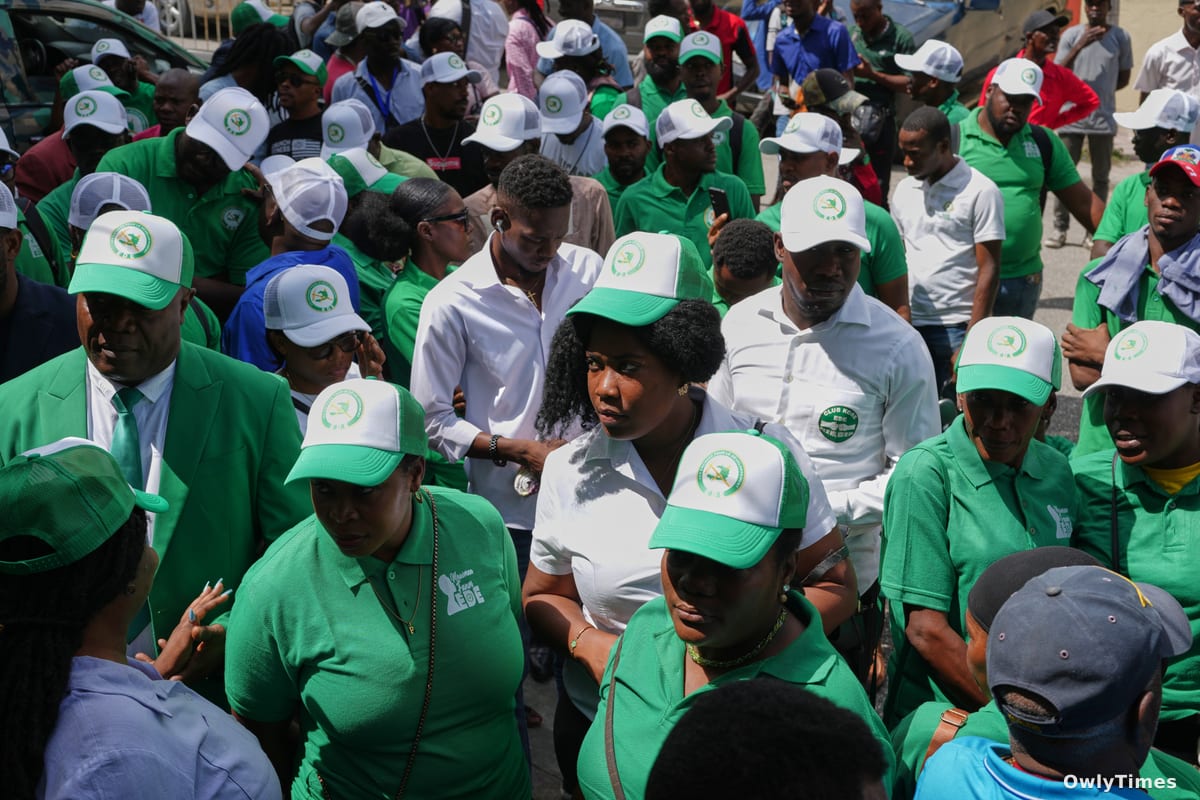
The participation of Claude Joseph’s EDE (Committed to Development) party is particularly revealing. Founded by the former Prime Minister who was in office during the assassination of Jovenel Moïse in July 2021, EDE’s entry signals a deliberate attempt to re-establish a narrative of continuity and stability, despite Joseph’s own complicated legacy. Joseph’s stated aim to end “the failure of eternal political transitions” rings hollow given his own role in the transitional government that followed Moïse’s death – a transition that ultimately failed to deliver security or a functioning government. This highlights a core tension: the same actors implicated in Haiti’s chronic instability are now positioning themselves as the agents of change. Who benefits and who loses from this maneuver? The established political elite benefits by maintaining a grip on power, while the Haitian population, facing escalating violence and displacement, risks being offered a symbolic gesture of participation without genuine systemic reform.
The scale of the crisis is staggering. The United Nations reports over 5,900 killed and 2,700 injured in 2023 alone, alongside a record 1.4 million internally displaced persons. Armed gangs control an estimated 90% of Port-au-Prince, effectively rendering large swathes of the capital ungovernable. To suggest, as Dalouce Désir of EDE does, that “no matter what, there must be an election,” ignores the fundamental prerequisite for any legitimate electoral process: security. This insistence on elections, despite the obvious obstacles, echoes historical precedents of externally-driven electoral interventions in fragile states. The 1990 elections in Namibia, overseen by the United Nations after decades of South African occupation, offer a contrasting example – a process backed by a robust peacekeeping force and a clear commitment to dismantling the existing power structures. Haiti currently lacks both.
This article draws on reporting from NPR.
The current situation, with Alix Didier Fils-Aimé as Haiti’s sole ruler following the dissolution of the transitional presidential council in February, is reminiscent of the periods of direct military rule that punctuated Haiti’s history, particularly the regimes of François Duvalier and his son, Jean-Claude Duvalier. While Fils-Aimé lacks the overt authoritarianism of the Duvaliers, the concentration of power in his hands, coupled with the pervasive insecurity, creates a similar environment of limited political space and suppressed dissent. The Provisional Electoral Council’s vague criteria for authorizing parties to participate – a final list is due March 26th – further exacerbates concerns about manipulation and exclusion. The lack of transparency raises the question of whether the Council will prioritize genuine representation or simply rubber-stamp the candidates favored by the existing power structures.
The political chess move to watch next isn’t the election itself, but the response of the international community to the inevitable delays and irregularities. Will they continue to insist on elections as the sole solution, effectively legitimizing a flawed process? Or will they shift their focus towards addressing the root causes of the crisis – namely, the dismantling of the gangs and the implementation of comprehensive security sector reform? The answer to that question will determine whether Haiti’s upcoming election is a genuine step towards democracy or merely a carefully orchestrated illusion of choice.





