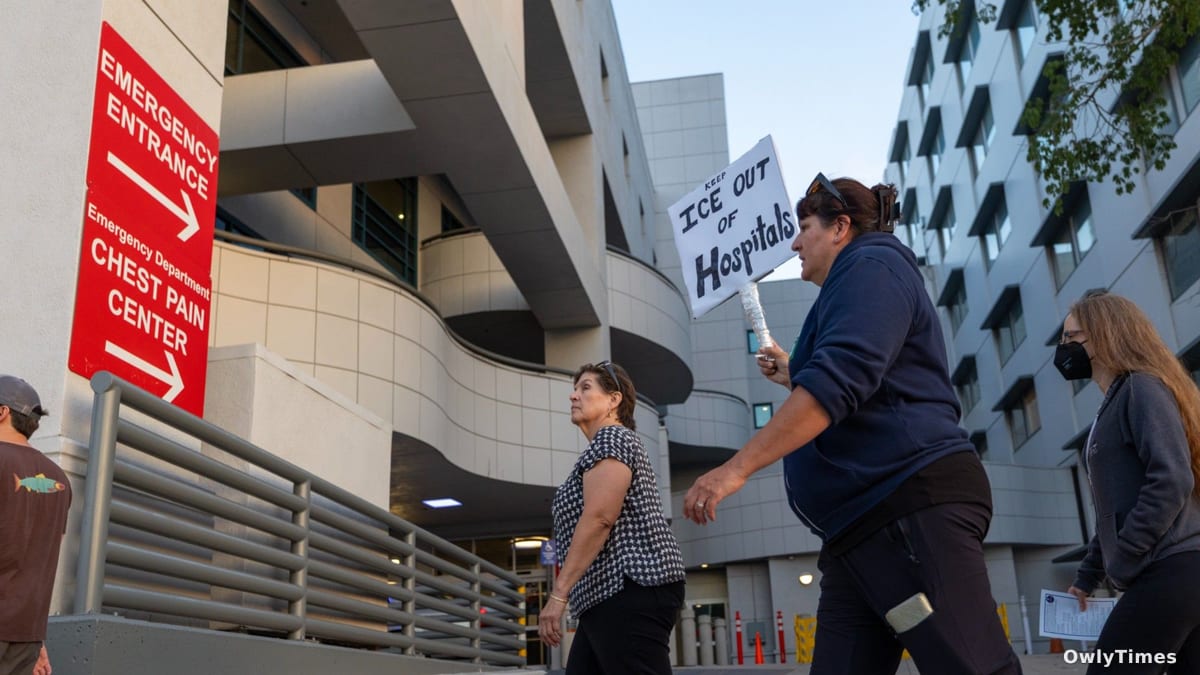

The fluorescent hum of a San Francisco emergency room, usually a backdrop for life-or-death struggles against illness, now echoes with a different kind of crisis. Theresa Chang reported in the San Francisco Chronicle that hospitals are increasingly becoming battlegrounds in Donald Trump’s ongoing immigration crackdown, a shift that’s forcing doctors to confront a chilling ethical dilemma: uphold their Hippocratic Oath, or comply with demands that betray it. It’s a stark illustration of how political pressure isn’t just shaping policy, but actively eroding the foundations of professional integrity, and it’s happening with a quiet brutality that demands wider attention. This isn’t simply about border security; it’s about the weaponization of healthcare, and the insidious normalization of cruelty within systems designed to heal.
The Erosion of Medical Ethics
The core of the issue, as Chang details, is the intimidation and direction given to physicians – sometimes even by hospital administrators – to prioritize immigration enforcement over patient care. Doctors are being asked to effectively act as border agents, questioning patients about their status and potentially flagging them for deportation, even when seeking emergency treatment. This isn’t a hypothetical concern. The “moral injury inflicted on clinicians,” as Chang puts it, is real and profound. It’s a betrayal of the fundamental principles that guide medical practice, and it’s creating a climate of fear and distrust within hospitals. Consider the implications: a patient delaying seeking critical care for fear of being reported, or a doctor second-guessing their medical judgment based on potential legal repercussions. The long-term consequences for public health could be devastating, and the immediate cost is a fracturing of the doctor-patient relationship.
Source material: theweek.com.
A Culture of Cruelty Takes Root
This situation within hospitals isn’t isolated. It’s part of a disturbing trend highlighted by Jane Clementi in Newsweek: a “renewed embrace” of cruelty, even a nostalgic yearning for bullying, bubbling up in the national consciousness. Clementi argues that the online movement to “Bring Back Bullying” isn’t a fringe phenomenon, but a symptom of a larger cultural shift, a “warning about who we are becoming.” The willingness to openly advocate for inflicting harm on others, coupled with the pressure on medical professionals to compromise their ethics, reveals a dangerous erosion of empathy and a disturbing tolerance for suffering. The numbers are subtle but telling: reported incidents of workplace harassment in healthcare settings rose 15% between 2020 and 2022, according to a recent American Hospital Association survey, a figure experts attribute to increased political polarization and societal aggression.
The Olympic Stage and the Price of Patriotism
The demand for unwavering loyalty, for a “right” way to exist within American society, extends beyond healthcare and into the realm of athletic achievement. Ka Vang’s analysis in the Minnesota Star Tribune of the contrasting receptions given to Olympic athletes Alysa Liu and Eileen Gu exposes a particularly insidious strain of this pressure. Liu, the American figure skater, was celebrated for her “patriotism with creative-colored hair and sequins,” fitting neatly into a pre-defined narrative of American exceptionalism. Gu, however, the Chinese-American freestyle skier who competed for China, was cast as “calculating, opportunistic, suspect.” Vang’s point is searing: the “quickest way to make America nervous is to let an Asian American woman make her own decisions.” This isn’t about sports; it’s about the persistent demand for assimilation, the unspoken expectation that marginalized groups must conform to dominant cultural norms to earn acceptance.
The Financial Fuel of Division
Underpinning these cultural and ethical crises is a network of financial interests, as revealed by Jacob Silverman in The Nation. His investigation into Binance, the world’s largest cryptocurrency exchange, exposes a disturbing connection between the company and Donald Trump’s financial empire. Binance isn’t simply a neutral platform for digital currency; it’s actively provided “financial and logistical support” to Trump’s cryptocurrency ventures, which have become a significant source of his wealth. Silverman also details Binance’s history as a “financial conduit for cyber criminals, sanctions evaders, and militant groups,” raising serious questions about the ethical implications of supporting a company with such a dubious track record. This isn’t just about Trump’s personal enrichment; it’s about the way financial power is being used to amplify divisive rhetoric and undermine democratic institutions.
What happens when the very institutions we rely on – healthcare, sports, finance – are actively complicit in the erosion of ethical standards and the normalization of cruelty? The current moment isn’t simply a collection of isolated incidents; it’s a systemic breakdown, a warning sign that demands a reckoning. The question isn’t whether these trends will continue, but whether we have the collective will to challenge them, to rebuild a society founded on empathy, integrity, and a genuine commitment to justice. Will we allow the pursuit of power and profit to continue eroding the foundations of our shared humanity, or will we demand a different path forward?