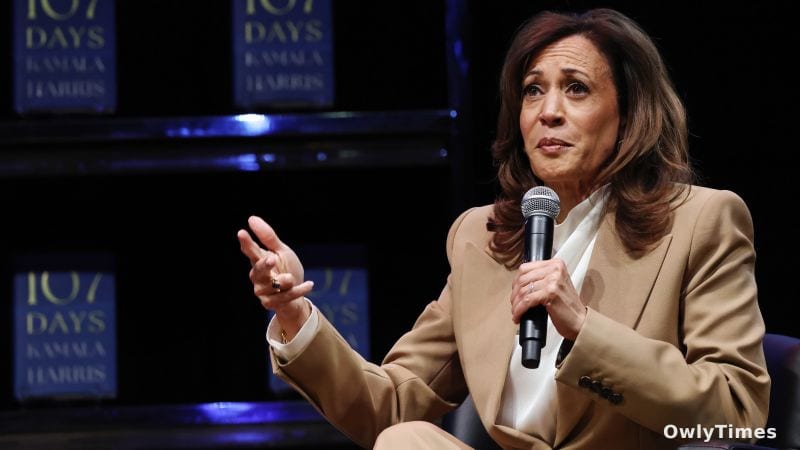

The Calculus of Loyalty: Harris’ Texas Intervention
The timing of Kamala Harris’ robocall for Jasmine Crockett in the Texas Senate Democratic primary isn’t about maximizing Democratic chances in November; it’s about consolidating political capital and signaling a clear pattern of reward for loyalty within the party. While ostensibly aimed at turning Texas blue, the intervention reveals a strategic prioritization of personal relationships and reciprocal support over purely pragmatic electoral calculations. This isn’t a dispassionate assessment of who can win, but a demonstration of who Harris chooses to elevate, and the message that sends to other ambitious Democrats.
Based on the original CNN report.
The facts are straightforward: Harris recorded a robocall urging voters to support Crockett in the primary, emphasizing her ability to “hold Donald Trump and his billionaire cronies accountable.” The language itself is standard Democratic fare, but the act of intervening – particularly so directly – is noteworthy. Crockett was a co-chair of Harris’ 2024 presidential campaign, spoke at the 2024 Democratic National Convention in support of Harris, and actively sought her counsel before launching her Senate bid. This isn’t an isolated incident; Harris has also endorsed New Orleans Mayor Helena Moreno, a 2019 co-chair of her first presidential campaign, and Dan Koh, a former White House aide. The pattern is unmistakable: Harris is investing in those who invested in her, even when the return isn’t guaranteed.
The Texas Primary as a Test of Influence
The context of the Texas primary is crucial. Crockett faces a challenge from state Rep. James Talarico, and the race is described as “heated and contentious.” While Crockett is considered the more progressive candidate, and thus potentially better positioned to energize the base, a more moderate candidate might have broader appeal in a state as politically complex as Texas. Harris’ endorsement isn’t about choosing the strongest general election candidate; it’s about backing a protégé. This raises the question of whether Harris is willing to risk a potentially weaker Senate nominee in pursuit of solidifying her own network of allies. The financial implications are also worth noting: Crockett’s campaign has benefited from significant small-dollar donations, but faces a fundraising disadvantage compared to potential Republican opponents. Harris’ endorsement, while not a financial contribution, provides a valuable boost in visibility and credibility.
The historical parallel here is instructive. Consider Lyndon B. Johnson’s meticulous cultivation of loyalty within the Democratic party. Johnson understood that political power wasn’t simply about policy positions, but about building a network of individuals indebted to him. Harris, while operating in a different political landscape, appears to be adopting a similar strategy. The difference is scale: Johnson wielded the power of the presidency, while Harris is a former vice president navigating a post-Obama political environment. Nevertheless, the underlying principle remains the same: nurture relationships, reward loyalty, and build a base of support that can be mobilized when needed.
Who Benefits and Who Loses in This Equation?
The immediate beneficiaries are Jasmine Crockett and, by extension, Kamala Harris. A Crockett victory would be a validation of Harris’ judgment and a demonstration of her ability to influence primary outcomes. It would also strengthen Harris’ position within the Democratic party, positioning her as a kingmaker capable of identifying and elevating rising stars. Talarico, naturally, is the immediate loser. Harris’ endorsement significantly elevates Crockett’s profile and makes it more difficult for Talarico to gain traction.
However, the broader implications are more complex. Other ambitious Democrats may interpret Harris’ actions as a signal that loyalty is valued above all else. This could encourage them to prioritize aligning themselves with Harris over pursuing independent strategies. Conversely, it could also breed resentment among those who feel overlooked or undervalued. The risk is creating a perception of favoritism that could ultimately undermine Harris’ credibility. The long-term impact on the Democratic party in Texas remains to be seen. While Harris explicitly states the goal is to “turn Texas blue,” the focus on personal connections could inadvertently reinforce existing divisions within the party.
The Next Move: Beyond the Primary
The political chess move to watch next isn’t simply the outcome of the Texas primary. It’s whether Harris continues to deploy this strategy of rewarding loyalty in other key races. Will she intervene in other contested primaries, even when the candidates aren’t necessarily the most electable? And, crucially, will she be willing to expend political capital on behalf of candidates who challenge the established Democratic order? The answer to that question will reveal the true extent of Harris’ ambitions and her vision for the future of the Democratic party. Specifically, observers should monitor whether Harris will endorse in the upcoming Arizona Senate race, where a progressive challenger is attempting to unseat a more moderate incumbent. That decision will signal whether this Texas intervention was a calculated exception, or the beginning of a new, more assertive phase of Kamala Harris’ political strategy.





