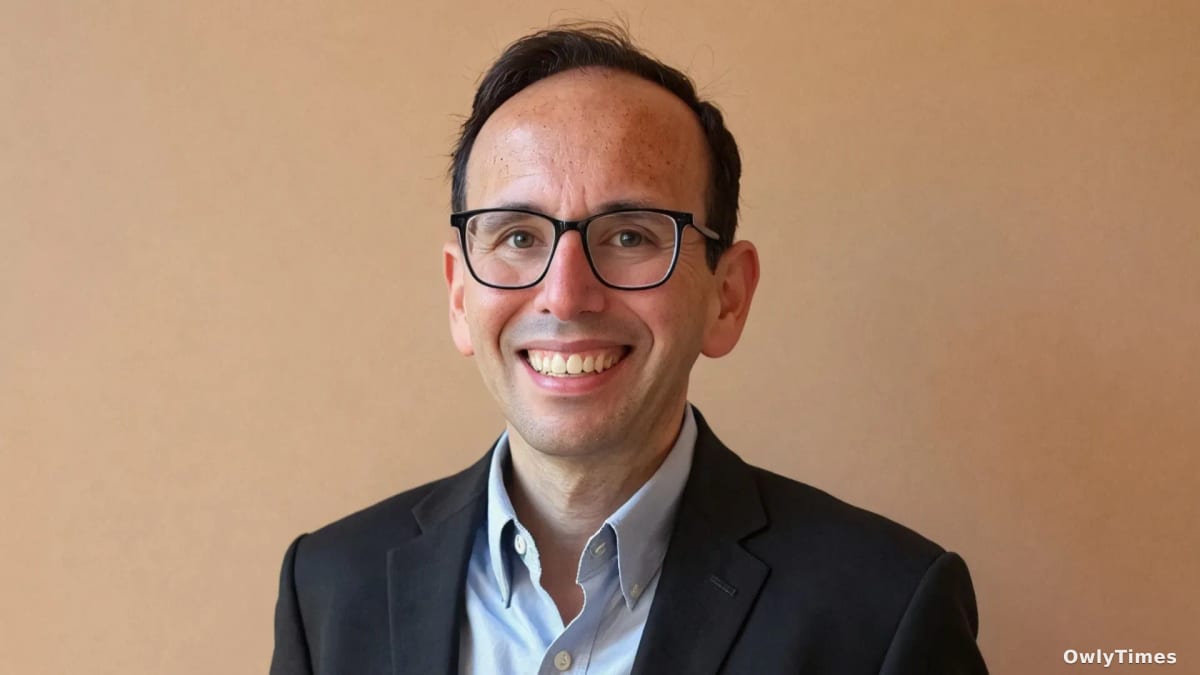

Beyond Budget Cuts: Harvard’s New Finance Dean Signals a Shift in Priorities
The appointment of Warren Petrofsky as Dean of Administration and Finance at Harvard’s Faculty of Arts and Sciences (FAS) isn’t simply filling a vacancy; it’s a deliberate signal about how the university intends to navigate a period of profound financial strain and evolving research landscapes. While headlines focus on the $350 million structural deficit facing the FAS, the selection of Petrofsky – a career administrator steeped in the complexities of large Arts and Sciences institutions – suggests Harvard is prioritizing internal operational overhaul alongside, and perhaps even before, aggressive cost-cutting measures. This isn’t about finding efficiencies to soften the blow of cuts; it’s about fundamentally reshaping how the FAS functions to ensure long-term sustainability, a strategy that demands a different skillset than simply trimming budgets.
The urgency of this appointment is undeniable. The position has been unfilled since Scott A. Jordan’s departure for Trinity College last summer, leaving a critical leadership gap as Hopi Hoekstra, Edgerley Family Dean of the FAS, has repeatedly cautioned faculty about “impending cuts and difficult choices.” However, the language used to introduce Petrofsky – emphasizing his experience in “significant administrative transformation” and “modernizing business and data systems” – paints a picture of proactive restructuring, not reactive damage control. Hoekstra’s email to FAS faculty explicitly states the role is “central to the work ahead,” highlighting the importance of “disciplined financial stewardship” coupled with a “reimagined administrative model.” This isn’t merely about balancing the books; it’s about building a more resilient and adaptable administrative infrastructure.
Petrofsky’s track record at Cornell’s College of Arts and Sciences provides crucial context. His responsibilities there – redesigning administrative services, bolstering research support, and modernizing data systems – mirror the challenges he’ll face at Harvard. This isn’t a scientist brought in to manage finances, or a financier unfamiliar with the nuances of academic research. He’s an administrator who has demonstrably tackled similar problems within a comparable institutional structure. The steering committee work updating Cornell’s financial and administrative systems is particularly noteworthy; large-scale operational overhauls are notoriously difficult to execute, requiring not just technical expertise but also deft political maneuvering and stakeholder buy-in. The fact that Cornell entrusted him with such a project speaks to his capabilities.
Source material: harvardmagazine.com.
It’s important to clarify what this appointment doesn’t mean. Reports haven’t indicated a reversal of the projected deficit or a sudden influx of funding. The shadow of the Trump administration’s impact on federal research funding – a concern Hoekstra explicitly raised – remains a significant threat. Petrofsky’s arrival won’t magically solve these external pressures. Instead, his mandate appears to be maximizing the efficiency and effectiveness of existing resources, preparing the FAS to weather potential funding instability. This is a long-term play, focused on internal capacity building rather than short-term fixes. The $350 million deficit isn’t disappearing, but Petrofsky’s role is to ensure the FAS can operate effectively with that constraint.
Limitations to Consider: Decentralization and Harvard’s Unique Culture
Despite the promising alignment between Petrofsky’s experience and Harvard’s needs, several limitations warrant consideration. Hoekstra’s email specifically highlights his success in “complex, decentralized Arts and Sciences environments.” However, Harvard’s decentralized structure is arguably more entrenched and historically resistant to centralized control than Cornell’s. Successfully implementing a “reimagined administrative model” will require navigating a complex web of departmental autonomy and faculty traditions. Furthermore, Harvard’s culture, with its emphasis on prestige and individual faculty achievement, may present unique challenges to collaborative, system-wide changes. What worked at Cornell may not translate directly to Cambridge.
Looking ahead, the crucial question isn’t whether Petrofsky can identify areas for improvement – it’s whether he can successfully implement those changes in the face of potential resistance. The next six months, as he begins his role on April 20th, will be critical. Watch for concrete proposals regarding administrative streamlining, data system integration, and research support enhancements. More importantly, observe how these proposals are received by faculty and department heads. The true measure of Petrofsky’s success won’t be his initial plans, but his ability to build consensus and navigate the inherent complexities of Harvard’s academic ecosystem. Will he prioritize transparency and collaboration, or will the restructuring process be perceived as top-down and disruptive? The answer will determine whether this appointment truly signals a new era of financial stability and operational efficiency for the FAS, or simply another layer of administrative complexity.