
Beyond Optimism: Why Global Health’s Focus is Shifting to Practical Resilience
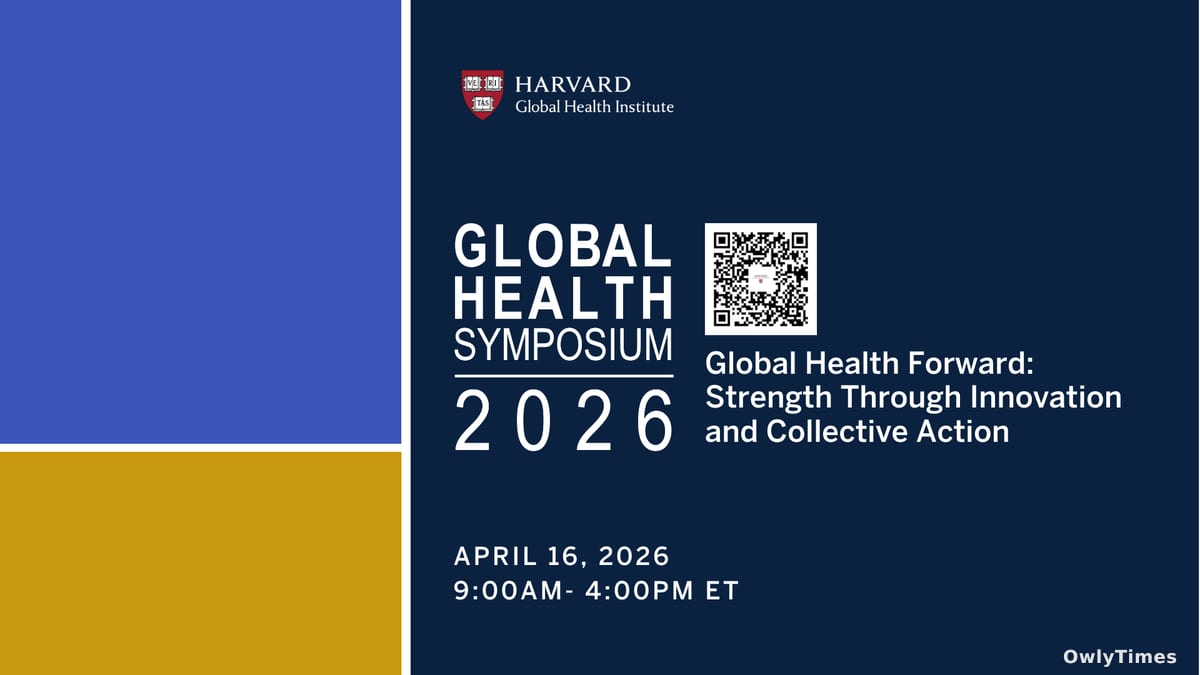
The annual cycle of global health conferences often feels dominated by aspirational goals – eradicating diseases, achieving universal health coverage, building back better. But the announcement of the Harvard Global Health Institute’s (HGHI) fourth annual Global Health Symposium, set for April 16th, signals a subtle but crucial shift in focus. This year’s theme, “Global Health Forward: Strength Through Innovation and Collective Action,” isn’t simply about what we want to achieve, but how we’ll navigate the increasingly complex realities that threaten to undermine even the most well-intentioned efforts. It’s a recognition that the era of easily mobilized resources and broad international consensus may be waning, demanding a more pragmatic approach to global health security.
This piece references the news.harvard.edu report.
The symposium’s timing is particularly noteworthy. While HGHI has held these events annually, the 2026 iteration arrives amidst a confluence of destabilizing factors. Geopolitical tensions, already heightened, are diverting attention and funding from long-term health initiatives. Simultaneously, many nations are grappling with economic constraints, forcing difficult choices about resource allocation. These aren’t hypothetical threats; the World Health Organization reported in late 2023 a significant funding gap for essential health programs, directly impacting disease surveillance and outbreak response capabilities. The symposium isn’t occurring despite these challenges, but because of them. The program, livestreamed via YouTube and already attracting over 900 virtual participants, aims to move beyond identifying problems to exploring actionable strategies for building resilient systems.
A central figure framing this conversation will be Sania Nishtar, CEO of Gavi, the Vaccine Alliance. Her keynote address is particularly significant given Gavi’s central role in vaccine equity – a goal that, despite considerable progress, remains unevenly distributed globally. While headlines often celebrate increased vaccine access, the reality is far more nuanced. Data from UNICEF shows that vaccine coverage rates in low-income countries have stagnated since 2019, and in some cases, declined, leaving millions vulnerable to preventable diseases. Nishtar’s experience navigating these complexities – balancing the demands of donor countries with the needs of recipient nations – will be crucial in setting the tone for the day’s discussions on ethical leadership and global cooperation.
The symposium’s strength lies in its diverse roster of speakers, including John-Arne Røttingen of the Wellcome Trust, Kalipso Chalkidou of the World Health Organization, and Alejandro Gaviria, former Colombian Minister of Health and Education. This isn’t a gathering of solely Western perspectives; the inclusion of voices from Africa and Latin America ensures a broader understanding of the challenges and potential solutions. Gaviria, for example, brings firsthand experience of navigating health crises within a resource-constrained setting, having led Colombia’s pandemic response. The emphasis on “transparent, evidence-informed decision-making” is a direct response to criticisms of opaque processes and politically motivated responses that hampered global health efforts during the COVID-19 pandemic. The symposium isn’t simply advocating for data; it’s advocating for a fundamental shift in how data is used to inform policy.
However, it’s important to acknowledge the limitations of even the most well-intentioned symposium. A single day of discussion, even with a diverse group of experts, cannot solve systemic problems. The symposium’s focus on “principles of solidarity and global justice” is laudable, but translating these principles into concrete action requires sustained political will and financial commitment – both of which are currently in short supply. Furthermore, the virtual format, while increasing accessibility, may limit the depth of engagement and the potential for spontaneous collaboration. The event runs from 9 a.m. to 4 p.m. Eastern Time, a schedule that may exclude participation from colleagues in certain time zones.
Looking ahead, the crucial question isn’t whether the symposium will generate innovative ideas – it almost certainly will. The real test will be whether these ideas can be translated into tangible changes in policy and practice. Specifically, will the discussions on regional collaboration lead to concrete agreements on cross-border disease surveillance and resource sharing? And, perhaps more importantly, will the emphasis on workforce development result in increased investment in training and retaining healthcare workers in low- and middle-income countries? The success of the “Global Health Forward” agenda hinges on whether the symposium can move beyond dialogue and catalyze action – and whether observers will track whether the commitments made on April 16th translate into measurable improvements in global health security over the next year.





