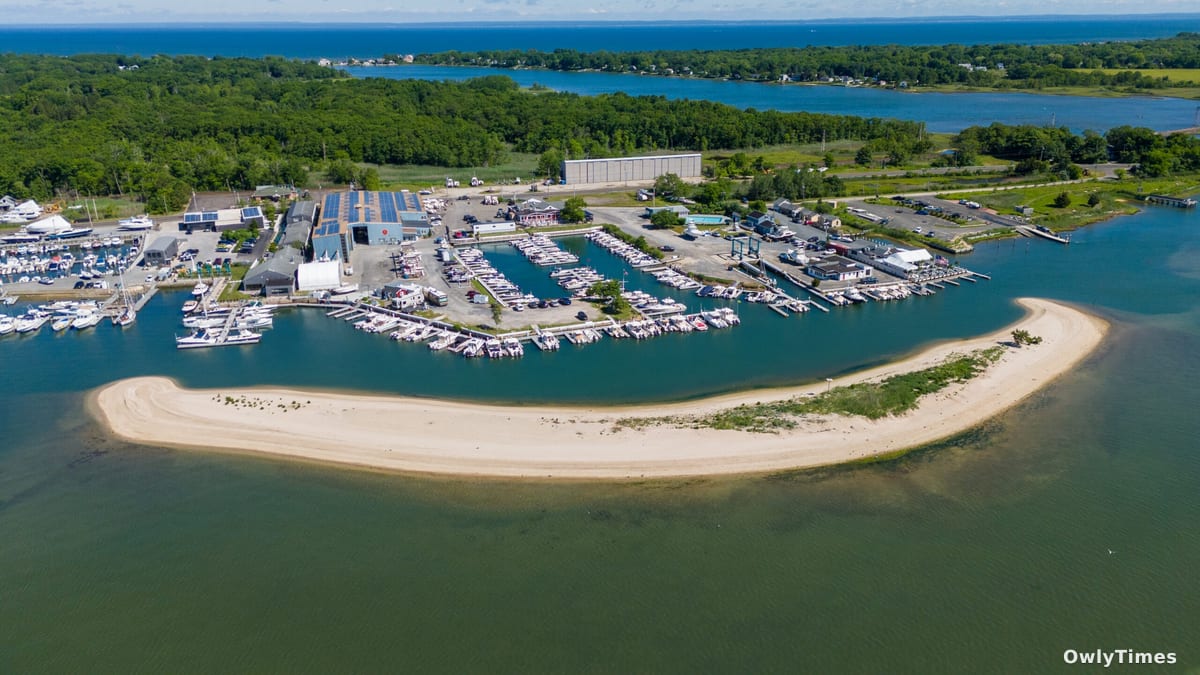

80 years of Lieblein family ownership at Port of Egypt Marine in Southold concluded this season, marking a shift in the North Fork’s economic landscape as the facility transitions to the portfolio of Hinckley, a luxury yacht manufacturer and service provider. While the acquisition of the Southold Bay site is framed as a strategic move to ensure long-term viability, it reflects a broader consolidation trend within the East Coast marine industry. Follow the money, and the narrative shifts from simple succession to the professionalization of local assets that once defined the regional character.
The Shift Toward Consolidated Ownership
The integration of Port of Egypt Marine into the Hinckley network is not an isolated transaction; it is a calculated expansion by a high-end corporate entity into a market previously dominated by independent operators. While Yvonne and Will Lieblein will remain at the helm, the institutional backing of a national yacht builder alters the facility's strategic mandate. In a sector where capital expenditures for marina infrastructure are rising, the move mirrors a wider pattern of smaller, family-run enterprises yielding to firms with deeper pockets and broader footprints.
This transition highlights a friction between legacy business models and the demands of a modern, more affluent consumer base. The local economy is increasingly being recalibrated to cater to visitors and second-home owners rather than the long-standing, year-round population. As the North Fork experiences this transformation, the market value of waterfront access and service capacity is rising, making it increasingly difficult for smaller, owner-operated businesses to compete with the efficiencies of larger, consolidated yacht service providers.
The Erosion of Local Institutional Knowledge
The disappearance of long-term independent businesses extends beyond the maritime sector, impacting the cultural and economic fabric of the region. The Candy Man in Orient, which ceased operations the day before Easter after nearly four decades, serves as a case study in the loss of local fixtures that functioned as community anchors. Similarly, the upcoming closure of Trimble’s of Corchaug Nursery on Route 25 in Cutchogue—after more than 35 years—illustrates the fragility of businesses that rely on the physical presence and labor of original owners.
These closures reveal a contradiction in the regional narrative: while the North Fork has long defined itself against the more manicured and expensive landscape of the South Fork, the economic reality is trending in that direction. When a business that has operated for over three decades shutters, it creates a vacuum that is rarely filled by a similar independent venture. Instead, the real estate and market share are often absorbed by entities with different operational priorities.
What This Means for Your Wallet
For the North Fork resident, these shifts represent a transition from a community-based economy to a service-based economy optimized for high-net-worth clients. As locally rooted establishments are replaced by corporate-backed service centers and upscale retail, the barrier to entry for both business owners and consumers continues to rise. Investors should monitor the remaining family-operated boatyards, such as Goldsmith’s and Albertson’s; the next reading of market consolidation in the marine services sector will indicate whether the North Fork maintains its independent character or completes its drift toward the high-cost model of its southern neighbor.