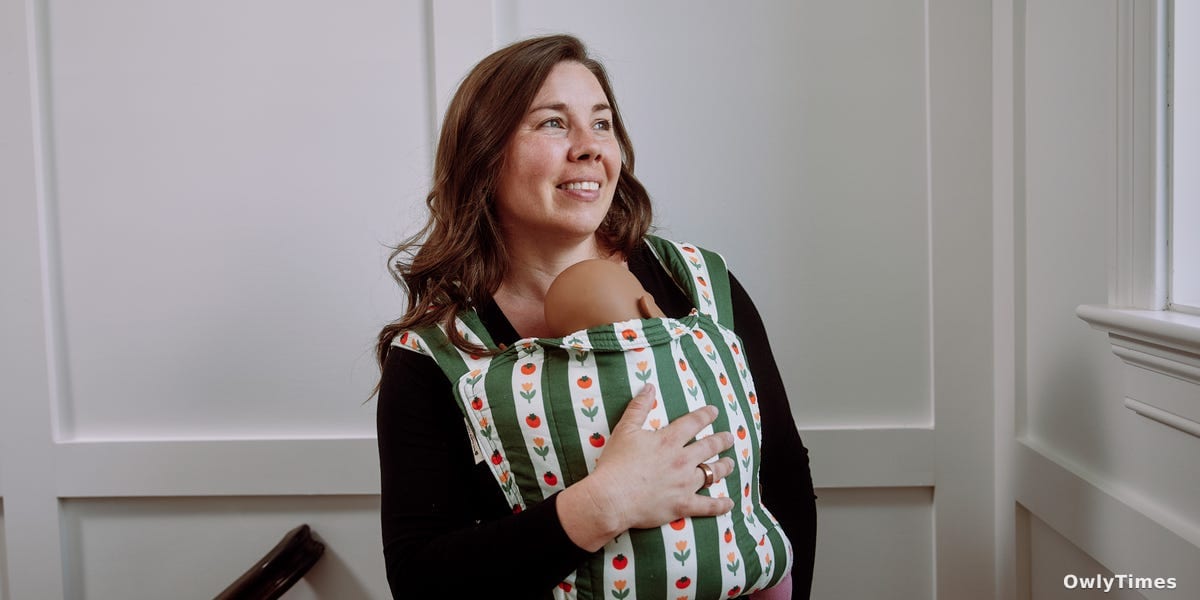

2,200% growth in revenue over a three-year window is the kind of figure that typically invites aggressive venture capital intervention, but for Skye Amundsen, cofounder and CEO of hope&plum, that trajectory was fueled by an entirely different currency: authentic community trust. Between 2022, when Amundsen exited her career in corporate law, and 2025, the baby carrier company transformed from a bootstrapped passion project into a seven-figure operation. This expansion is now necessitating a move into a 19,000-square-foot warehouse, a physical manifestation of a business model that prioritizes organic demand over speculative acquisition.
The Economics of Authenticity
Follow the money at hope&plum, and you find a stark rejection of traditional high-cost customer acquisition models. The company’s early growth was rooted in a 300-member online mom group, utilizing the high-trust, high-interaction nature of the babywearing community. By eschewing the "perfectly curated" aesthetic common in the industry, Amundsen and cofounder Mallory Mascoli leveraged personal storytelling—including posts about the realities of working motherhood and personal loss—to build a brand identity that converted followers into loyal customers.
This strategy produced tangible financial results. The company, which now employs over 30 people and supports two local manufacturing teams in Minneapolis, found that its most effective marketing was not transactional but relational. When the brand shifted its product strategy to address the specific pain points of larger-bodied parents—a demographic historically ignored by the broader baby carrier market—it didn't just capture a niche; it unlocked a massive, underserved segment of the market.
Scaling Through Supply-Chain Constraints
The tension between rapid demand and ethical, local production is the primary hurdle currently facing the leadership team. When the company launched its first buckle carrier in November 2023, the entire initial run sold out in two days. A subsequent launch of a newborn buckle carrier in February 2026 saw inventory exhausted in under 24 hours. While these sellouts confirm market fit, they also present a liquidity challenge: capital must be deployed for inventory long before the revenue is realized.
The financial burden of this growth is significant. Having bootstrapped the business since its 2018 inception—starting with a $7,000 investment from a corporate bonus—the company now finds itself in a cycle of constant reinvestment. The current move to the new warehouse includes a $500,000 capital expenditure for renovations. Unlike companies that rely on external equity, hope&plum’s survival depends on the precision of its demand forecasting. Because the company cannot "magically" produce more inventory without compromising its commitment to local, ethical manufacturing, the margin for error in production planning is razor-thin.
Managing the Velocity of Success
For the business owner, the current phase is characterized by a deliberate pivot from "explosive" to "steady" growth. After four years of doubling in size annually, Amundsen is now actively pulling back on projections to ensure the sustainability of the team and the infrastructure. The company’s waitlist—which forms following every sellout—serves as the primary indicator of demand. As the brand transitions into its new 19,000-square-foot facility, the next reading of these waitlist metrics will determine whether the current infrastructure can finally stabilize the gap between consumer demand and production capacity.





