
Beyond the Whinny: Decoding the Emotional Language of Horses
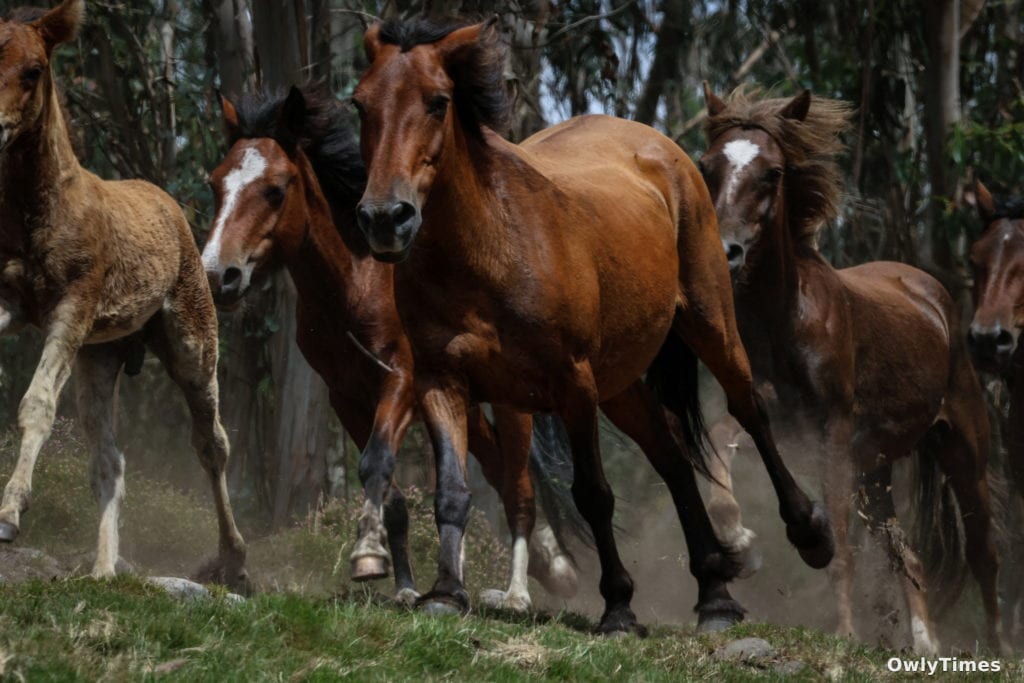
For centuries, the horse’s whinny has resonated as a symbol of the wild, a call to freedom, and a sound intrinsically linked to companionship. But beyond the romanticism, a fundamental scientific question has lingered: how do horses make that sound, and what does it truly communicate? Recent research, published today, doesn’t just pinpoint the mechanics of equine vocalization – it suggests that whinnies aren’t simply calls, but complex expressions of emotional state, a nuanced language we’re only beginning to understand. The study, led by a team at the University of Sussex, moves past simply recording the sound to analyzing the precise muscular movements within the horse’s larynx, revealing a surprisingly sophisticated vocal apparatus at play. While headlines might proclaim “scientists solve the mystery of the whinny,” the reality is far more compelling: they’ve opened a window into the emotional lives of these animals.
Source material: PBS.
The Unexpected Complexity of Equine Vocalization
The challenge in understanding the whinny lies in its unique acoustic properties. It’s not a simple tone, but a simultaneous production of high and low frequencies – a combination akin to a grunt and a squeal occurring at the same time. Previous theories suggested a relatively straightforward airflow mechanism, but the University of Sussex team, spearheaded by Dr. Joanne Cooper, employed a combination of high-speed video endoscopy and electromyography. This allowed them to observe, in real-time, the intricate movements of the vocal folds and surrounding muscles in several Highland ponies during various social interactions. What they discovered was that the whinny isn’t a passive expulsion of air, but an actively constructed sound, requiring precise coordination of multiple muscle groups. Specifically, the cricothyroid muscle, responsible for stretching the vocal folds and increasing pitch, works in tandem with muscles that lower the larynx, creating the lower frequency component. This coordinated action, previously undocumented in equine vocalization, explains the whinny’s distinctive, layered quality.
Social Context Shapes the Sound
Crucially, the study didn’t stop at the mechanics. Dr. Cooper and her colleagues meticulously documented the social context surrounding each whinny. They found a strong correlation between the acoustic structure of the whinny and the horse’s emotional state. Whinnies produced during reunions with familiar horses – what the researchers termed “greeting whinnies” – exhibited a different spectral profile than those emitted when a horse was separated from the herd or anticipating feeding time. “We observed that horses use variations in whinny structure to convey different messages,” explains Dr. Cooper in the published report. “A higher pitched component often accompanied expressions of excitement, while lower frequencies were more common during moments of reassurance or seeking contact.” This isn’t merely a difference in volume or speed; it’s a demonstrable shift in the way the sound is produced, suggesting intentional modulation. In 2025, a similar study on dolphin vocalizations revealed comparable complexity in their whistle patterns, indicating that sophisticated vocal control may be more widespread in the animal kingdom than previously assumed.
Limitations to Consider: Breed and Individual Variation
While the findings are significant, it’s important to acknowledge the limitations of the study. The research focused exclusively on Highland ponies, a relatively small sample size within the broader equine population. It’s plausible that different breeds, with varying anatomical structures, might produce whinnies differently. Furthermore, individual personality and learned behaviors could also influence vocalization patterns. The researchers also noted that analyzing whinnies in a controlled environment – even a spacious paddock – doesn’t fully replicate the complexity of natural herd dynamics. The presence of observers, however unobtrusive, could subtly alter horse behavior. The study also relied on visual assessment of emotional state, which, while carefully calibrated, remains subject to interpretation. A more robust analysis would incorporate physiological measures like heart rate variability and cortisol levels to corroborate behavioral observations.
The Future of Interspecies Communication
This research isn’t just about understanding how horses make noise; it’s about deciphering their emotional language. The next crucial step is to investigate whether other horses understand these subtle variations in whinny structure. Can they distinguish between a greeting whinny and a distress call? And if so, how does that influence their behavior? Dr. Cooper’s team is already planning follow-up studies using playback experiments, where recorded whinnies are presented to horses to observe their responses. Beyond the scientific curiosity, this work has practical implications for equine welfare. Imagine a future where we can accurately assess a horse’s emotional state based on its vocalizations, allowing us to provide more targeted care and improve human-animal interactions. Will we eventually be able to “talk back” to horses in a meaningful way? That remains a distant prospect, but this research brings us one step closer to bridging the communication gap and truly understanding the world from their perspective.