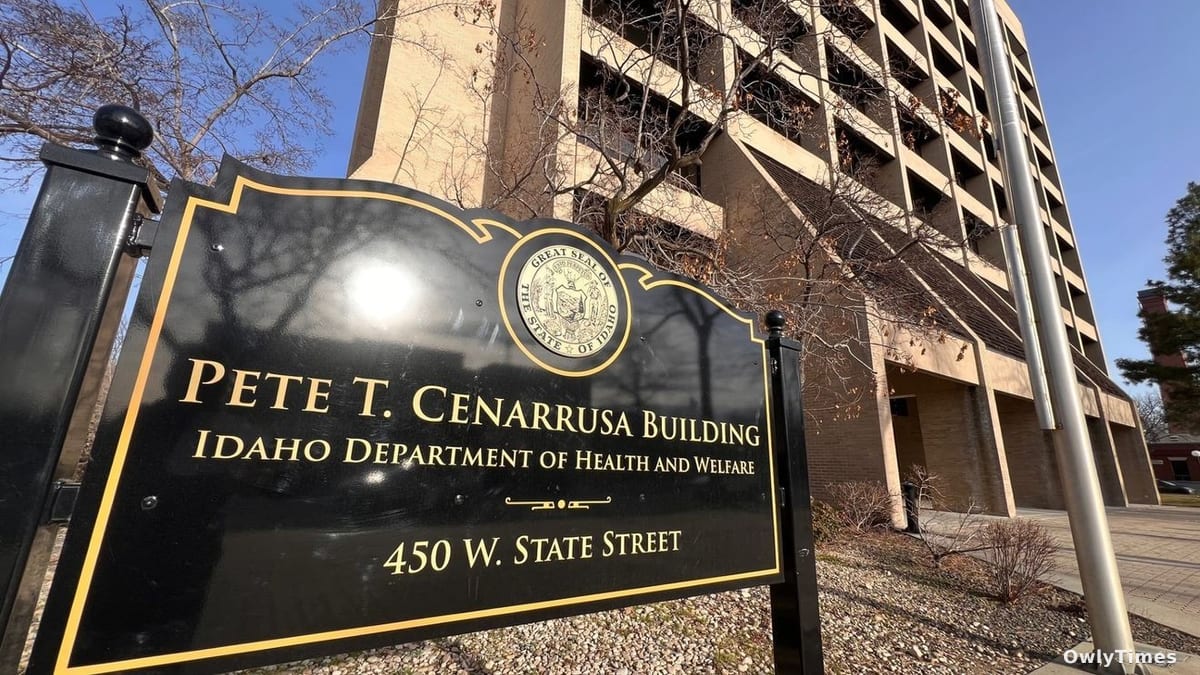

The Tightrope of Behavioral Healthcare Funding in Idaho
The question facing Idaho lawmakers isn’t simply whether to fund behavioral health programs, but how comprehensively. Last week’s vote by the Joint Finance-Appropriations Committee (JFAC) to restore funding for Assertive Community Treatment (ACT) and Peer Support Services, while seemingly a victory for advocates, reveals a deeper tension: a willingness to address immediate crises with one-time funds, coupled with an acknowledged reluctance to commit to long-term, sustainable solutions. The decision, reported on by the Idaho Capital Sun and culminating in a 16-2 vote, highlights a pragmatic, yet potentially shortsighted, approach to a growing public health need. It’s a situation where preventing future costs is weighed against the immediate budgetary concerns, and the voices of those on the front lines – law enforcement and healthcare providers – are attempting to quantify the true cost of inaction.
Drawn from idahonews.com.
The core of the issue stems from cuts made toward the end of 2025 to ACT and Peer Support Services. These programs are designed to provide intensive, community-based support for individuals with serious mental illness, aiming to prevent hospitalizations and involvement with the criminal justice system. What’s crucial to understand is that headlines proclaiming “funding restored” don’t tell the whole story. JFAC was presented with two distinct options. The first, and ultimately unsuccessful, proposal would have utilized the full $6 million from the Millennium Fund (derived from tobacco settlement funds), nearly $5.6 million from the Opioid Settlement Fund, and a $23 million federal match to restore funding for ACT, Peer Support and four additional behavioral health services: Skills Training and Development, Transportation costs, the Half Day Partial Hospital Program, and Early Serious Mental Illness. The second, and the one adopted, focuses solely on ACT and Peer Support, relying on $10.1 million in dedicated funds and $20.5 million in federal funding. This difference isn’t merely about dollars and cents; it’s about the scope of support available to individuals navigating a complex system.
Rep. Rod Furniss, R-Rigby, powerfully illustrated the potential consequences of the narrower approach, citing concerns raised by sheriffs across the state. He explained to the committee that without the supplemental programs, law enforcement lacks adequate support when responding to behavioral health crises, often resulting in individuals being taken to jail – a situation that, according to sheriffs’ estimates, could inflate property taxes statewide by around $150 million. This figure, representing a significant burden on taxpayers, underscores the economic argument for comprehensive care. Sen. Kevin Cook, R-Idaho Falls, echoed this sentiment, stating the additional programs are “intertwined” with ACT and Peer Support, and omitting them could ultimately prove more costly to the state in the long run. The committee’s decision, therefore, wasn’t simply a matter of choosing between programs, but of assessing the potential for escalating costs elsewhere in the system.
However, the celebratory tone surrounding the restored funding should be tempered by a critical understanding of its limitations. Rep. Josh Tanner, R-Eagle, JFAC co-chair, rightly cautioned against “disillusionment,” emphasizing that this funding is secured only through Fiscal Year 2027. This reliance on one-time infusions of dedicated and federal funds creates a precarious situation. While avoiding the use of general funds is politically appealing in the short term, it sets the stage for a potential crisis in Fiscal Year 2028, when the funding stream dries up and a general fund request – often met with greater resistance – becomes inevitable. The two dissenting votes, cast by Sen. Codi Galloway, R-Boise, and Rep. Furniss, likely reflect this concern about the long-term sustainability of the current approach.
Looking ahead, the success of these restored programs hinges on the Opioid Settlement Fund appropriating the necessary $5.8 million to cover related costs. If this funding doesn’t materialize, the amount allocated to ACT and Peer Support Services will be reduced to $4.155 million, further limiting the scope of services. More importantly, the state needs to begin a serious conversation about establishing a consistent, reliable funding mechanism for behavioral health. The current reliance on temporary settlements and federal matches is not a viable long-term strategy. The question now isn’t just whether Idaho can afford to fund these programs, but whether it can afford not to invest in a sustainable system of care that addresses the root causes of mental illness and reduces the burden on other state resources. Will Idaho lawmakers proactively address this looming funding cliff, or will they continue to react to crises with short-term fixes, potentially jeopardizing the progress made and leaving vulnerable populations at risk?





