
Is your new laptop already feeling…last year? Because the relentless march of CPU upgrades just hit a speed bump, and it’s bigger than most of us realize. The whispers coming from the silicon heart of the PC world – initially a murmur about AMD’s Zen 6 Ryzen delay – have solidified into a full-blown chorus: the next generation of processors from both AMD and Intel are now slated for an early 2027 arrival, pushing back timelines by potentially six months or more. The real story here isn't just about delayed product launches; it’s about a fundamental shift in how the PC industry operates, and what that means for your wallet and your expectations.
The Domino Effect of Silicon Shortages
The news, broken by leakers HXL on X (formerly Twitter) and Golden Pig Upgrade on Weibo, initially felt like a setback for enthusiasts. A CES 2027 reveal for both Intel’s “Nova Lake-S” Core Ultra Series 4 and AMD’s Zen 6? That’s a long wait. But dig a little deeper, and it becomes clear this isn’t a case of companies simply missing deadlines. It’s a direct consequence of ongoing silicon and DRAM shortages – a problem many hoped was receding – that are now actively lengthening product cycles across the entire PC ecosystem. Remember the chip shortages of 2020-2022? They didn’t just disappear; they morphed into a persistent, low-grade headache that’s now impacting product roadmaps. This isn’t a temporary blip; it’s a recalibration.
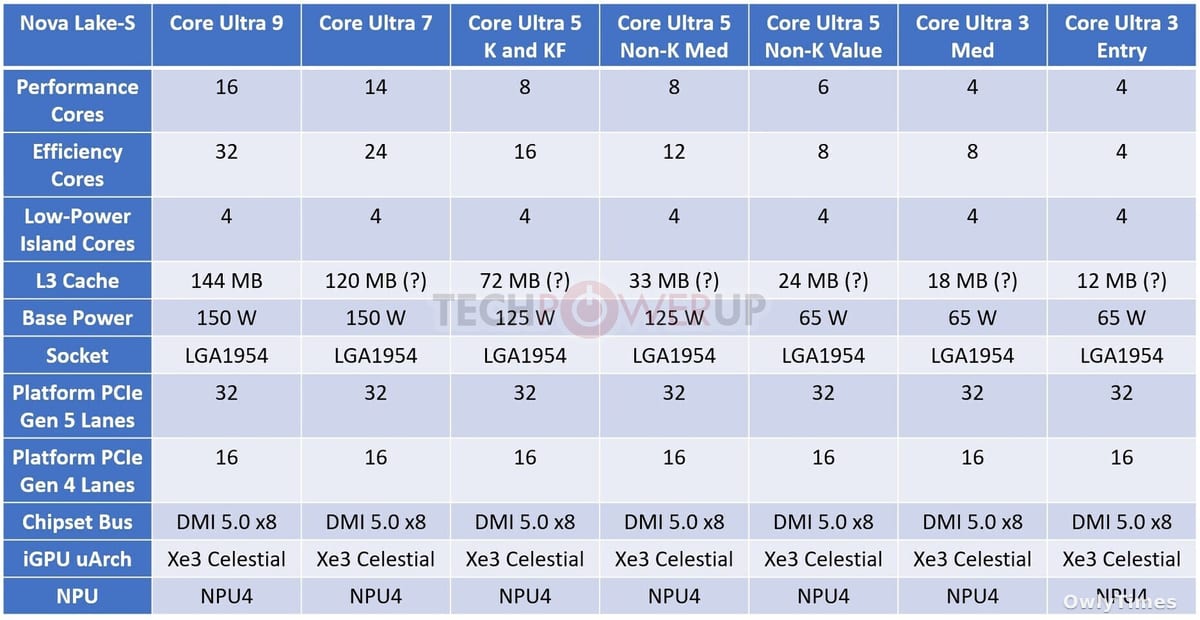
Drawn from techpowerup.com.
Beyond Core Counts: The Rise of the NPU
While core counts continue to climb – Intel’s Nova Lake-S is rumored to scale from 12 cores (4 P-cores, 4 E-cores, 4 LP-cores) to a frankly absurd 52 cores (16 P-cores, 32 E-cores, 4 LP-cores) – the focus is shifting. The leaks surrounding Nova Lake-S consistently highlight increased Neural Processing Unit (NPU) performance. What does that mean for you? It means more on-device AI processing. Think faster, more efficient image editing, real-time language translation, and improved video conferencing – all handled locally, without relying on the cloud. This isn’t about making your spreadsheets calculate faster; it’s about fundamentally changing how you use your computer. The industry is betting big on AI, and these NPUs are the engines driving that bet.
What This Means for the Average User
For years, the PC upgrade cycle has been driven by incremental improvements in CPU performance. A few more percentage points here, a slightly faster clock speed there. Most users barely noticed the difference. But the delay of Zen 6 and Nova Lake-S isn’t about incremental gains. It’s about a more substantial architectural shift, one that prioritizes AI capabilities alongside raw processing power. This delay effectively extends the lifespan of current-generation CPUs. If you bought a machine in the last 18-24 months, you’re likely fine for another year or two. The pressure to upgrade immediately is lessened, which, frankly, is good news for consumers. However, it also means the promised land of seamless, on-device AI experiences is pushed further out of reach.
The Manufacturing Bottleneck and Global Dependencies
The situation underscores a critical vulnerability in the tech supply chain. We’ve become reliant on a handful of manufacturers – primarily TSMC and Samsung – for leading-edge chip production. When those manufacturers face constraints, the entire industry feels the ripple effect. This isn’t just a technical problem; it’s a geopolitical one. The concentration of manufacturing power in a few regions creates inherent risks, as evidenced by recent tensions surrounding Taiwan. The current delays aren’t simply about a lack of materials; they’re about a complex web of dependencies and vulnerabilities that the industry is struggling to untangle.
Here’s what to watch for: by late 2024, pay close attention to capital expenditure announcements from TSMC and Samsung. Are they significantly increasing investment in new fabrication facilities? If not, prepare for a future of continued delays and potentially higher prices. The next 12 months will reveal whether this 2027 launch window is a realistic target, or just another optimistic projection destined to slip.