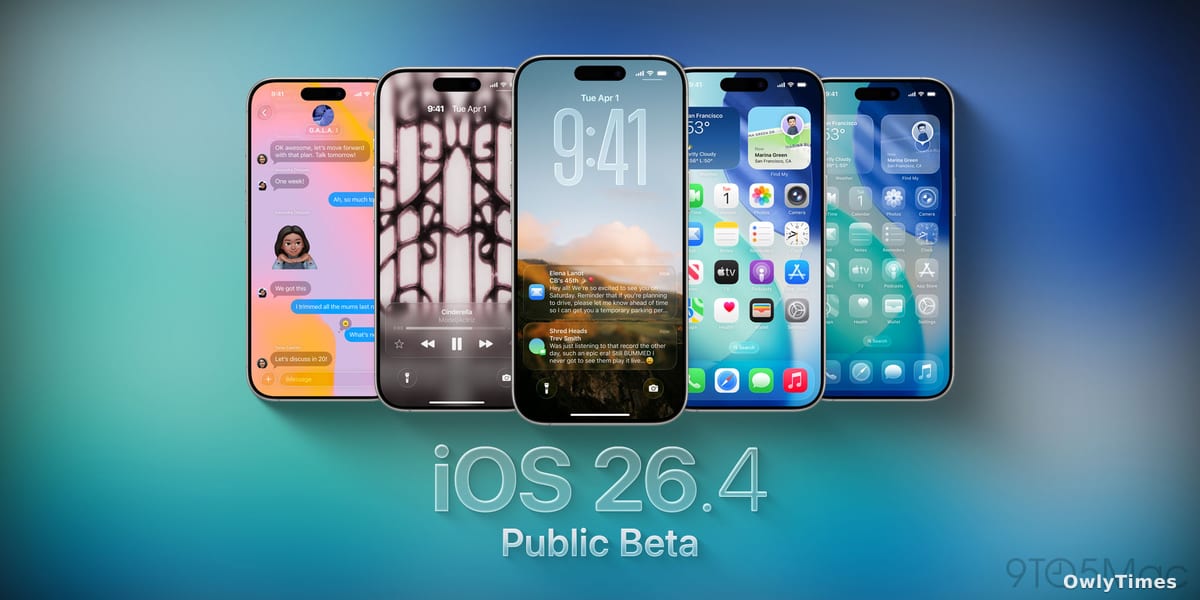

Is Apple actually innovating, or just really good at marketing incremental updates? That’s the question nagging at me as I dig through the first public beta of iOS 26.4. Everyone’s buzzing about the AI-powered features, but the real story here isn’t a revolutionary leap forward – it’s Apple quietly tightening its grip on your digital life, one “convenience” feature at a time. This isn’t about making your iPhone fundamentally better; it’s about making it harder to leave the Apple ecosystem.
The Music App Gets a Makeover (and a Dose of AI)
Let’s start with the shiny object: Apple Music. iOS 26.4 brings redesigned album and playlist views, which, admittedly, are a bit cleaner. But the headline grabber is “Playlist Playground,” an AI-powered feature that generates playlists based on your listening habits. Sounds fun, right? Except it’s also a clever way to further lock you into Apple’s streaming service. Think about it: the more you use Playlist Playground, the more data Apple collects about your tastes, the more personalized (and therefore sticky) the experience becomes. Spotify, Amazon Music, and others are playing catch-up, but Apple’s advantage isn’t just the algorithm; it’s the seamless integration across all your Apple devices. It’s a walled garden, and the flowers are looking increasingly appealing.
Data Tracking Creep: Hotspot Usage and Beyond
Beyond the music updates, Apple is adding per-device Personal Hotspot data usage reports. On the surface, this seems like a user-friendly feature – finally, a way to see who’s hogging your data. But consider the implications. Apple is now tracking exactly how you’re using your hotspot, and by extension, how others are using your data plan. This isn’t about transparency; it’s about building a more comprehensive profile of your network activity. And while Apple touts its privacy features, these granular data points are valuable commodities, even if they’re not directly sold to advertisers. Remember, data is the business model, even for companies that claim otherwise. The company released the first public beta version for iPhone users, allowing early access to these changes.
Based on the original 9to5mac.com report.
Security Features: A Necessary Baseline, Not a Selling Point
The automatic enabling of Stolen Device Detection is a welcome change, and frankly, should have been on by default from the start. It’s a basic security measure that leverages the iPhone’s location tracking and network connectivity to alert you if your device is compromised. Similarly, progress on CarPlay video support is incremental but important. These aren’t groundbreaking features; they’re table stakes in a world where smartphone security is paramount. Apple is finally catching up to expectations, not exceeding them. The fact that these features are being framed as exciting updates speaks volumes about the current state of mobile security.
RCS and the Great Messaging Divide
The testing of end-to-end encrypted RCS messaging is perhaps the most interesting development, but also the most fraught with political implications. For years, Apple has resisted adopting RCS, the modern messaging standard used by Android, effectively creating a green bubble/blue bubble divide that stigmatizes Android users. Now, with regulatory pressure mounting, Apple is finally considering a shift. But will it be a full embrace of RCS, or a proprietary, Apple-flavored version that maintains its control over the messaging experience? The answer to that question will determine whether this is a genuine attempt to improve interoperability or just another strategic move to maintain its walled garden.
The real question isn’t whether iOS 26.4 is a good update – it’s whether we’re becoming too complacent with incrementalism. We’re so focused on the new features that we’re overlooking the subtle ways Apple is consolidating its power. My prediction? Within the next 18 months, Apple will launch a subscription bundle that combines Apple Music, iCloud storage, and other services, further incentivizing users to stay within the ecosystem. The price will be “competitive,” but the real cost will be your data and your freedom of choice. Watch for that – it’s the next logical step in Apple’s long game.