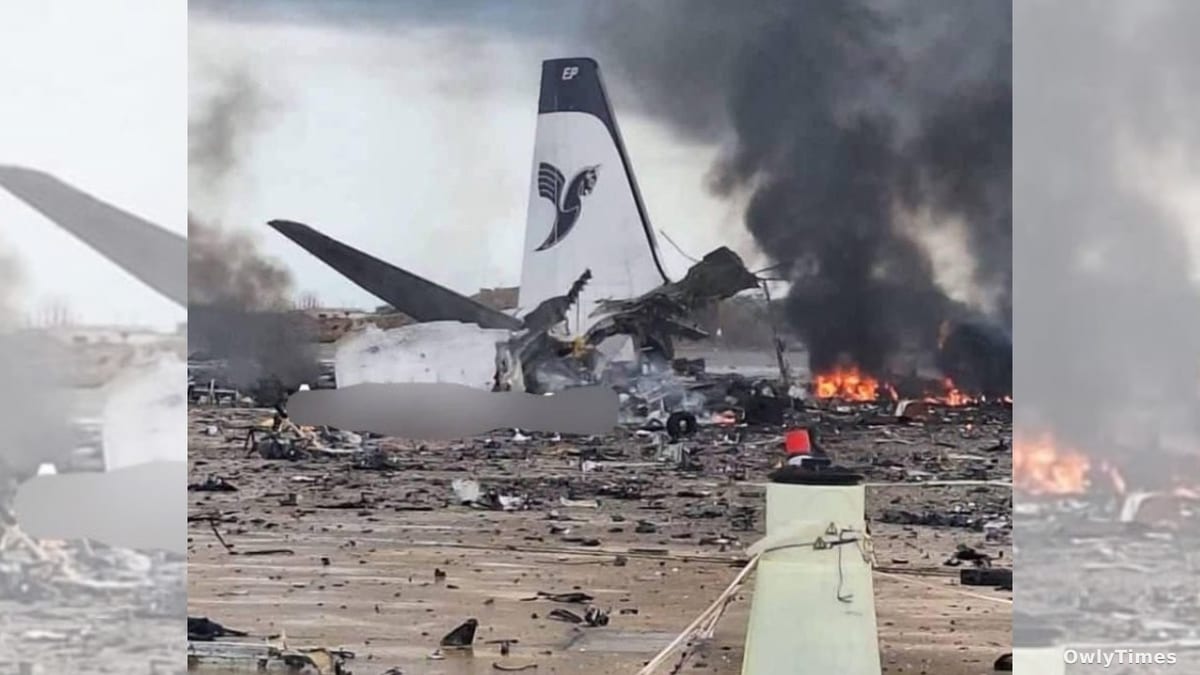

The targeting of civilian infrastructure – specifically, the destruction of an Iran Air passenger plane on the ground at Bushehr Airport – isn’t a sign of escalating conflict, it’s a calculated shift in the nature of the pressure being applied to Tehran. While initial strikes focused on military and intelligence assets, the deliberate risk to civilian aviation and proximity to the Bushehr Nuclear Power Plant signals a willingness to raise the stakes beyond conventional military objectives, forcing a reassessment of Iran’s cost-benefit analysis. This isn’t simply about degrading Iran’s capabilities; it’s about demonstrating the fragility of its systems and the potential for uncontrolled escalation.
According to reports from Iranian news sites, including Mehr News Agency, the aircraft was hit during an attack on Bushehr Airport on March 3, 2026. Photographs released by Mehr show smoke rising from the area, confirming the damage. The choice of Bushehr is particularly pointed. Located on the Persian Gulf, the city houses Iran’s only operational nuclear power plant, a facility already under intense international scrutiny. While the plant itself hasn’t been directly targeted – yet – the attack introduces a new level of risk. The proximity of military action to a nuclear facility isn’t unprecedented; during the 1980 Iran-Iraq War, both sides repeatedly struck at each other’s nuclear programs, but the current context, with a wider geopolitical landscape and more sophisticated weaponry, amplifies the danger exponentially.
Drawn from indiatoday.in.
Who benefits and who loses from this escalation? Israel, demonstrably, gains a stronger negotiating position and sends a clear message about its red lines regarding Iran’s regional activities. The United States, while publicly maintaining a degree of distance, likely tacitly approves of actions that constrain Iran without direct American military involvement. The immediate losers are the Iranian people, facing increased instability and the potential for economic disruption. Critically, Russia also finds itself in a precarious position. Rosatom chief Alexei Likhachev announced the halting of construction on the second and third units of the Bushehr plant, citing the ongoing military operations. This isn’t merely a safety precaution; it’s a significant financial setback for Russia, which has heavily invested in Iran’s nuclear program as a means of both economic leverage and geopolitical influence. The presence of 639 Russian personnel in Iran, with nearly 100 already evacuated, underscores the vulnerability of Russian assets and citizens.
The suspension of work at the Bushehr plant is a key indicator of the shifting dynamics. Likhachev’s statement that “it is difficult to predict the further course of events” is a carefully worded acknowledgement of the loss of control. The fact that Rosatom intends to maintain a presence, even without communication with Iranian nuclear leadership, suggests a commitment to protecting its investment, but also a recognition that the situation is rapidly deteriorating. This echoes the Soviet Union’s experience in Egypt during the 1967 Six-Day War, when Soviet personnel and infrastructure were caught in the crossfire, leading to a significant loss of influence in the region. The evacuation of Russian workers, initiated on Saturday, highlights the growing concern for their safety and the potential for further disruptions.
The attack on Mehrabad Airport, Tehran’s primary domestic flight hub, further broadens the scope of the conflict. The reported “American-Zionist terrorists” – as described by Iranian media – targeting civilian aviation infrastructure isn’t accidental. It’s a deliberate attempt to cripple Iran’s internal connectivity and project an image of vulnerability. This tactic mirrors strategies employed during the Balkan conflicts in the 1990s, where disrupting transportation networks was a key component of weakening the targeted state.
The political chess move to watch next isn’t whether Iran will retaliate – that’s almost certain. It’s how Iran will retaliate. Will it focus on proxy attacks through groups like Hezbollah and Hamas, attempting to avoid direct confrontation with Israel and the United States? Or will it escalate further, potentially targeting critical infrastructure in the region, risking a wider regional war? The answer will reveal whether Tehran perceives this as a contained pressure campaign or a prelude to a more comprehensive effort to dismantle its capabilities. The coming days will determine if this escalation remains a calculated risk, or spirals into a full-blown crisis.