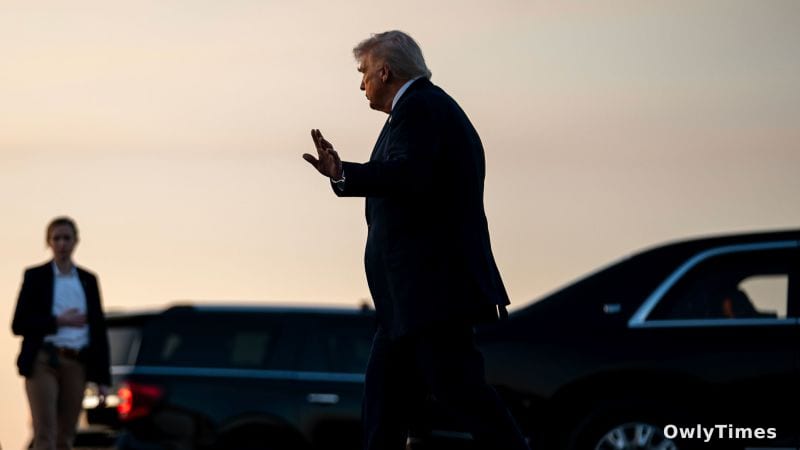

The current round of indirect negotiations between the United States and Iran, characterized by the exchange of “guiding principles” and a continued military buildup, isn’t about preventing war – it’s about buying time for a calculated escalation, or a strategically advantageous off-ramp. President Donald Trump isn’t seeking a simple return to the 2015 Joint Comprehensive Plan of Action (JCPOA); he’s leveraging the threat of military force to reshape the terms of engagement with Iran, and potentially, the regime itself. The willingness to engage in incremental diplomacy, facilitated by Steve Witkoff, Jared Kushner, and Omani intermediaries, is a pressure tactic, not a sign of genuine negotiation.
The immediate outcome – an agreement to continue talking after three-and-a-half hours – reveals the power dynamic at play. Who benefits and who loses from this prolonged ambiguity? Iran gains breathing room from potential military action, and a platform to potentially extract sanctions relief. The United States benefits from appearing to pursue a diplomatic solution while simultaneously tightening the noose through economic sanctions and military deployments, including the positioning of the USS Gerald R. Ford carrier strike group. The losers are regional stability and the credibility of diplomatic processes, which are increasingly viewed as tools of coercion rather than genuine compromise. Vice President JD Vance’s statement that Trump “reserves the ability to say when he thinks that diplomacy has reached its natural end” isn’t a commitment to peace, but a declaration of conditional patience.
This piece references the CNN report.
This situation echoes the pre-war maneuvering that preceded the 2003 invasion of Iraq. Then, as now, a narrative of imminent threat – in Iraq’s case, weapons of mass destruction – was used to justify a massive military buildup and a series of diplomatic initiatives designed to isolate the target regime. The key difference is that Trump, unlike the George W. Bush administration, appears less focused on outright regime change as an immediate objective, and more interested in maximizing leverage before making a decision. The fact that Trump openly discusses regime change as the “best thing that could happen” underscores this point – it’s a stated aspiration, not a defined strategy. The parallel isn’t about predicting an invasion, but recognizing the pattern of escalating pressure followed by a calculated decision point.
The sticking points in the negotiations – Iran’s nuclear program, ballistic missiles, and regional support for militant groups – are less about substantive disagreements and more about establishing negotiating leverage. While the US publicly prioritizes the nuclear file, as JD Vance stated, framing it as the most critical threat, the insistence on addressing Iran’s broader regional activities suggests a desire for a comprehensive deal that fundamentally alters Iran’s behavior. Iran’s offers to dilute enriched uranium or temporarily suspend enrichment, coupled with the possibility of shipping material to Russia, are concessions designed to buy time and demonstrate a willingness to negotiate, but fall short of Trump’s stated demand of “no enrichment.” This divergence highlights the core tension: Iran seeks sanctions relief and security guarantees, while the US seeks to dismantle Iran’s regional influence and constrain its nuclear capabilities.
The economic pressure on Iran is a critical component of this strategy. Administration officials believe the “dire state of its economy, strangled by western sanctions” will force concessions. However, this calculation overlooks the potential for Iran to double down on its defiance, particularly given the internal political dynamics and the influence of figures like Ayatollah Ali Khamenei, who has issued ominous threats against the United States. Amos Hochstein’s observation that the US is “trying to gain time to figure out” the consequences of potential military action underscores the lack of a clear post-conflict plan, a critical flaw that plagued the Iraq War. The deployment of military assets isn’t solely about preparing for war; it’s about creating a credible threat that compels Iran to negotiate on US terms.
The political chess move to watch next isn’t another round of talks in Geneva, but the timing of the USS Gerald R. Ford’s arrival in the Middle East. Will it coincide with a further escalation of tensions, a perceived Iranian provocation, or a sudden breakthrough in negotiations? The carrier’s presence isn’t merely a show of force; it’s a deadline, a visible manifestation of Trump’s patience wearing thin. The question isn’t whether Trump wants a deal, but whether he believes he can extract enough concessions from Iran to justify a diplomatic solution, or if he’ll conclude that military action is the only way to achieve his objectives.





