
The Calculus of Confrontation: Decades of Accusation as Justification
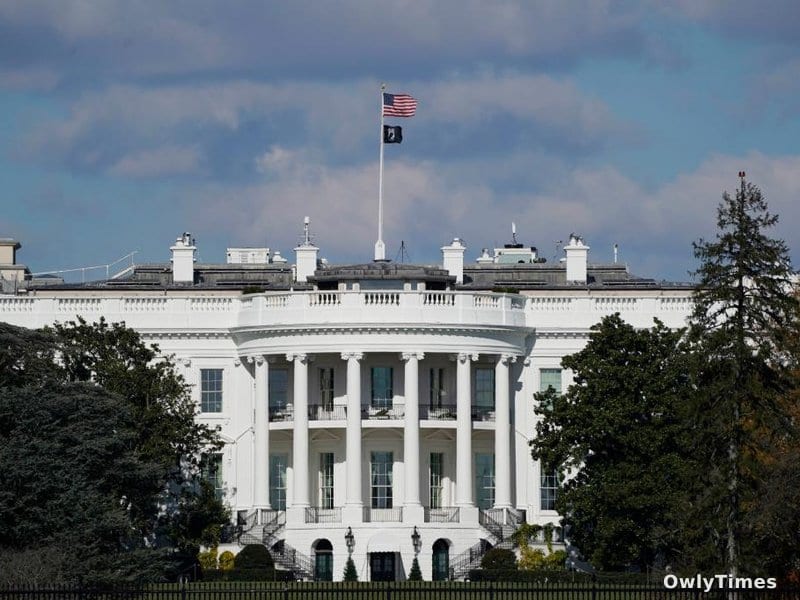
The White House’s forceful articulation of Iran as “the world’s leading state sponsor of terrorism” isn’t a spontaneous escalation, but the culmination of a strategic narrative decades in the making. The March 3rd statement, detailing a litany of attacks linked to Iran and its proxies, functions not merely as condemnation, but as a pre-emptive justification for potentially more aggressive action. The framing – that President Trump is finally doing what five decades of predecessors avoided – is a deliberate attempt to position any future military or economic pressure as a necessary correction, not a provocation. This isn’t about responding to the October 7th attacks by Hamas or the recent deaths of US service members in Jordan in isolation; it’s about presenting a historical continuum of Iranian hostility requiring a decisive, and potentially escalatory, response.
Quantifying the Cost: American Casualties and the Narrative of Threat
The White House’s claim that “more Americans have been killed by Iran than any other terrorist regime on Earth” is a potent, if difficult to definitively verify, statement. The provided record – 603 US troops killed in Iraq between 2003 and 2011 alone, representing “roughly one in every six American combat fatalities” – establishes a significant baseline. This figure, however, is presented without comparison to casualties inflicted by other state sponsors of terrorism, or even a breakdown of direct Iranian action versus attacks by groups they allegedly support. The inclusion of the 241 US Marines killed in Beirut in 1983, and the 1996 Khobar Towers bombing (19 US airmen killed, nearly 500 wounded) serves to broaden the scope of the accusation, extending the timeline of alleged Iranian aggression back to the early years of the Islamic Republic. The recent figures – three US service members killed in Jordan in January 2024, and over 180 wounded since October 2023 – are comparatively small, but strategically positioned to demonstrate a continuing, and escalating, threat.
See the original ianslive.in story for the full account.
Historical Echoes: Hostage Crises and the Limits of Deterrence
The invocation of the 1979 US Embassy hostage crisis in Tehran – a 444-day standoff involving 66 Americans – is particularly revealing. This event, deeply ingrained in American political memory, represents a foundational rupture in US-Iran relations. Referencing it isn’t simply about recounting past grievances; it’s about tapping into a pre-existing reservoir of anti-Iran sentiment. The pattern of attacks outlined by the White House – bombings, hijackings, kidnappings throughout the 1980s and 90s – mirrors the tactics employed by state-sponsored terrorism during the Cold War, specifically those attributed to Soviet-backed groups. This historical parallel subtly positions Iran as a contemporary analogue to the Soviet Union, justifying a similar strategy of containment and, potentially, rollback. The consistent failure of deterrence over these decades – evidenced by the continued attacks despite various sanctions and diplomatic efforts – is the unspoken argument underpinning the current hardline stance.
The Levinson Case and the Shadow of Unacknowledged Conflict
The mention of Robert Levinson, the former FBI agent who disappeared in Iran in 2007 and is believed to have died in Iranian custody, introduces a particularly sensitive dimension. Unlike battlefield casualties, Levinson’s case represents a direct, unacknowledged act of hostility against the US government itself. The lack of transparency surrounding his disappearance and presumed death fuels accusations of Iranian bad faith and underscores the perceived futility of traditional diplomatic channels. This case, alongside the recent indictment of an Iranian national allegedly plotting to assassinate President Trump, serves to personalize the threat, moving beyond abstract statistics to highlight the direct targeting of American citizens and leaders. This framing is designed to galvanize public support for a more assertive policy.
Beyond Rhetoric: The Next Move in the Persian Gulf
The White House’s statement is a clear signaling exercise. The explicit articulation of goals – “destroying Iran’s missiles, annihilating their navy, and ensuring they can never obtain a nuclear weapon” – goes beyond mere condemnation and outlines potential objectives for military action. However, the immediate political chess move to watch isn’t a military strike, but the reaction within the US Congress. Will lawmakers, particularly those wary of another protracted conflict in the Middle East, support further escalation? The Biden administration, while maintaining a firm stance on Iran’s regional activities, has prioritized a return to the JCPOA nuclear deal – a path explicitly rejected by the Trump administration’s rhetoric. The question now is whether the White House can successfully leverage this decades-long narrative of Iranian aggression to build a bipartisan consensus for a more confrontational policy, or if internal divisions will constrain its options.





