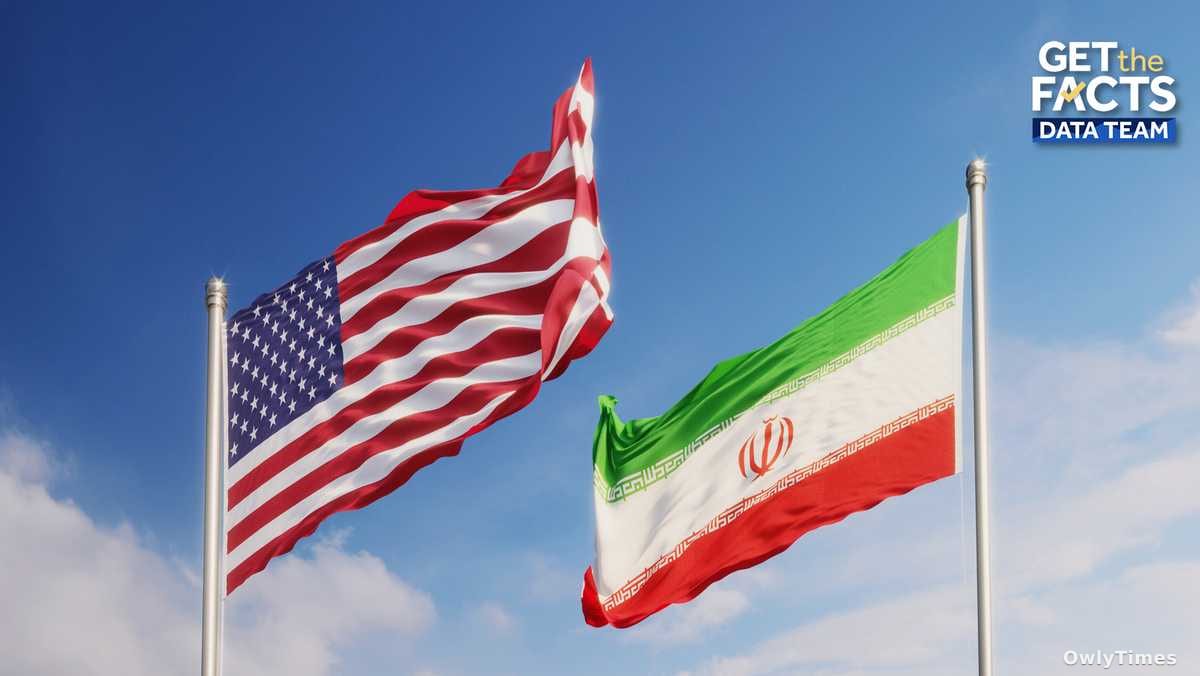

Is anyone actually paying attention to the map, or are we all just letting President Trump’s pronouncements of “victory” lull us into a false sense of security? The narrative coming out of the White House – that Operation Epic Fury is a resounding success – is actively obscuring a far more dangerous reality: this isn’t a localized conflict, it’s a tectonic shift in Middle Eastern alliances, and the fault lines are running through countries most Americans have never considered. The real story here isn't whether Trump can declare victory in four to six weeks – it’s how this war is forcing nations to pick sides, and the ripple effects that will have on global stability for decades to come.
The situation escalated further Friday with the downing of an American F-15E fighter jet over Iran, a stark reminder that this isn’t a video game. But even before that, the conflict was already a complex web of pre-existing relationships, now strained to the breaking point. A recent analysis by the Get the Facts Data Team of 19 Middle Eastern nations reveals a region far from neatly divided into “Team US” and “Team Iran.” While Israel remains Washington’s closest ally, receiving roughly 14% of its annual defense budget – a figure that’s actually increased with bypassed congressional review – the picture quickly becomes murky. Designating countries as “major non-NATO allies” like Bahrain, Egypt, Jordan, Kuwait, Qatar, and Saudi Arabia sounds reassuring, but it doesn’t guarantee unwavering support, especially when those same nations are actively being targeted by Iranian missiles and drones.
Source material: wyff4.com.
Consider Turkey, a NATO member. The US government describes its relationship with Ankara as “between close cooperation and notable division.” That’s diplomatic speak for “we’re constantly at odds.” And Turkey isn’t just hedging its bets; missiles have been intercepted in Turkish airspace during this conflict, demonstrating its vulnerability and forcing a delicate balancing act. The same applies to Pakistan, a major non-NATO ally attempting neutrality while simultaneously engaging both sides diplomatically. This isn’t about moral ambiguity; it’s about national self-interest. These countries are navigating a geopolitical minefield, and their primary concern isn’t upholding American foreign policy, it’s protecting their own borders and economies.
The White House insists Trump is “100% crystal clear” about avoiding “boots on the ground,” but that assurance rings hollow when you consider the escalating involvement of proxy forces. Iran’s reliance on militias in Iraq – who have already launched attacks on US bases – and the complex situation in Syria, where Iranian influence is substantial despite cautious attempts to rebuild relations with the US, demonstrate that this conflict is already being fought by other people’s soldiers. The US can claim it isn’t directly involved, but that doesn’t change the fact that American interests are being directly threatened by actors funded and armed by Tehran. The dismissal of a 15-point ceasefire deal by Iran, coupled with continued attacks, isn’t a sign of weakness, it’s a calculated move to test the limits of American resolve. Trump’s claim that Iran “wants to make a deal so badly” feels less like insight and more like a projection of his own negotiating tactics.
Even Turkmenistan’s official neutrality is a strategic choice, not a moral one. It’s a recognition that getting caught between these two powers is a losing game. The most unsettling aspect of this situation is the sheer number of countries being pulled into the orbit of this conflict, not as active participants, but as potential collateral damage. The US isn’t simply fighting a war against Iran; it’s fighting to maintain a regional order that’s rapidly unraveling.
Here’s what to watch for: over the next six weeks, don’t focus on Trump’s declarations of victory. Instead, pay attention to the economic pressure being applied to countries like Lebanon, where Hezbollah’s influence is destabilizing, and Yemen, already ravaged by civil war. If the US fails to secure a lasting ceasefire, the next phase of this conflict won’t be about military strikes, it will be about economic coercion – and the ordinary citizens of these nations will be the ones who pay the price. The question isn’t if this war will have unintended consequences, but when those consequences will begin to reshape the geopolitical landscape in ways we can’t yet imagine.





