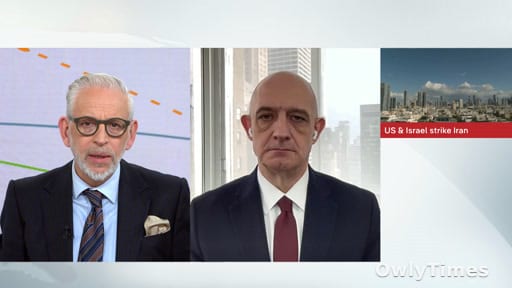

The Illusion of Regime Change: Why Targeting Individuals in Iran Will Likely Fail
The current discourse surrounding potential disruptions to the Iranian regime rests on a fundamental miscalculation: the assumption of a centralized power structure vulnerable to decapitation strikes. As Hans-Jakob Schindler, a leading terrorism expert, points out, Iran isn’t a traditional hierarchy with a single point of failure. It’s a “multipolar system,” a network of interwoven power centers designed for resilience, and the strategic implications of this reality are being largely ignored in Washington and European capitals. The focus on eliminating key figures, while emotionally satisfying to proponents of regime change, is likely to be strategically ineffective, and may even strengthen the very forces it intends to dismantle. This isn’t a novel situation; history is replete with examples of attempting to dismantle complex political systems through targeted assassinations, with consistently limited success.
Reporting from dw.com informs this analysis.
A System Designed for Succession, Not Collapse
Schindler’s assessment, delivered on February 28, 2026, isn’t simply a pessimistic outlook. It’s a diagnosis rooted in the specific architecture of Iranian politics. He argues that even removing a significant leader won’t trigger the collapse many anticipate, because the system is built to absorb such losses. This isn’t a matter of blind faith in the regime’s ideology, but a cold calculation of power dynamics. The interconnectedness of these power centers – encompassing the Islamic Revolutionary Guard Corps (IRGC), the religious establishment, and various political factions – means that functions can be readily transferred, and rivalries can be temporarily suspended in the face of external pressure. This mirrors, to a degree, the Soviet Politburo in the decades following Stalin’s death; while individual leaders rose and fell, the underlying structure of power remained remarkably stable, capable of navigating internal conflicts and external threats. The difference, of course, is that the Soviet system ultimately succumbed to economic pressures and internal dissent, factors currently less pronounced in Iran.
Who Benefits and Who Loses from a Failed Intervention?
The implications of this miscalculation are significant. Who benefits from pursuing a strategy predicated on regime change through targeted killings? Primarily, hardliners within the US and allied nations who believe a forceful approach is the only viable option. They gain political capital by appearing resolute, even if their actions are ultimately counterproductive. Conversely, who loses? Regional stability is immediately jeopardized. A destabilized Iran, even one not fully collapsing, could trigger proxy conflicts across the Middle East, drawing in regional powers like Saudi Arabia and Israel. More subtly, the credibility of Western intelligence agencies would be damaged, having demonstrably failed to understand the internal workings of the Iranian state. Perhaps most crucially, the Iranian population – the stated beneficiaries of regime change – would likely bear the brunt of the ensuing chaos, lacking the means to effectively capitalize on any power vacuum. Schindler’s pointed observation that the opposition remains “unarmed” underscores this vulnerability.
The Absence of a Viable Alternative
The lack of a credible, organized opposition is a critical factor often downplayed in calls for regime change. While discontent undoubtedly exists within Iran, translating that discontent into a cohesive political force capable of governing is a monumental task. The regime has systematically suppressed dissent for decades, dismantling potential opposition networks and cultivating a climate of fear. This isn’t merely a matter of authoritarian control; it’s a deliberate strategy to prevent the emergence of a viable alternative. The historical parallel here is Egypt under Hosni Mubarak. Years of suppressed opposition meant that when the Arab Spring uprisings reached Cairo in 2011, there was no ready-made leadership to fill the void, leading to a period of instability and ultimately, the rise of a new authoritarian regime. The situation in Iran is arguably more complex, given the deeply entrenched nature of the existing power structures.
The Next Chess Move: Sanctions and Internal Fracture
The political chess move to watch isn’t a dramatic military intervention, but a subtle shift in strategy towards maximizing internal fractures within the Iranian system. Rather than focusing solely on eliminating individuals, Western powers should prioritize targeted sanctions designed to exacerbate existing economic tensions and deepen rivalries between the IRGC, the religious establishment, and other factions. This approach, while slower and less immediately gratifying, has a higher probability of success. The goal isn’t to trigger a sudden collapse, but to gradually erode the regime’s legitimacy and create opportunities for internal reform. The question now is whether policymakers will heed Schindler’s warning about the inherent resilience of the Iranian system, or continue to pursue a strategy based on a flawed understanding of its internal dynamics. The answer will determine not only the fate of Iran, but the stability of the entire region.





