
The Calculus of Civilian Harm: Escalation and the Limits of Targeted Strikes
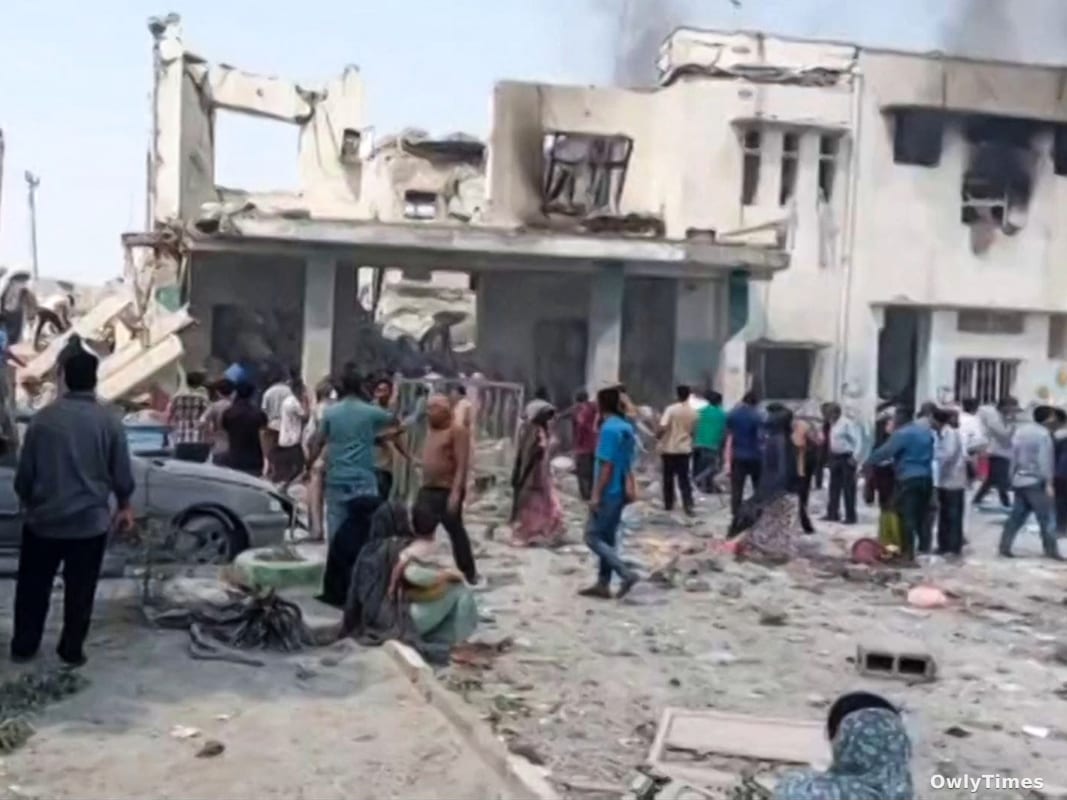
The reported Israeli strike on the Shajareh Tayyebeh girls’ elementary school in Minab, Iran, resulting in 108 deaths and 63 injuries, isn’t a tragic anomaly – it’s a calculated risk embedded within the current US-Israeli offensive. The immediate strategic objective isn’t simply to degrade Iranian military capabilities, but to raise the costs of retaliation to a level that deters a wider regional conflict. This attack, and the reported second strike near Tehran resulting in student deaths, are designed to demonstrate resolve and signal a willingness to inflict pain, even if that pain falls on non-combatants. The silence from both the US and Israel regarding these specific claims is itself a statement, prioritizing operational tempo over immediate public defense.
Who Benefits and Who Loses in the Narrative War
The immediate losers are, unequivocally, the families and communities impacted by these strikes. Beyond the human cost, however, the Iranian government stands to benefit politically, both domestically and internationally. Foreign Minister Abbas Araghchi’s swift condemnation and sharing of images on X, coupled with Esmaeil Baghaei’s call for UN Security Council action, are not simply expressions of grief. They are carefully crafted appeals to global public opinion, framing the conflict as an unprovoked assault on Iranian civilians. This narrative directly challenges the US and Israel’s stated intention of targeting only military assets, as highlighted by Al Jazeera’s Mohammed Vall. The Iranian government can now leverage these casualties to bolster support from regional allies and potentially galvanize international pressure for a ceasefire – or, at minimum, constrain the scope of further attacks.
Source material: Al Jazeera.
The US, meanwhile, finds itself in a precarious position. President Trump’s prior promises of aid to the Iranian people now ring hollow in the face of mounting civilian casualties. This contradiction undermines the administration’s broader messaging and provides ammunition for critics who argue that the offensive is driven by political considerations rather than genuine security concerns. The benefit for the US lies in demonstrating a firm line against Iran, a message aimed at reassuring allies like Saudi Arabia and maintaining US credibility in the region. However, the cost of that demonstration is a significant erosion of soft power and a potential surge in anti-American sentiment.
Echoes of Past Conflicts: The Civilian Toll as a Strategic Variable
The heavy civilian toll echoes the 12-day war between the US and Iran in June 2025, where, according to Iran’s Ministry of Health and Medical Education, “thousands” were killed or injured and public infrastructure was damaged. This isn’t a new pattern. Throughout the decades-long US-Iran rivalry, civilian casualties have consistently served as a strategic variable. During the Iran-Iraq War (1980-1988), both sides deliberately targeted civilian infrastructure to break the enemy’s will. Similarly, the US-led intervention in Iraq in 2003 saw significant civilian casualties, which, while often unintended, were factored into the overall calculus of regime change. The current situation differs in that the US and Israel are operating with a stated commitment to precision strikes, yet the reality on the ground – as evidenced by the Minab school attack – suggests a far more ambiguous outcome. The question isn’t whether civilian casualties are avoidable, but whether they are acceptable within the parameters of the current strategy.
The UN Security Council and the Limits of International Intervention
Esmaeil Baghaei’s appeal to the UN Security Council is largely symbolic. Given the US’s veto power, any meaningful resolution condemning the attacks or imposing sanctions on the US and Israel is highly unlikely. The Security Council has repeatedly proven ineffective in addressing conflicts involving permanent members, and this situation is no exception. The real leverage lies in the potential for individual nations or blocs of nations to impose unilateral sanctions or diplomatic pressure. However, the deeply polarized geopolitical landscape makes such a coordinated response improbable. The European Union, for example, is divided on the issue, with some members prioritizing transatlantic relations with the US over concerns about civilian casualties in Iran.
The political chess move to watch next isn’t a military escalation, but rather the composition of the upcoming UN Security Council emergency session. Will the US attempt to deflect criticism by focusing on Iran’s regional activities, or will it offer a substantive defense of the strikes? The answer will reveal the extent to which the administration is willing to prioritize its strategic objectives over the growing humanitarian crisis and the long-term consequences for its international standing.





