
$60 Billion in Revenue at Risk: Assessing Dubai’s Economic Exposure After Iranian Attacks
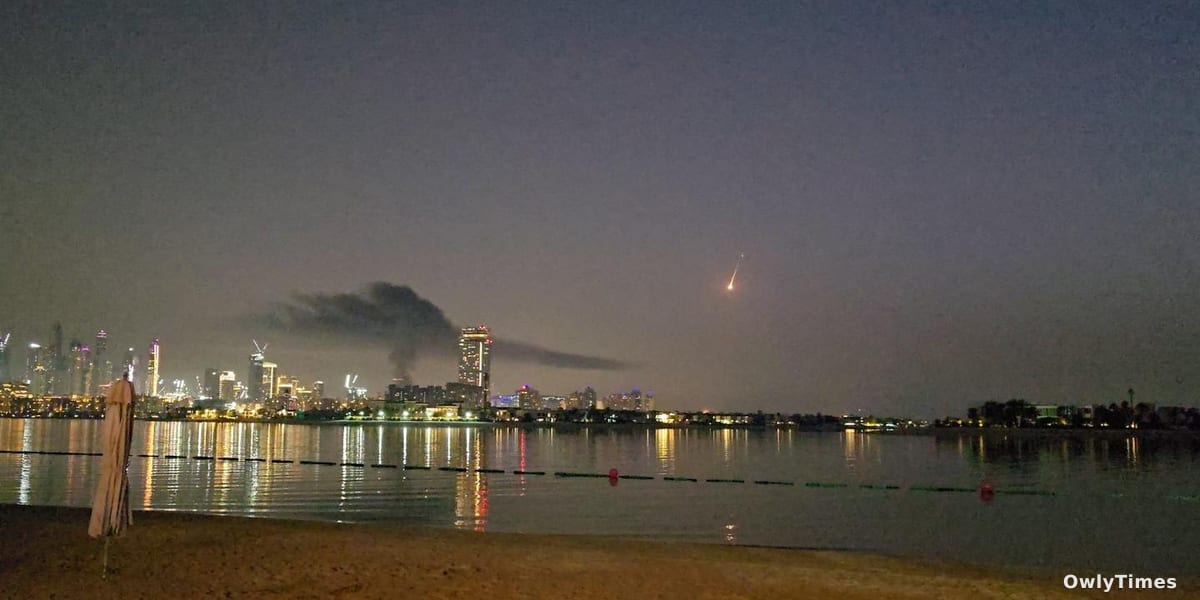
The attacks launched by Iran on February 28th placed roughly $60 billion of Dubai’s annual revenue stream directly in the line of fire. While the UAE’s air defense systems intercepted the vast majority of the 137 missiles and 209 drones, the damage sustained by critical infrastructure – including Dubai International Airport, Jebel Ali Port, and the Palm Jumeirah – reveals a calculated attempt to disrupt the emirate’s economic engine. This wasn’t simply a display of force; it was a targeted economic strike, and the implications extend far beyond the immediate repairs.
Based on the original lemonde.fr report.
Follow the money, and the picture becomes clear. Dubai’s airport and seaport collectively generate approximately 60% of the emirate’s revenues, according to official estimates. This concentration of economic activity in vulnerable locations makes Dubai uniquely susceptible to disruptions of this kind. The “minor damage” reported at Dubai airport, resulting in four staff injuries, belies the potential for cascading delays and reputational harm. While the UAE proactively closed its airspace, mitigating passenger impact, the incident underscores the fragility of its position as the world’s busiest hub for international traffic – a title it held with 86.9 million passengers in 2023, a 27.8% increase year-over-year. Any sustained disruption to air travel will directly impact tourism, a sector that contributed 30.8% to Dubai’s GDP in 2022.
The attack on Jebel Ali port, capable of handling aircraft carriers and a key node in global trade, is equally concerning. This port isn’t just a regional hub; it facilitates roughly $80 billion in trade annually, connecting Asia, Europe, and Africa. The fire sparked by intercepted drone debris, while contained, highlights the vulnerability of this critical infrastructure to future attacks. The presence of US warships at the port adds another layer of geopolitical complexity, raising the stakes for any escalation. This incident immediately impacts shipping insurance rates for vessels calling at Jebel Ali, adding to the cost of goods and potentially diverting traffic to competing ports like those in Oman or Saudi Arabia.
The symbolic targeting of landmarks like the Burj Al Arab and the Palm Jumeirah, while causing relatively minor physical damage, serves a crucial purpose: eroding investor confidence. Dubai has meticulously cultivated an image of stability and luxury, attracting foreign investment and high-net-worth individuals. The attacks directly challenge that narrative, raising questions about the long-term security of the emirate. The four people injured in the Palm Jumeirah incident, while a small number, represent a breach of the perceived safety that underpins Dubai’s appeal. This is particularly relevant given that roughly 90% of the UAE’s population is comprised of foreigners, many of whom are drawn by the promise of a secure and prosperous environment.
The UAE’s successful interception of the majority of incoming projectiles demonstrates a significant investment in defense systems. However, the fact that any damage occurred at all reveals limitations in those systems and the inherent difficulty of defending against a sustained, multi-pronged attack. The cost of replenishing intercepted missiles and repairing damaged infrastructure will be substantial, diverting funds from other economic priorities. Furthermore, the incident is likely to accelerate the UAE’s investment in advanced air defense technologies, adding to its defense budget. Mohamed bin Zayed Al Nahyan, the President of the UAE, has already signaled a firm response, but the nature of that response remains to be seen.
What this means for your wallet: Expect to see a ripple effect in travel costs and potentially in the price of goods shipped through the region. Increased insurance premiums for shipping and air travel, coupled with potential supply chain disruptions, will likely translate into higher prices for consumers. More importantly, investors should closely monitor the UAE’s response and the evolving geopolitical landscape. The question isn’t if Iran will attempt another strike, but when and where. The stability of Dubai – and the substantial returns it has offered investors – is now demonstrably contingent on a volatile regional security situation.