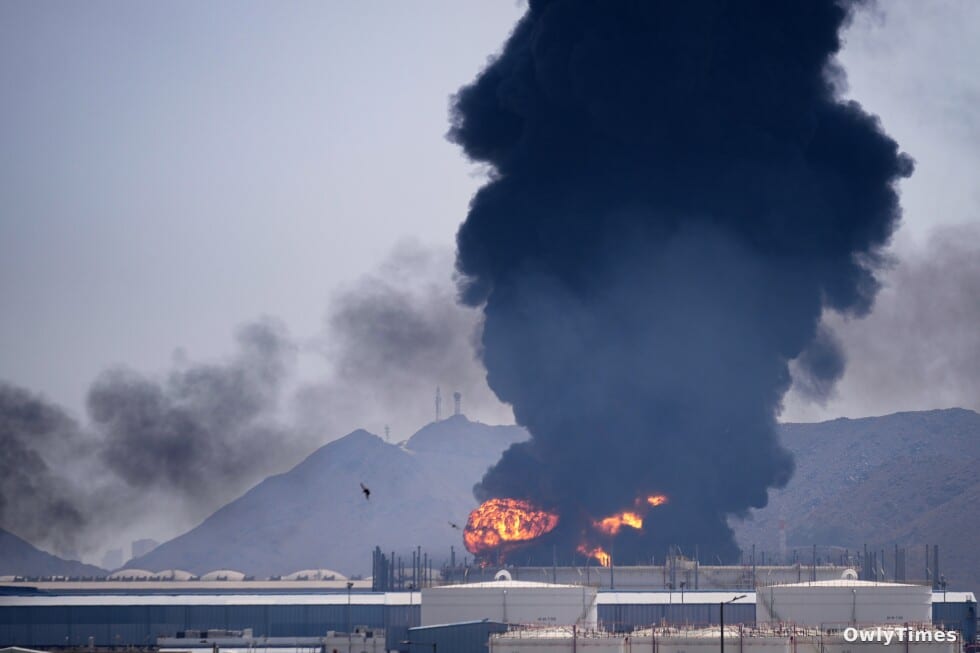

Is the current conflict with Iran actually a war, or a remarkably expensive game of brinkmanship? The headlines scream of escalating tensions, troop deployments, and threats of bombing runs, but the reality on the ground suggests something far more insidious: a calculated strategy of economic disruption masquerading as military confrontation. The real story here isn't the airstrikes – it's Iran’s surprisingly effective deployment of insurgency tactics to weaponize global markets, and the precarious position that puts President Trump in ahead of a crucial election cycle.
For a nation supposedly “battered daily by airstrikes” from the combined might of the United States and Israel, Iran is holding an awful lot of cards. The key, as Shukriya Bradost, a Mideast security analyst, succinctly put it, isn’t about winning a military conflict – it’s about surviving long enough to declare victory. And right now, survival looks a lot like strangling the world’s oil supply through the Strait of Hormuz. This isn’t a new playbook; Iran’s proxies have honed these tactics for decades, and the current situation feels less like a sudden escalation and more like a meticulously planned demonstration of leverage. The Strait, once carrying a fifth of the world’s oil and natural gas, is now largely controlled by The Islamic Republic, dictating which shipments pass and at what cost.
Reporting from AP informs this analysis.
This isn’t just about higher gas prices, though those are certainly a factor. The ripple effect of constricted oil flow is woven into the fabric of the global economy. Everything from manufacturing to transportation becomes more expensive, contributing to inflationary pressures that are already squeezing consumers worldwide. And that’s where President Trump finds himself in a bind. He’s facing mounting pressure to lower the cost of living, and a prolonged standoff with Iran – and the resulting economic fallout – directly undermines that goal. The threat of bombing Iranian power plants, a deadline already pushed back twice to April 6th, feels less like a serious military plan and more like a desperate attempt to project strength. As the risk advisory Eurasia Group noted, Trump’s strategy appears to be “escalate to de-escalate,” a dangerous game of chicken with potentially catastrophic consequences.
The resilience of Iran isn’t simply about its military capabilities, though its “shoot and scoot” tactics – mobile missile launchers disguised as commercial trucks – are proving remarkably effective. It’s about adapting the strategies of insurgency, mirroring the tactics of groups like Yemen’s Houthi rebels and Shiite militias in Iraq, both of whom have thrived despite relentless targeting. Iran’s geography, a vast and mountainous landscape, provides natural cover, allowing it to operate like a shadow force even with its air defenses weakened and its navy decimated. Trump claimed on Thursday night that only 9% of Iran’s missile arsenal remains, a figure impossible to independently verify, but even that leaves a substantial capacity for disruption.
However, to paint Iran as solely a strategic mastermind would be misleading. Cracks are appearing beneath the surface. The brutal suppression of protests earlier this year, resulting in thousands killed and tens of thousands detained, has created a simmering resentment within the Iranian population. The recruitment of children as young as 12 into the Basij militia, ostensibly in response to public demand but more likely to bolster dwindling ranks, is a desperate measure indicative of internal strain. Questions surrounding the health and leadership of Mojtaba Khamenei, Iran’s new supreme leader, and a perceived lack of central command within the military further complicate the picture.
Yet, despite these vulnerabilities, the Soufan Center’s analysis highlights a crucial point: the U.S. can’t necessarily achieve through force what it hasn’t been able to achieve through war. A military victory isn’t guaranteed, and the economic consequences of a prolonged conflict are already being felt globally. The situation isn’t about overwhelming military power; it’s about a calculated gamble by Iran to inflict enough pain to force concessions. The question now isn’t if negotiations will resume, but when – and whether President Trump will be willing to accept a deal that doesn’t deliver a complete and unequivocal victory. Watch closely for a shift in rhetoric from Washington, a softening of demands, and a willingness to engage in back-channel talks. Because the next six months will determine whether this is a contained crisis, or the opening act of a much larger, and far more unpredictable, conflict.