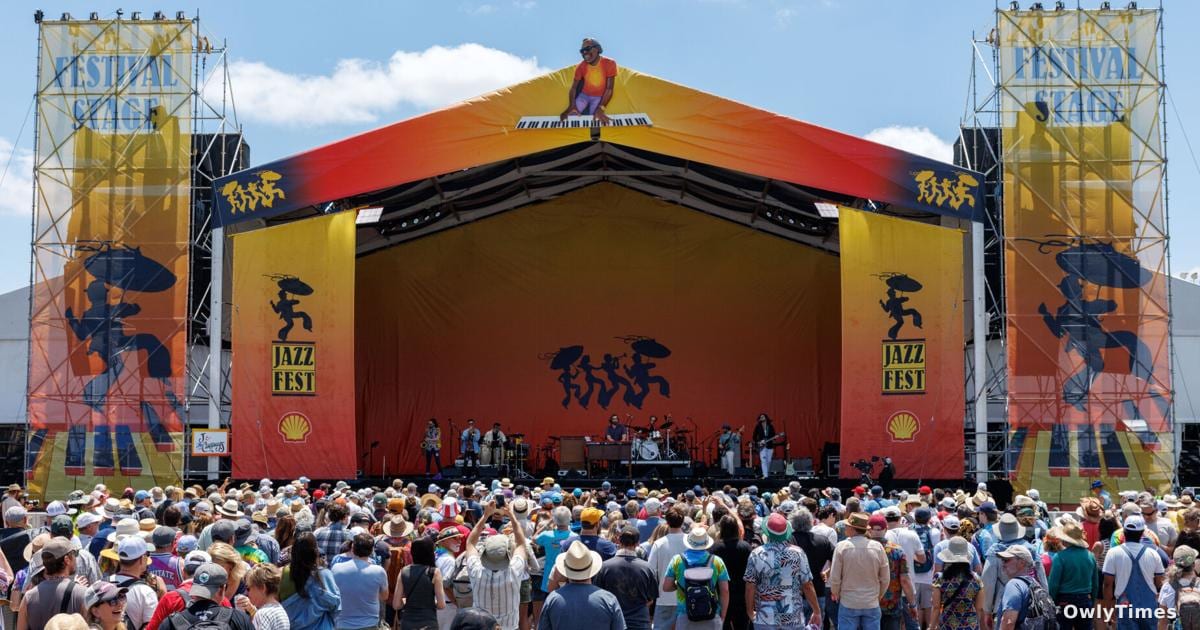

The mud near the Festival Stage at the Fair Grounds was still damp, a lingering reminder of the meteorological chaos that had gripped the New Orleans Jazz & Heritage Festival for the previous 48 hours. Yet, as the sun broke through on Saturday, May 2, 2026, the scene shifted from one of logistical anxiety to the kind of collective catharsis that only this city can produce. Attendees navigated around the remaining puddles, not with the frustration of delayed plans, but with the focused determination of people who refused to let a little rain dampen the spirit of an institution.
A Resilient Rhythm Amidst the Scramble
For two days, the festival had been locked in a high-stakes game of schedule scrambles, forcing organizers and performers to recalibrate in real-time. When you manage an event of this scale, the weather isn't just an inconvenience; it’s a direct threat to the financial and cultural momentum of the entire production. Yet, by the time J and The Causeways took the Festival Stage, the air was clear and the crowd was thick. The fact that the second Saturday of the festival officially sold out suggests that the audience’s appetite for the event is far more resilient than the forecast.
Beyond the immediate relief of a dry stage, the sold-out status speaks to the unique magnetism of Jazz Fest. In an industry where festival lineups are often criticized for their homogeneity, this event maintains a defiant sense of place. While headliners like the Eagles, Alabama Shakes, and T-Pain provided the high-wattage pull needed to move tickets, the true pulse of the day was found elsewhere. It was in the WWOZ Jazz Tent, where James Jordan and The Situation commanded a rapt audience, and in the Blues Tent, where C.J. Chenier & the Red Hot Louisiana Band reminded us that the festival’s backbone remains firmly rooted in regional tradition.
The Human Element Behind the Logistics
There is a specific, tactile reality to the festival experience that often gets lost in the shorthand of headlines. We see the photos of Jesse and Stacey Justice eating under the sun, or James Prechter, age 6, finding his rhythm on the drums, and we are reminded that these events are not just platforms for touring acts. They are temporary ecosystems. Whether it was Jack Mudlark navigating the grounds in a giant puppet or Artist Jimmy Descant meticulously crafting a piece in his stall, the day felt less like a recovery from a storm and more like an assertion of cultural identity.
The juxtaposition of the massive production—the Congo Square Stage featuring Dee-1 or the Shell Gentilly Stage hosting Mia Borders—against the intimate, almost domestic moments in the Children’s Tent with the Junior Baby Doll Ladies, highlights the festival’s broad reach. It balances the commercial necessity of major acts with the preservation of local craft. This is the tension that defines the modern festival landscape: the need to scale up to survive while digging deep to maintain authenticity.
Measuring the Momentum
The success of this weekend serves as a barometer for the health of the live music sector as it navigates increasingly unpredictable environmental variables. When festivals hit these moments of crisis, the speed at which they pivot defines their long-term viability. As the festival looks toward its final scheduled programming, the next reading of ticket sales and crowd capacity for the remaining days will show whether this weekend’s recovery set a sustainable template for future seasons. For now, the music continues, and the mud is just part of the story.