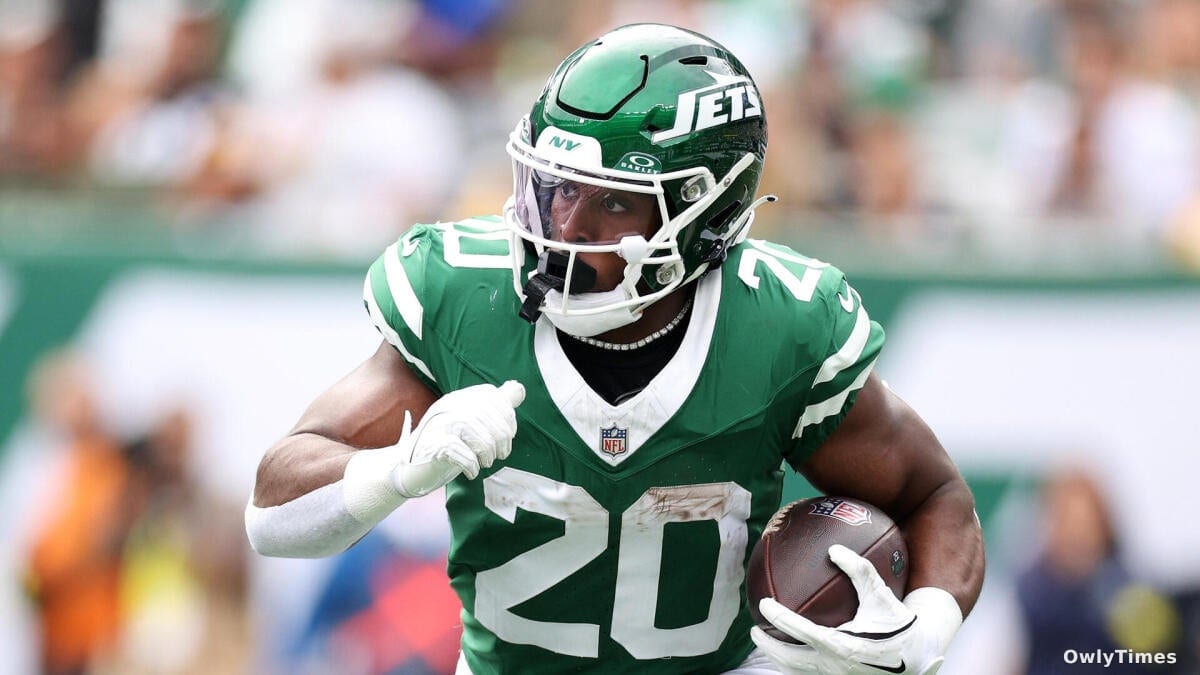

The fluorescent lights of the NFL Combine buzzed over Darren Mougey, General Manager of the New York Jets, as he delivered a carefully calibrated message: the team wants Breece Hall back. But beneath the surface of football speak – talk of franchise tags and mutual interest – lies a story far more revealing than a simple contract negotiation. It’s a story about loyalty in a mercenary age, the precarious value of running backs in a passing league, and what it means to build a future on shifting ground. This isn’t just about keeping a talented player in green and white; it’s about the Jets signaling what kind of franchise they intend to be.
For weeks, the narrative surrounding Hall was one of inevitable departure. The Jets, after a disastrous 7-10 season punctuated by quarterback instability and offensive woes, were widely expected to capitalize on Hall’s value. He was a prime trade candidate, a bright spot on a dimming roster who could fetch a significant return. Yet, they held firm. Why? Because in a league obsessed with maximizing short-term gains, the Jets are hinting at something different: a commitment to a player who embodies resilience and, crucially, a connection to a fanbase starved for a winning identity. Hall, drafted in the second round in 2022, hasn’t had the benefit of playing on a consistently competitive team, yet he’s delivered – averaging over 876 rushing yards and four touchdowns per season, even rebounding from a devastating ACL tear that cut short his promising rookie campaign.
The looming financial decisions are stark. The Jets have until March 3rd to either sign Hall to a long-term extension or apply the franchise tag ($14.5 million) or transition tag ($11.7 million). These aren’t just numbers; they’re pressure points. The franchise tag, while securing Hall’s services for another year, feels like a temporary fix, a delay of the inevitable. It also signals a lack of confidence in long-term planning, a willingness to kick the can down the road. The transition tag, allowing other teams to make an offer Hall can match, introduces a thrilling, and potentially heartbreaking, element of risk. It’s a gamble that relies on Hall prioritizing loyalty over a potentially larger payday elsewhere. This is where the story transcends the typical contract dispute. Running backs, historically the cornerstone of NFL offenses, are now often viewed as disposable commodities, their careers notoriously short and brutal.
Drawn from CBS Sports.
Mougey’s insistence on “good conversations” and a sense that Hall “wants to be here” feels deliberately reassuring, a public attempt to counter the prevailing cynicism. But it’s also a calculated risk. The Jets’ struggles haven’t exactly created a desirable environment for a player seeking to maximize his potential. They’ve cycled through quarterbacks, struggled with offensive line consistency, and haven’t come close to replicating the success they envisioned when they drafted Hall. Yet, Hall’s consistency – even with a slight dip in receiving numbers last season (36 catches, 350 yards, one touchdown, all personal lows) – speaks to his character and dedication. He’s a player who shows up, performs, and doesn’t make excuses. In a league increasingly defined by off-field drama and player empowerment, that’s a valuable asset.
Beyond the headlines of tags and contract values, the Jets’ handling of the Breece Hall situation is a test case. Are they willing to invest in a player who represents stability and a potential foundation for future success, even if it means potentially overpaying in a volatile market? Or will they succumb to the pressure of short-term thinking, trading him for draft capital and continuing the cycle of rebuilding? The next week will reveal the answer, but the question that lingers is this: in an NFL increasingly driven by transactional relationships, can a team truly build a winning culture by prioritizing loyalty and investing in the players who embody its values? The league, and Jets fans, are watching closely.

