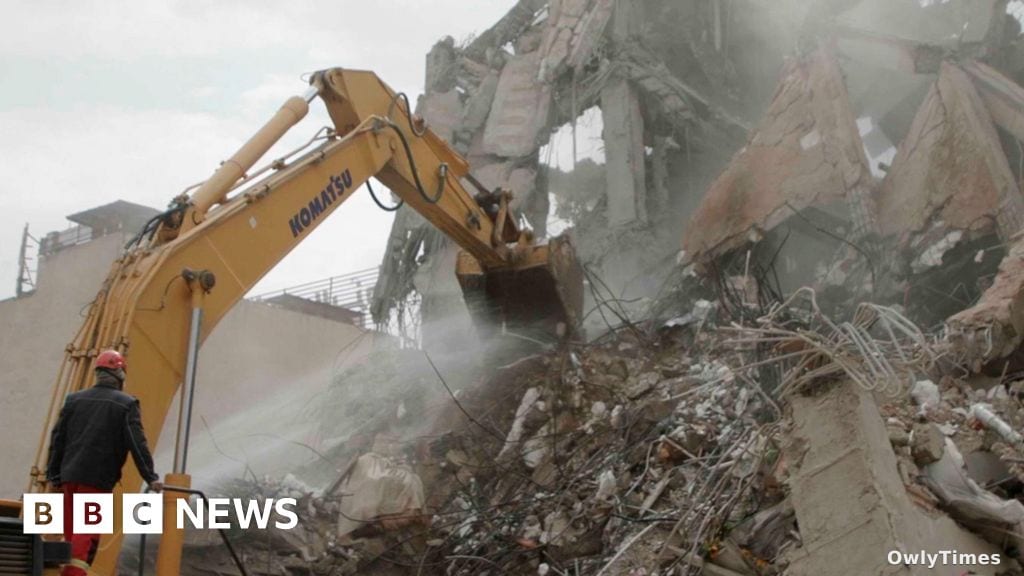

Is the escalating conflict between Iran, the US, and Israel being framed with a deliberate blind spot? We’re hearing a lot about “lawful military objectives” and “proportional response,” but the images coming out of Tehran tell a different story – one of civilian lives irrevocably shattered amidst the rubble. The real story here isn't a sophisticated military campaign; it’s the brutal reality of modern warfare unfolding within densely populated urban spaces, and the terrifyingly predictable consequences for ordinary people.
For weeks, Iran has been under sustained attack, with the Israel Defense Forces (IDF) and US Central Command claiming to target regime-linked infrastructure. Since the start of the conflict, the IDF reports dropping over 12,000 bombs across Iran, with 3,600 hitting Tehran alone, while US Central Command claims to have struck over 9,000 targets. But the BBC’s recent investigation, spearheaded by Nawal Al-Maghafi and her team at BBC Eye, reveals a pattern of strikes that consistently blurs the line between military necessity and civilian harm. The footage, eyewitness testimony, and satellite imagery paint a grim picture of a war being waged with a callous disregard for collateral damage.
Source material: the BBC.
The devastation in the Resalat district of eastern Tehran is particularly stark. On March 9th, an Israeli air strike leveled a multi-story apartment building, allegedly targeting a Basij paramilitary force outpost. But the impact extended far beyond that single site. Military experts analyzing the damage concluded the scale was consistent with the use of a Mark 84 bomb – a 2,000lb weapon – capable of causing widespread destruction. A mother, desperately searching through the debris, embodies the human cost: “They don't have the manpower to get her out,” she cries, referring to her daughter trapped beneath the rubble, “she’s afraid of the dark.” Days later, both her daughter and granddaughter were found dead. Residents estimate between 40 and 50 people perished in that single attack. This isn’t an isolated incident; it’s a pattern.
The IDF maintains it “directs its strikes exclusively against lawful military objectives” and claims casualty figures are “substantially lower than stated.” This assertion rings hollow when confronted with the lived experiences of Tehran residents. A 55-year-old man, whose apartment was destroyed in the same strike, recounts being “thrown across the room” and losing everything. “I don't have anything now… All my documents, everything, it's gone.” His story isn’t unique. Across the city, similar accounts emerge – of sudden explosions, multiple strikes in quick succession, and a terrifying lack of warning. The Abbasabad police station strike on March 1st, near a Ramadan gathering, reportedly killed at least 20 people, according to eyewitnesses.
This isn’t simply a matter of unfortunate accidents. International humanitarian law dictates a clear distinction between civilian objects and military objectives, and demands proportionality – the expected harm to civilians must be weighed against the military advantage gained. International humanitarian law experts consulted by BBC Eye suggest the use of heavy bombs like the Mark 84 in densely populated areas is potentially unlawful, given the foreseeable harm to civilians. The UN has previously urged against using such weapons in populated areas. Yet, the evidence suggests a pattern of strikes that disregard these principles. The US-based Human Rights Activists News Agency (HRANA) reports 1,464 civilian deaths in the first month of the conflict, including at least 217 children.
What’s particularly troubling is the lack of preparedness within Iran itself. Residents report a complete absence of civil defense protocols – no sirens, no evacuation plans, no public shelters. The government has remained largely silent on the issue, leaving citizens feeling exposed and vulnerable. This isn’t just about the bombs falling from the sky; it’s about a systemic failure to protect its own people. The internet blackouts further exacerbate the situation, hindering communication and spreading fear. This lack of transparency fuels resentment, even among those previously critical of the regime.
The US and Israel frame this as a targeted campaign against the Iranian state. But in a city where state infrastructure is interwoven with civilian life, the lines are irrevocably blurred. The consequences are being felt not by abstract political entities, but by families like the one in Resalat, mourning their lost loved ones amidst the rubble. The question isn’t whether these strikes are strategically effective – it’s whether the cost in human lives is justifiable, and whether the current approach is sustainable.
Looking ahead, watch for a shift in the narrative. As civilian casualties continue to mount, and the evidence of disproportionate force becomes harder to ignore, the international pressure on both Israel and the US will intensify. But more importantly, watch for a potential backlash within Iran. The current silence won’t last forever. The next escalation won’t be measured in bombs dropped, but in the simmering anger of a population that feels abandoned and betrayed. Will that anger be directed outwards, or inwards? That’s the question that will define the next phase of this conflict.





