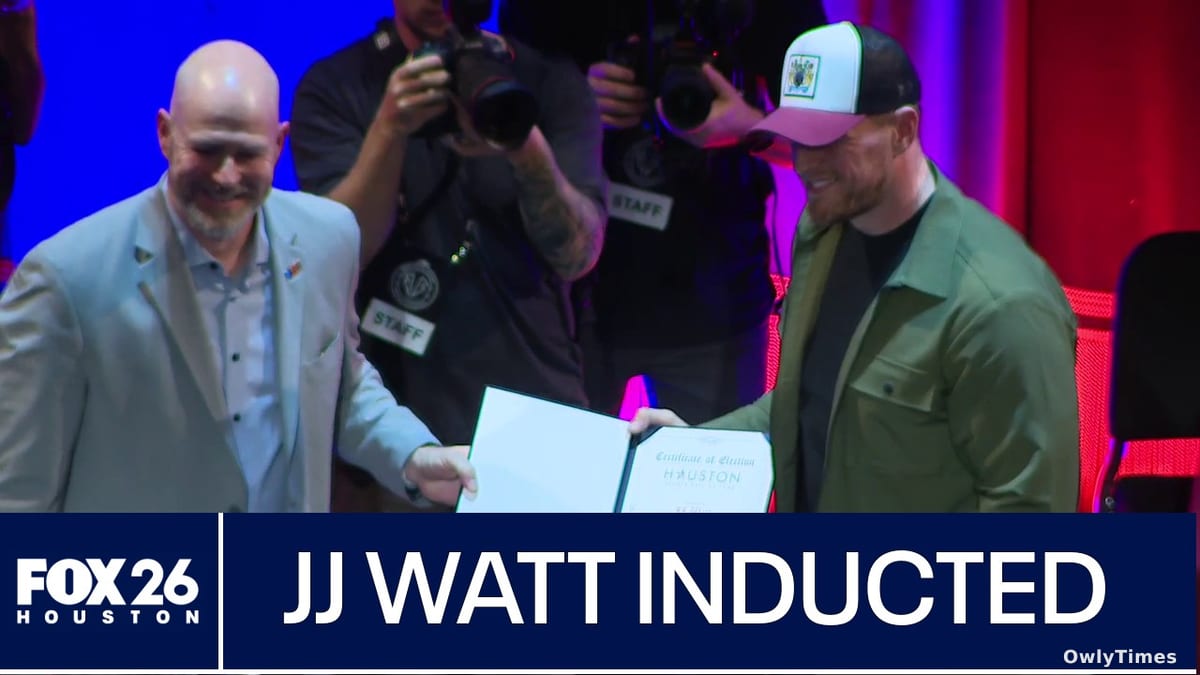

The roar wasn’t from a stadium, not yet. It was the murmur of anticipation in the Rice University hall, a room buzzing with talk of soccer and the approaching 2026 World Cup, when J.J. Watt’s name echoed through the speakers. It wasn’t a play call, or a sack announced over the stadium speakers, but a recognition of something larger than football – a cementing of legacy. The Harris County-Houston Sports Authority’s decision to name Watt the inaugural inductee of the Houston Sports Hall of Fame Class of 2026 feels less like a formality and more like a city finally articulating what it already knew: this wasn’t just about touchdowns and tackles. This was about a player who became synonymous with Houston’s resilience, its heart, and its unwavering spirit.
From Defensive End to Defining Symbol
The statistics are, of course, impressive. Ten seasons with the Houston Texans, three NFL Defensive Player of the Year awards (2014, 2015, 2017), and a franchise record of 101 sacks. These numbers place Watt among the league’s elite, a force of nature on the field. But to focus solely on the on-field achievements is to miss the tectonic shift he represented for a city often overlooked on the national sports landscape. Before Watt, the Texans were a relatively young franchise, still searching for an identity. He became that identity – a relentless competitor who embodied the blue-collar grit of the city. His arrival in 2011 coincided with a surge in local NFL viewership, jumping 18% in his rookie year alone, according to Nielsen ratings, and consistently remaining above the league average throughout his tenure. This wasn’t just about winning; it was about giving Houston a hero to rally around.
Source material: fox26houston.com.
The $41 Million Question: Athlete Activism Evolved
But the moment that truly separated Watt from his peers, the moment that transcended the game, came in the aftermath of Hurricane Harvey in 2017. While many athletes offered thoughts and prayers, Watt launched a fundraising campaign that shattered expectations. He initially set a goal of $200,000, a substantial amount in itself. Within hours, it was clear this would be something different. The final tally: over $41 million. This wasn’t a celebrity endorsement or a carefully curated PR stunt. It was a raw, authentic outpouring of empathy and a hands-on commitment to rebuilding the community. The scale of the fundraising is particularly striking when compared to other disaster relief efforts led by athletes; the American Red Cross, for example, typically raises an average of $15 million per major national disaster. Watt’s success wasn’t just about his name recognition, but about the trust he’d built with the city, a trust forged through years of dedication on the field and a genuine connection to the people he represented.
Beyond the Field: Redefining “Athlete”
The Walter Payton NFL Man of the Year award, bestowed upon Watt in 2018 for his Harvey relief efforts, felt like a redefinition of the award itself. Traditionally, it celebrated on-field excellence and community involvement. With Watt, the balance tipped. His humanitarian work became the defining characteristic, overshadowing even his remarkable athletic achievements in the public consciousness. This shift reflects a broader cultural expectation for athletes to use their platforms for social good. The current generation of fans, particularly those under 30, are demonstrably more likely to support athletes who take a stand on social issues, with a 2023 study by the Pew Research Center showing a 25% increase in positive sentiment towards athlete activism compared to 2018. Watt didn’t just meet that expectation; he pioneered it, setting a new standard for what it means to be a professional athlete in the 21st century.
A Hall of Fame Induction and a Shifting Landscape
Joining the ranks of Houston legends like Hakeem Olajuwon and Nolan Ryan in the Houston Sports Hall of Fame isn’t simply an honor for Watt; it’s a statement about the evolving values of sports fandom. It’s a recognition that athletic prowess is no longer enough. The city is celebrating a player who understood that his influence extended far beyond the gridiron, a player who actively chose to use his platform to make a tangible difference. The question now isn’t whether other athletes will follow in his footsteps – many already are – but whether the institutions of professional sports will adapt to fully support and celebrate this new model of athlete engagement. Will leagues prioritize community impact alongside performance metrics? Will endorsements increasingly favor athletes with demonstrated social responsibility? The echoes of that announcement at Rice University aren’t just about one man’s legacy; they’re about the future of the game itself.

