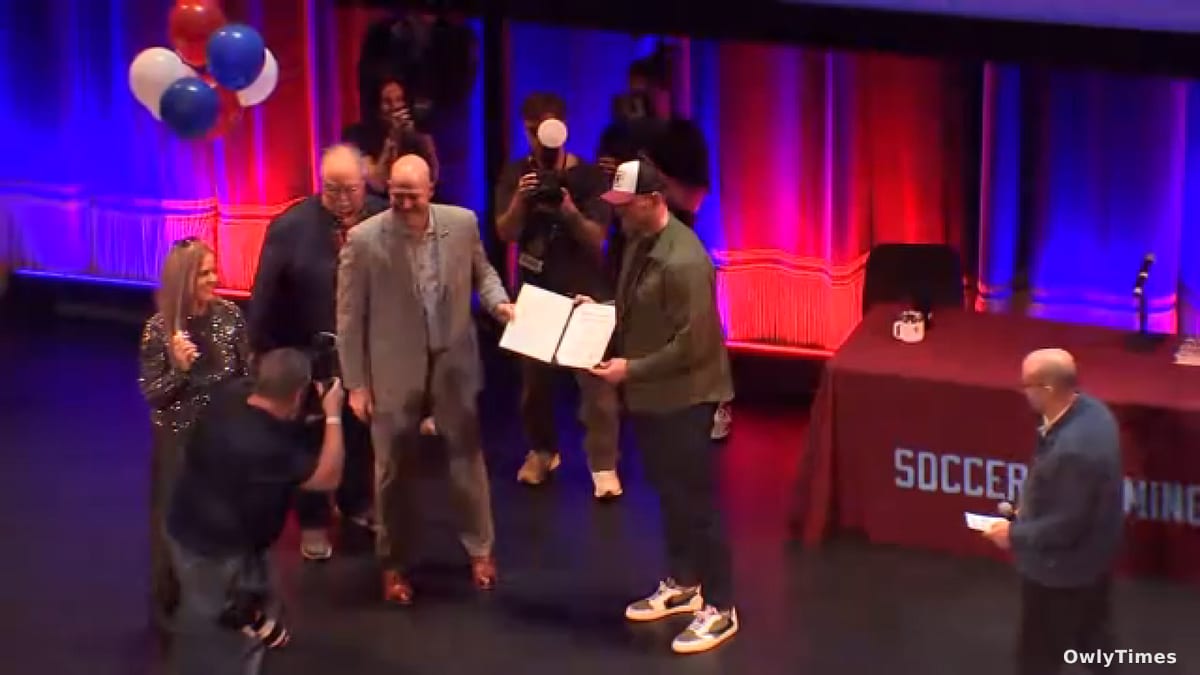

The roar wasn’t audible, not in the polished ballroom of the Houston Sports Hall of Fame announcement on Thursday night, but J.J. Watt knew it was there. It echoed from the bayous, from the tailgates, from the countless homes where his number 99 jersey hung like a talisman. It wasn’t just a celebration of tackles and sacks; it was a recognition of a decade spent redefining what it meant to be a Houston icon, a player who became synonymous with a city still finding its footing after decades of being overlooked. The announcement, coming at 9:20 PM Houston time, felt less like an induction and more like a homecoming, a full-circle moment for a player who embodied resilience.
Beyond the Stats: A City’s Reclamation Project
The numbers are impressive, undeniably. Five Pro Bowls, three Defensive Player of the Year awards, 10 seasons anchoring the Houston Texans defense. But to focus solely on the statistics is to miss the larger narrative. Watt arrived in Houston in 2011, a first-round draft pick for a franchise perpetually chasing legitimacy. The Texans, established in 2002, were still viewed as the NFL’s little brother, a team struggling to carve out an identity in a state obsessed with high school and college football. Watt didn’t just become a star; he became Houston’s football team. He arrived during a period of economic uncertainty following the 2008 recession, and his relentless work ethic and unwavering commitment resonated with a city rebuilding itself. His impact extended far beyond the gridiron, a fact the Hall of Fame clearly recognized.
The Weight of a Jersey: Philanthropy and Public Image
The accompanying KTRK report highlighted “all the times J.J. Watt showed up for the people of Houston,” a subtle but crucial point. It wasn’t just about winning games; it was about responding to crises. The fundraising efforts following Hurricane Harvey in 2017, spearheaded by Watt, raised over $41.6 million – a figure that dwarfed initial government aid and demonstrated the power of athlete-led philanthropy. This wasn’t a PR stunt; it was a genuine outpouring of support, a player using his platform to directly address the needs of his community. In an era where athlete activism is often met with controversy, Watt navigated the landscape with a quiet dignity, focusing on tangible results rather than divisive rhetoric. This approach, while perhaps less headline-grabbing, cemented his status as a beloved figure in a way few athletes achieve. It’s a model that younger players are increasingly emulating, recognizing the power of localized impact.
This article draws on reporting from abc13.com.
The Ring of Honor and the Looming Pro Football Hall of Fame
The fact that Watt and Andre Johnson are the only players currently enshrined in the Texans’ Ring of Honor speaks volumes about the franchise’s relatively short history and the scarcity of true, enduring stars. It also underscores the weight of Watt’s legacy. While his final two seasons with the Arizona Cardinals were a muted coda to his prime, they didn’t diminish his impact in Houston. Now, at 36, he’s transitioned seamlessly into the role of NFL analyst, bringing the same intensity and analytical rigor to the broadcast booth that he once displayed on the field. His eligibility for the Pro Football Hall of Fame in 2028 is a near certainty, but the Houston Sports Hall of Fame induction feels different. It’s a local honor, a testament to a bond forged over a decade of shared triumphs and tribulations. The announcement isn’t just about a football player; it’s about a symbol of Houston’s own ascent.
What Happens When the Icon Retires?
The question now isn’t whether J.J. Watt will be immortalized in Canton, but what his induction signifies for the future of athlete-city relationships. Will teams actively seek players who demonstrate a commitment to community engagement, recognizing the long-term branding benefits? Or will the focus remain solely on on-field performance, treating players as commodities rather than civic leaders? The Texans, currently navigating a rebuild, could learn a valuable lesson from the Watt era: investing in players who invest in the city is a winning strategy, both on and off the field. As the NFL continues to grapple with issues of social responsibility and player empowerment, the legacy of J.J. Watt serves as a powerful reminder that true greatness extends far beyond the final score.