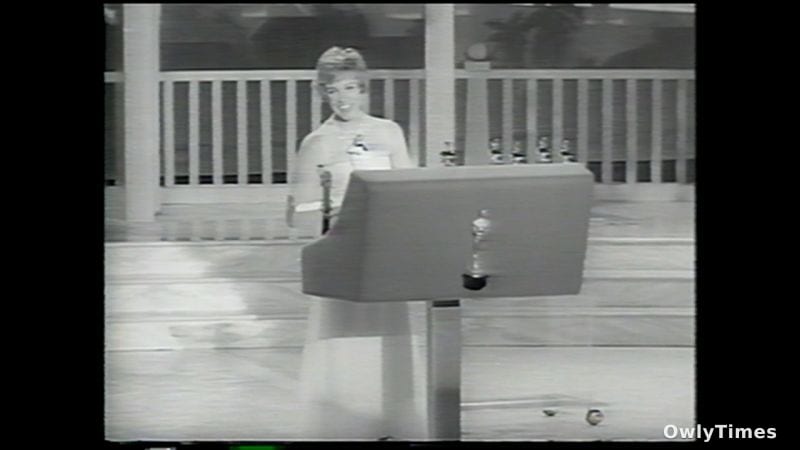

The flashbulbs popped, a relentless staccato against the plush velvet of the Santa Monica Civic Auditorium. It was April 6, 1965, and a visibly stunned Julie Andrews had just accepted the Academy Award for Best Actress for her role as Mary Poppins. The image – a radiant Andrews, clutching the golden statuette, a slight tremor in her hands – became instantly iconic. But beyond the headlines of a deserving win, this moment wasn’t just a celebration of a beloved film; it was a seismic shift in Hollywood power dynamics, a quiet rebellion against a studio system clinging to outdated notions of female stardom, and a harbinger of the cultural upheaval that would define the decade.
The Shadow of a Rivalry: Disney vs. Warner Bros.
The narrative often paints Andrews’ win as a straightforward triumph. And it was. Mary Poppins was a critical and commercial juggernaut, earning 13 nominations and taking home five Oscars. However, the backstory is laced with a delicious, and often overlooked, rivalry. Just two years prior, Jack L. Warner of Warner Bros. had notoriously passed on Andrews for the lead in My Fair Lady, deeming her “too unknown” and opting instead for the established star Audrey Hepburn. This decision, widely seen as a snub, fueled a narrative that Warner Bros. lacked faith in British talent and, more pointedly, underestimated Andrews’ potential. Disney, sensing an opportunity, swooped in, offering Andrews the titular role in Mary Poppins, a gamble that paid off spectacularly. The Oscar win wasn’t just personal validation for Andrews; it was a resounding victory for Walt Disney and a pointed rebuke to Warner Bros., a studio then dominating the awards circuit. In 1965, the Academy Awards weren’t simply about recognizing artistic merit; they were a battleground for studio supremacy, and Disney had decisively won a key skirmish.
Based on the original CNN report.
Beyond the Supercalifragilisticexpialidocious: A New Kind of Leading Lady
Andrews’ portrayal of Mary Poppins was revolutionary in its own right. She wasn’t the typical glamorous Hollywood heroine. Mary Poppins was firm, practical, and possessed a quiet authority that defied conventional expectations of female characters. This wasn’t a damsel in distress waiting for rescue; this was a woman who arrived to fix things, to instill order and joy in a chaotic household. The film, and Andrews’ performance, tapped into a growing desire for more complex and empowered female representation. While the film’s whimsical exterior charmed audiences, its underlying message – a woman taking control and shaping her own destiny – resonated deeply, particularly as the second-wave feminist movement began to gain momentum. The $27.3 million gross (equivalent to over $240 million today) wasn’t just box office success; it signaled a shift in what audiences wanted to see from their leading ladies.
The Price of Perfection: Andrews’ Subsequent Struggles
The immediate aftermath of the Oscar win seemed to promise a golden age for Andrews. She followed Mary Poppins with The Sound of Music in 1965, another massive hit that cemented her status as a global superstar. But the very qualities that made her a success – her wholesome image and unwavering professionalism – ironically began to box her in. Hollywood struggled to see beyond the “goody-two-shoes” persona, limiting her to roles that reinforced that image. A disastrous throat surgery in 1997, stemming from a botched polyp removal, further derailed her career, robbing her of her singing voice and forcing her to adapt to non-singing roles. This is a stark reminder that even at the peak of success, the industry can be unforgiving, and the pressures to maintain a certain image can be stifling. Andrews’ story isn’t just about a fairytale win; it’s about the challenges of navigating a system that often prioritizes marketability over artistic freedom.
A Legacy of Empowerment and a Question for the Future
Julie Andrews’ 1965 Oscar win wasn’t just a moment of personal triumph; it was a cultural inflection point. It demonstrated the power of Disney to disrupt the established order, showcased a new type of female protagonist, and foreshadowed the changing expectations of women in society. Today, as Hollywood grapples with issues of representation and inclusivity, Andrews’ story serves as a potent reminder of the battles fought – and the battles still to come. The industry is slowly, painstakingly, moving towards a more equitable landscape, but the echoes of Warner Bros.’ initial dismissal of Andrews still resonate. Will studios continue to prioritize established “safe” choices, or will they embrace the risk of championing fresh, diverse talent? The answer to that question will determine whether the spirit of that 1965 victory – a spirit of empowerment and unexpected triumph – truly endures.