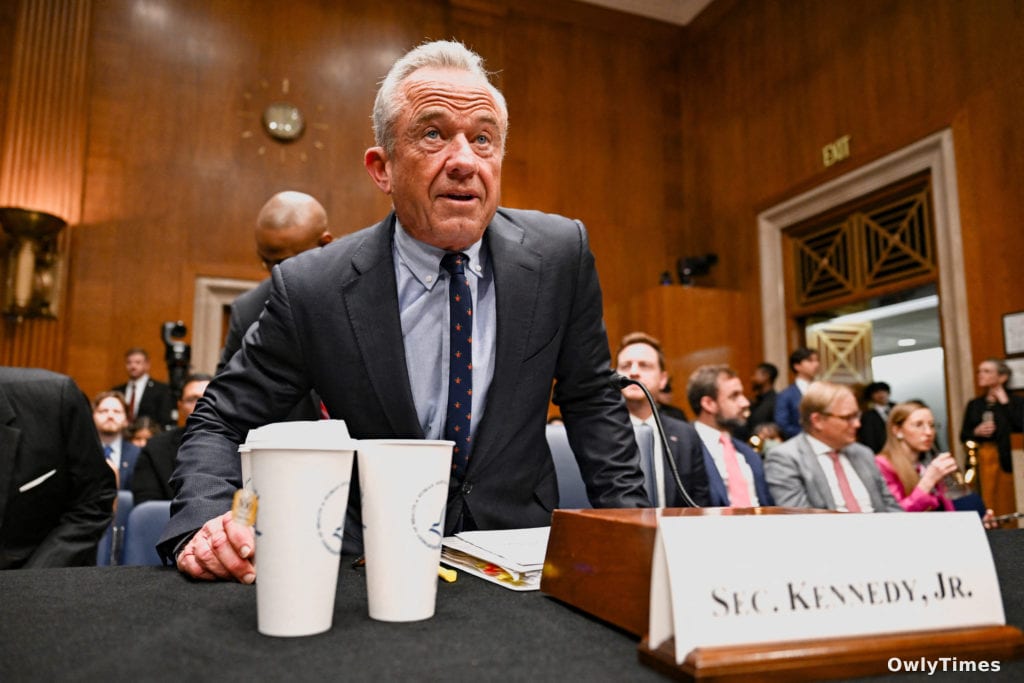

The scientific question currently testing the resilience of American public health policy is whether federal infrastructure can survive a fundamental ideological shift that prioritizes budgetary austerity over established institutional guidance. Over the past several days, Health Secretary Robert F. Kennedy Jr. has been at the center of this tension, tasked with defending the Trump administration’s proposed 2027 budget. The proposal mandates a reduction of more than 12% of funding for the Department of Health and Human Services (HHS), a move that forces a direct confrontation between the administration’s goal of addressing a record $39 trillion federal deficit and the maintenance of long-standing public health programs.
The Disconnect Between Spending and Service
A significant portion of the debate surrounding the 2027 budget involves the classification of federal outlays, particularly regarding Medicaid. When challenged by lawmakers such as Sen. Ben Ray Luján, a Democrat from New Mexico, Kennedy argued that there are no actual cuts to the program. He pointed to a Congressional Budget Office report projecting that Medicaid outlays would increase by approximately 47% over the next decade.
However, the disparity between what the administration claims and what analysts observe highlights a crucial methodological conflict. As Edwin Park, a research professor at Georgetown University, noted, this argument relies on nominal growth figures that fail to account for population expansion and inflation. While the administration frames the projection as an increase, the legislative framework effectively results in nearly $1 trillion less in spending than what would occur under current policy. For the public, this creates a confusing landscape where government agencies are technically spending more in absolute dollars, yet providing less coverage per capita.
Vaccine Skepticism and the Crisis of Trust
The most contentious element of the hearings focused on the resurgence of preventable diseases, specifically the threat to the nation’s measles elimination status. Kennedy has consistently deflected responsibility for the decline in vaccination rates, citing a global rise in cases that includes countries like Canada, Mexico, and the United Kingdom. He attributes the domestic trend to a broader collapse in public trust regarding government health recommendations, an issue he claims to be actively addressing.
The scientific reality, however, is more complex than the administration’s rhetoric. While Kennedy characterizes himself as "pro-science," his history—including his 2021 encouragement for the public to "resist" CDC guidelines—has created a measurable friction. Rep. Kim Schrier, a Democrat from Washington, highlighted what she termed a "spillover effect," where public skepticism toward vaccines has expanded to include routine neonatal care, such as vitamin K injections. Kennedy’s rebuttal that he has never spoken on the topic of vitamin K underscores the difficulty in reconciling his past advocacy with his current role as a federal health official.
The Future of Scientific Research
Beyond vaccination policy, the proposed $5 billion reduction in funding for the National Institutes of Health (NIH) has triggered bipartisan concern. Even Republican lawmakers, such as Sen. Thom Tillis of North Carolina, have expressed worry that such deep cuts to research could leave the United States at a strategic disadvantage, particularly against global competitors like China. Kennedy himself acknowledged that the reductions are "painful," yet maintained that the budgetary reality of the current federal deficit leaves little room for maneuver.
The next indication of how these fiscal constraints will reshape the health landscape will emerge from the upcoming 2026 midterm election cycle. As voters continue to identify healthcare affordability—exemplified by stories like that of Rep. Cliff Bentz’s brother, who pays $26,000 annually for coverage—as a primary concern, the effectiveness of administration initiatives like the TrumpRx website will be put to the test. The trajectory of these programs and their impact on actual out-of-pocket costs will determine whether the current pivot away from traditional health funding models provides the relief promised or exacerbates the existing instability in the national healthcare market.





