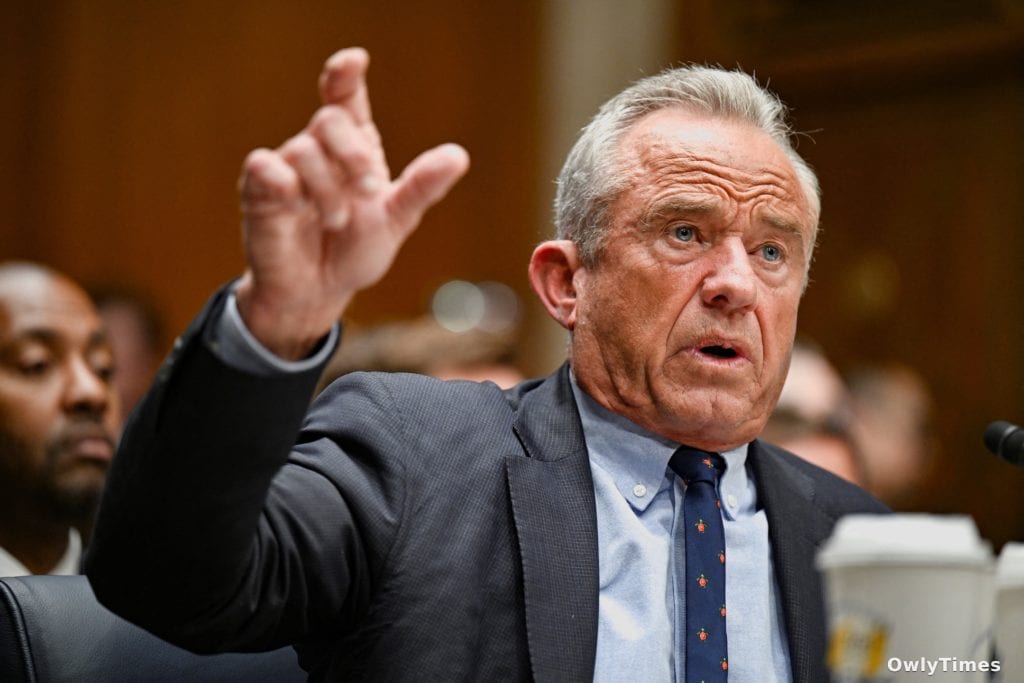

How should the federal government balance fiscal austerity with the maintenance of essential public health infrastructure? This central question has dominated the recent marathon of congressional hearings featuring Health Secretary Robert F. Kennedy Jr., who has faced seven public hearings since last week to defend the administration’s aggressive approach to departmental oversight.
The prevailing headlines have focused on the political friction between Kennedy and Democratic lawmakers regarding his past rhetoric on vaccines. However, the substance of these hearings reveals a deeper structural tension: the disconnect between the administration's "Make America Healthy Again" agenda and the mechanical reality of massive budgetary contraction. President Trump’s budget proposal currently calls for a 12 percent cut to the National Institutes of Health (NIH), a reduction amounting to billions of dollars. These cuts are not merely abstract figures; they target specific programs, including HIV/AIDS prevention, mental health, and women’s health initiatives—the latter of which, according to Senator Susan Collins, have already seen a 31 percent reduction in grants containing the word "women."
Kennedy has framed these actions as a necessary campaign to eliminate "waste, fraud and abuse" while "cutting red tape" to expedite agency decision-making. Yet, the scientific community remains divided on whether these efficiency measures are compromising core public health functions. Dr. Deb Houry, the former chief medical officer for the Centers for Disease Control and Prevention (CDC), argues that the erosion of staffing is the most immediate risk. According to Houry, vital programs—ranging from violence prevention to oral health—remain in the congressional budget but have been effectively hollowed out within the agency as staff positions are eliminated, leaving a vacuum in the execution of public health mandates.
One of the most contentious points of the hearings concerned the resurgence of preventable diseases. Senator Michael Bennet (D-CO) pointedly noted that the United States recorded the highest number of measles cases in 30 years during the previous cycle. Despite the country facing its worst measles outbreak in decades—with over 2,000 cases reported last year—Kennedy maintained that his leadership successfully managed the crisis, describing it as a global phenomenon. Critics like Houry contend that the Secretary often presents data in a vacuum, citing instances where he attributed the decline of diseases to sanitation rather than immunization, despite peer-reviewed studies explicitly crediting vaccines for the eradication of mortality in those categories.
Limitations to consider in this discourse include the inherent difficulty of distinguishing between policy-driven restructuring and the loss of institutional knowledge. While Kennedy has testified that the incoming CDC director, Dr. Erica Schwartz, will have independent authority to manage political appointees, skeptics point to the recent restructuring of the HHS vaccine advisory panel. By shifting the charter’s requirement from "expertise" to "knowledge," the administration has altered the composition of the body, introducing members with histories of vaccine skepticism. Whether this represents a genuine push for transparency or a systematic undermining of evidence-based policy remains the subject of intense debate.
The trajectory of this public health shift will likely hinge on the next reading of federal health outcome metrics and the subsequent implementation of the remaining NIH budget. As the administration continues its push for structural reform, the ability of agencies like the CDC to contain infectious outbreaks while operating under significant financial and personnel constraints will serve as the definitive test of whether these current strategies effectively safeguard the American public.