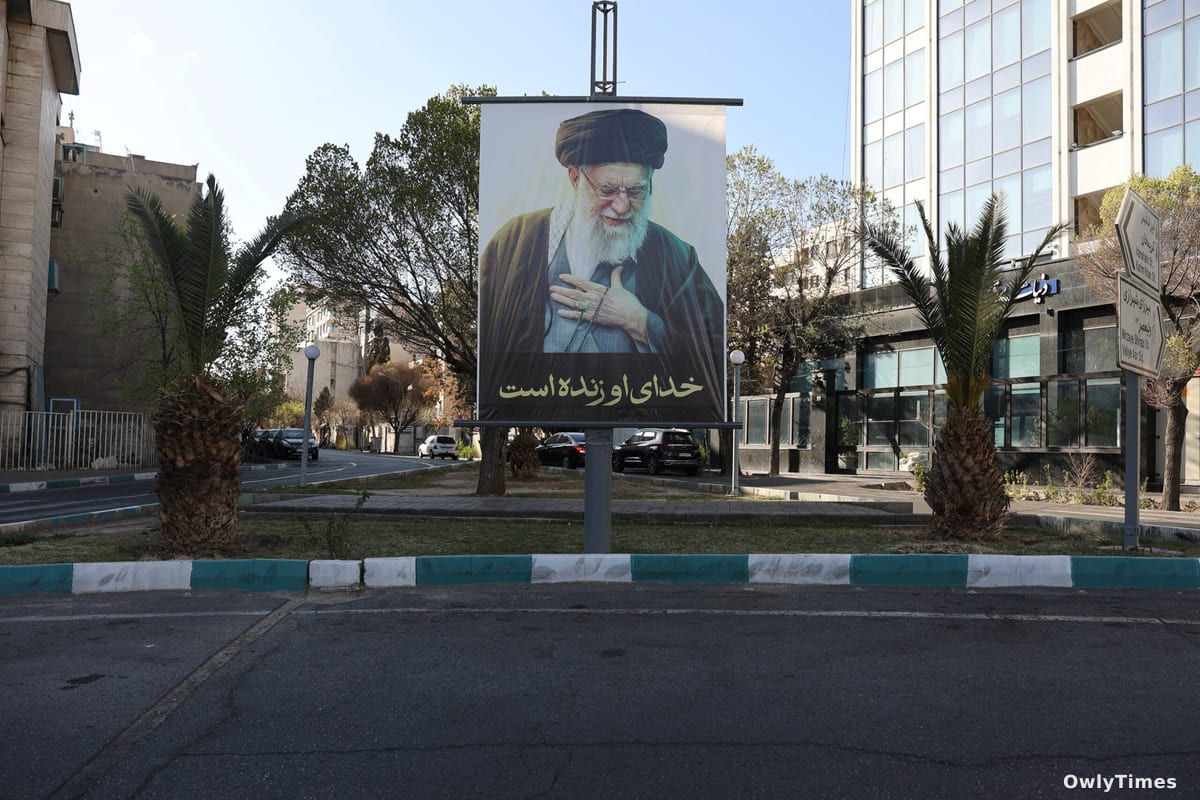

The calculated gamble to dismantle Iran’s Islamic regime, initiated this past Saturday with the killing of Supreme Leader Ali Khamenei, wasn’t born of spontaneous outrage or a sudden shift in policy. It was a meticulously planned exploitation of accumulated miscalculations – by both Washington and Tehran – and a convergence of regional vulnerabilities. The move, spearheaded by a joint US-Israeli campaign, wasn’t about reacting to Iran, but about forcing a reaction from Iran that would expose its weaknesses and, crucially, justify a long-desired regime change. The immediate fallout, as evidenced by Iran’s widening of the conflict to include attacks on Gulf states, confirms this strategy: Tehran is escalating in a way that isolates itself and undermines its regional standing, precisely the outcome anticipated by its adversaries.
The initial phase of Operation Roaring Lion, as it’s being framed within Israeli circles, hinges on a fundamental understanding of power dynamics. Prime Minister Benjamin Netanyahu and Israel Defense Forces Chief of Staff Eyal Zamir are invoking the historical narrative of Purim – the deliverance of the Jewish people from annihilation in ancient Persia – not as mere symbolism, but as a framing device for a contemporary struggle. This isn’t simply a military operation; it’s a narrative war, positioning the US-Israeli alliance as liberators and Iran as a modern-day Haman. However, the invocation of historical parallels also reveals a degree of hubris, a belief that the current alignment of forces guarantees a “happy ending,” a sentiment that overlooks the inherent unpredictability of regional conflicts.
This article draws on reporting from atlanticcouncil.org.
The roots of this escalation lie in the failed negotiations surrounding the 2015 Iran nuclear deal. While Iranian negotiators, accustomed to protracted bargaining with the US, approached the Donald Trump administration with a familiar playbook, they fundamentally misread the new player. Trump, having already promised support to Iranian protesters and assembled a naval “armada,” wasn’t interested in incremental concessions. He demanded capitulation, a demand rooted not in strategic calculation but in a personal conviction that Iran hadn’t been sufficiently punished. This inflexibility, coupled with the administration’s insistence on “games, tricks, [and] stall tactics,” created the conditions for a military confrontation. The reported speed and precision of the initial Israeli strikes – “eliminated 30 high-level officials in [the first] 30 seconds,” according to Israeli media – underscore the extent of the pre-planning and the element of surprise achieved through this misdirection.
Who benefits and who loses from this unfolding crisis? Israel stands to gain the most, at least in the short term. The removal of a key adversary and the potential for a more collaborative regional order align with its long-term security objectives. The United States, under the Trump administration, gains a symbolic victory, fulfilling a campaign promise and reaffirming its commitment to regional allies. However, the Gulf states, particularly the United Arab Emirates, find themselves in a precarious position. As Eric Alter, dean of the Anwar Gargash Diplomatic Academy in Abu Dhabi, points out, the UAE is being “forced…closer to the US and Israeli position than it wants to be.” Having invested heavily in building a stable relationship with Tehran, the UAE now faces retaliatory attacks on its infrastructure and the potential for further escalation. This highlights a critical tension: the UAE’s security dependence on the US and Israel clashes with its economic and diplomatic interests in maintaining ties with Iran.
Iran’s missteps extend beyond its misreading of the Trump administration. By expanding the conflict to include attacks on Kuwait, Saudi Arabia, and other Gulf states, Iran has alienated potential neutral parties and solidified a regional consensus against it. This self-isolation is compounded by the loss of credibility stemming from its attacks on civilian infrastructure. As Khalid Al-Jaber, executive director of the Middle East Council on Global Affairs, notes, these actions “disregard international law and undermine the fundamental principles that govern peaceful relations.” The result is a weakening of Iran’s regional influence and a diminished capacity to mediate or de-escalate conflicts. Iraq, paradoxically, may emerge as a beneficiary, potentially reestablishing its sovereignty by reducing Iran’s influence within its borders, though this hinges on navigating the complex dynamics of its own internal political landscape and the potential for increased militia activity.
The situation in Lebanon remains particularly volatile. Nicholas Blanford, a nonresident senior fellow at the Atlantic Council, highlights the dilemma facing Hezbollah: comply with a potential Iranian instruction to attack Israel and risk devastating retaliation, or defy Iran and risk fracturing the alliance. The potential for Hezbollah to drag Lebanon into a wider conflict is a significant concern, particularly given the organization’s internal divisions and the precarious economic and political situation within the country. Turkey, with its shared border with Iran and its role as a NATO member, faces a multifaceted challenge, encompassing security concerns, economic disruption, and diplomatic maneuvering. The influx of refugees, the potential for Kurdish separatist activity, and the disruption of energy supplies all pose significant threats to Turkish stability.
The current crisis represents a fundamental shift in the regional order, moving beyond the tentative rapprochement efforts of recent years. As Aziz Alghashian of the Gulf International Forum observes, the Gulf states are now recalculating their approach toward Iran, prioritizing deterrence over diplomacy. This shift signals a move toward a more militarized regional landscape, where the pursuit of security through capabilities – rather than alliances – will likely dominate strategic thinking. The question now isn’t whether Iran will survive this onslaught, but what form its survival will take. Will a weakened regime emerge, clinging to power through repression and proxy warfare? Or will a new leadership emerge, willing to engage in genuine dialogue and compromise?
The political chess move to watch next isn’t on the battlefield, but in the internal dynamics of Iran. Specifically, the composition and actions of the new leadership following Khamenei’s death will determine the trajectory of the conflict. Will hardliners consolidate power, doubling down on confrontation? Or will pragmatists emerge, seeking a way to de-escalate and salvage what remains of Iran’s regional influence? The answer to that question will dictate whether this crisis spirals into a full-scale regional war or settles into a new, albeit unstable, equilibrium.





