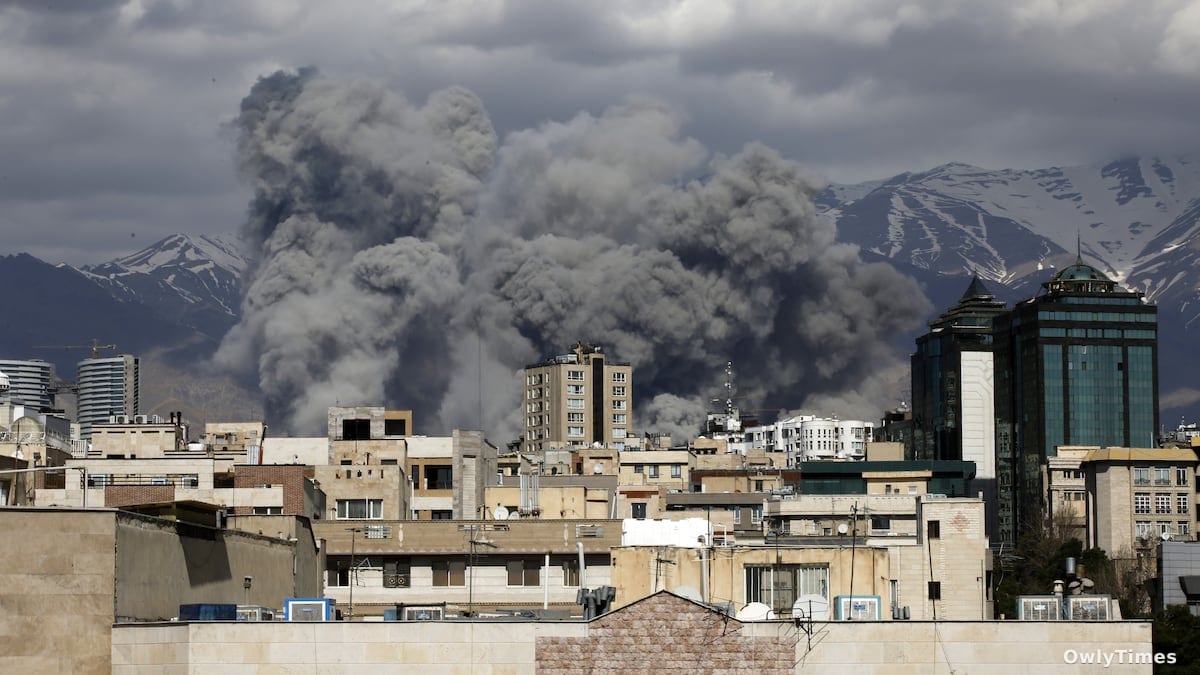

The Calculus of Elimination: Assessing the US-Israel Strike on Khamenei
The coordinated strikes by the United States and Israel against Iran on February 28th, culminating in the death of Supreme Leader Ayatollah Ali Khamenei on March 1st, weren’t a spontaneous reaction to Iranian proxy activity. They represent a calculated, if extraordinarily risky, attempt to fundamentally alter the power balance in the Middle East by removing a key architect of regional destabilization. This wasn’t about deterring future attacks; it was about regime disruption, predicated on the belief that Khamenei’s death creates a vulnerability within the Iranian theocracy exploitable by internal factions and external pressures. The immediate escalation – Iran’s retaliatory missile strikes across the region – confirms the high-stakes gamble underway.
This piece references the opb.org report.
The initial wave of attacks, targeting infrastructure within Iran, was followed by a swift and demonstrably effective operation to eliminate Khamenei. This suggests a level of intelligence penetration and operational coordination rarely seen, indicating months, if not years, of planning. The timing is crucial. With the US presidential election looming in November 2026, the Biden administration appears to have opted for a decisive move, potentially aiming to secure a foreign policy victory and preemptively address concerns about Iran’s nuclear program and support for anti-US groups. For Benjamin Netanyahu’s government in Israel, facing domestic pressure and international scrutiny over the Gaza conflict, the operation offers a chance to reassert regional dominance and demonstrate its security capabilities. Who benefits and who loses is immediately apparent: the US and Israel gain a short-term strategic advantage, while Iran faces internal chaos and external pressure. Regional allies of Iran, like the Houthis in Yemen, are now in a precarious position, their benefactor weakened and their own legitimacy questioned.
Retaliation and Regional Spillover: Mapping the New Conflict Lines
Iran’s response, launching missiles into Israel, Bahrain, and other regional targets, wasn’t merely a display of force. It was a demonstration of reach and resolve, intended to raise the cost of further intervention and signal that any attempt to destabilize the regime will be met with widespread disruption. The attacks on Bahrain, a key US ally and host to the Fifth Fleet, are particularly significant. This expands the conflict beyond the traditional Israel-Iran axis, directly challenging US interests and potentially drawing in other Gulf states. The speed of Iran’s retaliation – within 24 hours of Khamenei’s death – underscores the pre-planned nature of their response, suggesting contingency plans were in place for this very scenario. This isn’t a spontaneous outburst of grief; it’s a calculated escalation designed to deter further attacks and rally domestic support.
The images emerging from across the region – mourning in Tehran, celebrations among the Iranian diaspora in cities like Glasgow, and protests both for and against war in the US – reveal the deeply fractured nature of the situation. Demonstrations in Los Angeles and Houston highlight the domestic political divisions within the United States, mirroring the broader public reluctance for another large-scale Middle Eastern conflict. The presence of pro-Khamenei demonstrations in Yemen, specifically in Sebeen Square controlled by Houthi rebels, demonstrates the extent of Iran’s influence and the potential for proxy conflicts to intensify. This echoes the dynamics of the Cold War, where superpowers often fought through proxies to avoid direct confrontation.
The Succession Question: Internal Instability in Iran
The death of Ayatollah Khamenei throws Iran’s political succession into turmoil. While a successor has not yet been officially named, the power struggle will likely pit hardliners against more moderate factions within the regime. The current frontrunner appears to be Ayatollah Ebrahim Raisi, the current President, but his legitimacy is contested, and his ascension could trigger further internal dissent. The potential for a power vacuum, coupled with widespread public mourning and potential unrest, creates a window of opportunity for external actors to exert influence.
This situation bears a striking resemblance to the aftermath of Ayatollah Ruhollah Khomeini’s death in 1989, when a similar power struggle ensued, ultimately leading to Khamenei’s own appointment as Supreme Leader. However, the current context is far more volatile, with a weakened economy, widespread social discontent, and a more assertive regional posture from both the US and Israel. The risk of a fractured Iran, potentially descending into civil conflict, is now significantly higher. The immediate priority for the Iranian regime will be to maintain control and prevent the collapse of state institutions, a task made exponentially more difficult by the ongoing external pressure.
Beyond Retaliation: The Next Phase of the Conflict
The immediate focus will be on containing the escalation and preventing a full-scale regional war. However, the underlying strategic calculus remains unchanged: the US and Israel are attempting to reshape the Iranian regime, while Iran is determined to preserve its regional influence and retaliate for the assassination of its Supreme Leader. The next political chess move to watch isn’t a military one, but a diplomatic one. Will the Biden administration attempt to engage with potential successors within the Iranian regime, offering a path towards de-escalation and a revised nuclear agreement? Or will it continue to pursue a policy of maximum pressure, betting that internal instability will ultimately lead to regime change? The answer to that question will determine whether this crisis spirals into a wider conflict or opens a path towards a new, and potentially more dangerous, era in the Middle East.





