
The announcement from President Trump on Saturday – that Ayatollah Ali Khamenei had been killed in a joint US-Israeli operation – wasn’t a spontaneous declaration of victory, but the culmination of a strategic gamble predicated on a deeply flawed assumption: that removing a regime’s figurehead guarantees its collapse. This move, framed as a “decapitation” strike, reflects a recurring temptation in modern warfare – the promise of decisive political results without the quagmire of occupation. However, history consistently demonstrates that airpower, while effective at eliminating individuals and damaging infrastructure, is a remarkably unreliable tool for reshaping political systems. The current situation isn’t about whether the operation was possible, but whether it was wise, and a careful look at past precedents suggests a dangerous escalation is now more likely than a swift resolution.
Who benefits and who loses from this action is immediately apparent, though not in the way the administration likely intends. Israel, having long viewed Khamenei as a primary instigator of regional instability, gains a temporary reprieve from direct Iranian threats and a boost in perceived security. Within the US, the administration scores points with a domestic base eager for confrontation with Iran. However, the immediate losers are likely to be regional stability, the prospects for de-escalation, and – crucially – the Iranian people, who now face a potentially more entrenched and aggressive regime. The long-term beneficiaries, ironically, may be the hardliners within Iran, who can exploit the narrative of external aggression to consolidate power and suppress dissent.
This article draws on reporting from vox.com.
The logic behind decapitation strikes – sever the head of the snake – is intuitively appealing, but it ignores the fundamental nature of modern regimes. They aren’t monolithic entities controlled by a single individual, but complex networks of security services, political elites, patronage structures, and ideological institutions. The assassination of Dzhokhar Dudayev in Chechnya in 1996, a tactically brilliant operation mirroring the precision of the strike against Khamenei, serves as a stark warning. Despite the flawless execution, Dudayev’s death didn’t end the war; it elevated him to martyrdom, empowered hardliners, and ultimately led to a renewed and even more brutal conflict. This pattern – leaders fall, regimes adapt – is disturbingly consistent across history, from Serbia under Slobodan Milošević to Libya under Muammar Gaddafi.
The case of Kosovo in 1999, often cited as an airpower success, offers a different, but equally cautionary, tale. While not a single decapitation strike, the sustained NATO campaign aimed to degrade Serbian military capacity and fracture the regime’s leadership. Instead, it coincided with some of the most extreme acts of ethnic cleansing, demonstrating that airpower can inadvertently accelerate atrocities. The key difference, and a critical point often overlooked, is that the Kosovo campaign wasn’t solely focused on regime change, but on halting immediate repression. The current operation against Iran, explicitly framed as a “decapitation” mission, lacks that crucial nuance. President Trump’s call for Iranians to “seize control of your destiny” echoes President George H.W. Bush’s ill-fated encouragement of Iraqi uprisings in 1991, which ultimately left Kurds and Shiites vulnerable to Saddam Hussein’s brutal reprisals.
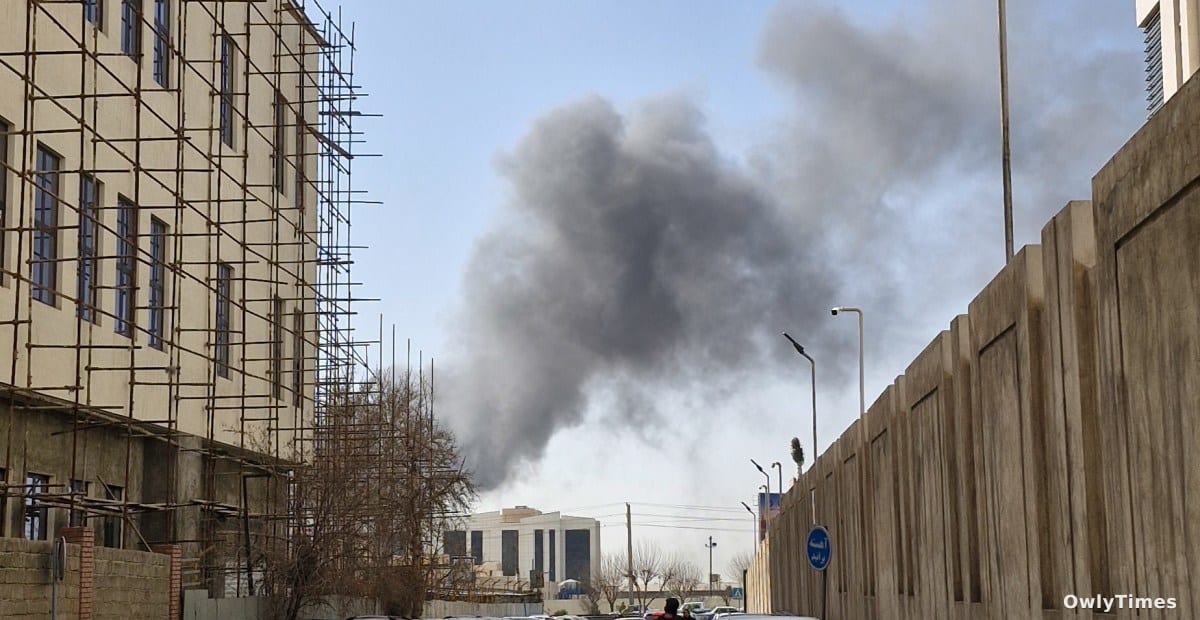
The immediate aftermath of the strike reveals the dangers of this miscalculation. Reports of spontaneous celebrations in Iranian cities, while encouraging, are already being overshadowed by the regime’s framing of the strikes as a violation of sovereignty and an act of aggression. This narrative, predictably, is being used to consolidate internal control, sideline moderates, and mobilize nationalist sentiment. The recent crackdowns on Iranian protests demonstrate the regime’s willingness to use lethal force, and that willingness is likely to be amplified under conditions of perceived existential threat. Moreover, the timing of retaliation is notoriously unpredictable. The strikes that killed Qassem Soleimani in 2020 prompted a measured response, but subsequent Israeli operations have elicited increasingly aggressive reactions, culminating in the direct missile attacks on Israel in 2024 and the expanded strikes across the Gulf following Saturday’s events.
The political chess move to watch next isn’t whether further strikes will be authorized, but whether the administration has a credible plan for managing the inevitable fallout. The historical record is clear: airpower alone cannot fuel a revolution, and regime-targeting operations often produce outcomes far more dangerous than anticipated. The question isn’t simply whether Iran will retaliate, but how and when, and whether the US is prepared for a protracted and escalating conflict that extends beyond the immediate battlefield. The administration must now confront the uncomfortable reality that removing the head of the snake doesn’t kill the snake – it often just makes it strike harder.





