
The Calculus of Continuity: Landry’s Guard Deployment and the Shifting Security Landscape of New Orleans
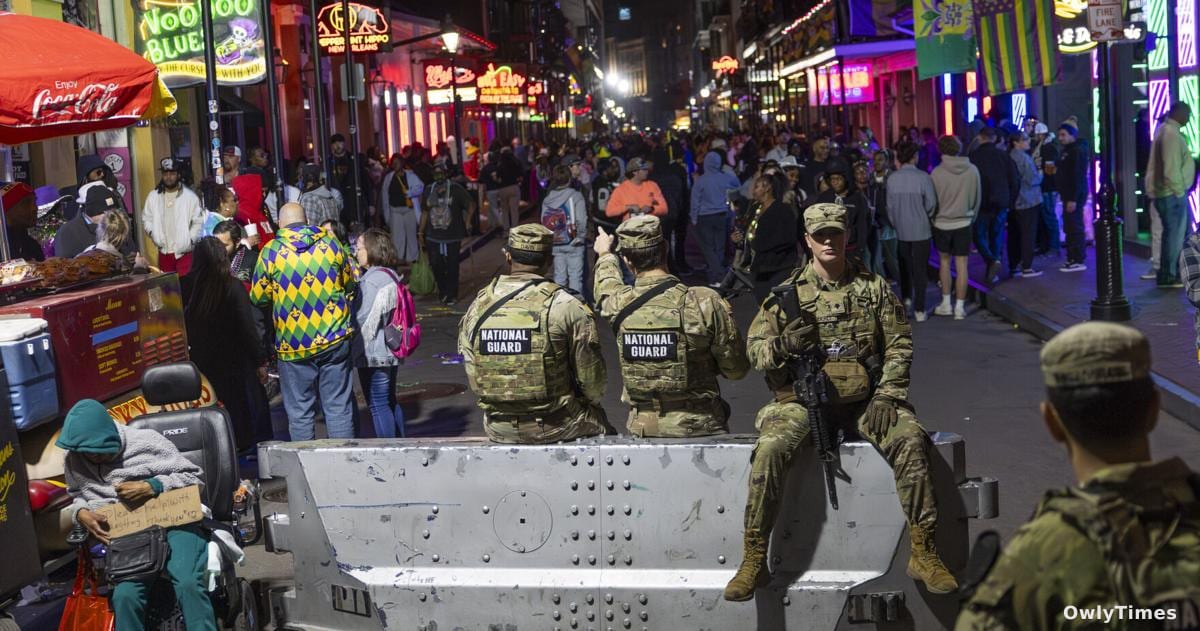
The extension of the Louisiana National Guard’s presence in New Orleans through August, announced Monday by Governor Jeff Landry, isn’t simply a response to crime statistics – it’s a strategic assertion of executive authority and a calculated gamble on the optics of security. While framed as a continuation of successful crime-fighting measures, the move reveals a deeper power dynamic between the state capital and a city still grappling with perceptions of disorder. Landry isn’t merely bolstering law enforcement; he’s establishing a precedent for state intervention in local security, a tactic with implications extending far beyond the French Quarter.
Original reporting: NOLA.com.
The stated justification – complementing local law enforcement and combating violence – aligns with Landry’s broader campaign promises. He highlighted “real progress in reducing crime,” pointing to a 55% decrease in New Orleans’ homicide rate compared to 2022, a year when the city led the nation in murders. However, the timing is crucial. The Guard’s initial deployment began before this dramatic drop, coinciding with New Year’s Eve festivities. To attribute the decline solely to the Guard, as Louisiana National Guard officials have done, and as echoed by former President Donald Trump’s claim of crime being “down to almost nothing,” is a selective reading of the data. New Orleans ended 2023 with a 50-year low in homicides before the full impact of the Guard’s presence could be measured. Who benefits and who loses here is clear: Landry gains political capital by claiming credit for existing trends, while Mayor Helena Moreno and New Orleans Police Department Superintendent Anne Kirkpatrick, despite publicly supporting the extension, risk ceding control of public safety narratives to the state.
The narrative of success is further complicated by the mixed reception within the city itself. While Lt. Noel Collins emphasizes the Guard’s role in “bolstering law enforcement efforts,” some French Quarter residents and business owners report that the visible presence of armed soldiers increases feelings of insecurity. This contradiction highlights a fundamental tension: the perception of safety is not solely determined by quantifiable crime statistics. The deployment also yielded 175 human trafficking arrests, a figure touted by the Guard, but one that doesn’t necessarily translate into a broader sense of public safety for residents. The focus on trafficking arrests, while important, could be interpreted as a strategic attempt to showcase tangible results in an area less likely to generate controversy than, say, aggressive policing tactics.
This move echoes historical precedents of state governors deploying National Guard troops to address civil unrest or perceived security failures. The use of the National Guard in Little Rock, Arkansas, in 1957 to enforce school desegregation, though vastly different in context, demonstrates the potential for state-level deployments to become flashpoints for federal-state conflict and questions of constitutional authority. More recently, similar deployments in Illinois and Oregon have faced legal challenges, suggesting that Landry’s strategy isn’t without risk. The legal basis for prolonged military presence in a civilian context is always subject to scrutiny, and a protracted deployment could invite lawsuits challenging its constitutionality.
The “strong support” from Moreno and Kirkpatrick is a critical component of Landry’s strategy. Securing their buy-in minimizes the potential for a public rift and allows him to present a united front on public safety. However, this partnership also creates a dependency, potentially limiting the city’s autonomy in future security decisions. The six-month extension, with 120 soldiers remaining, suggests a long-term vision beyond simply addressing immediate crime concerns. It’s a sustained presence designed to normalize state intervention and establish a template for future deployments. The political chess move to watch next is whether Landry attempts to expand this model to other Louisiana cities facing crime challenges, and whether Moreno and Kirkpatrick will continue to endorse such expansions, or begin to push back against what could become a gradual erosion of local control.





