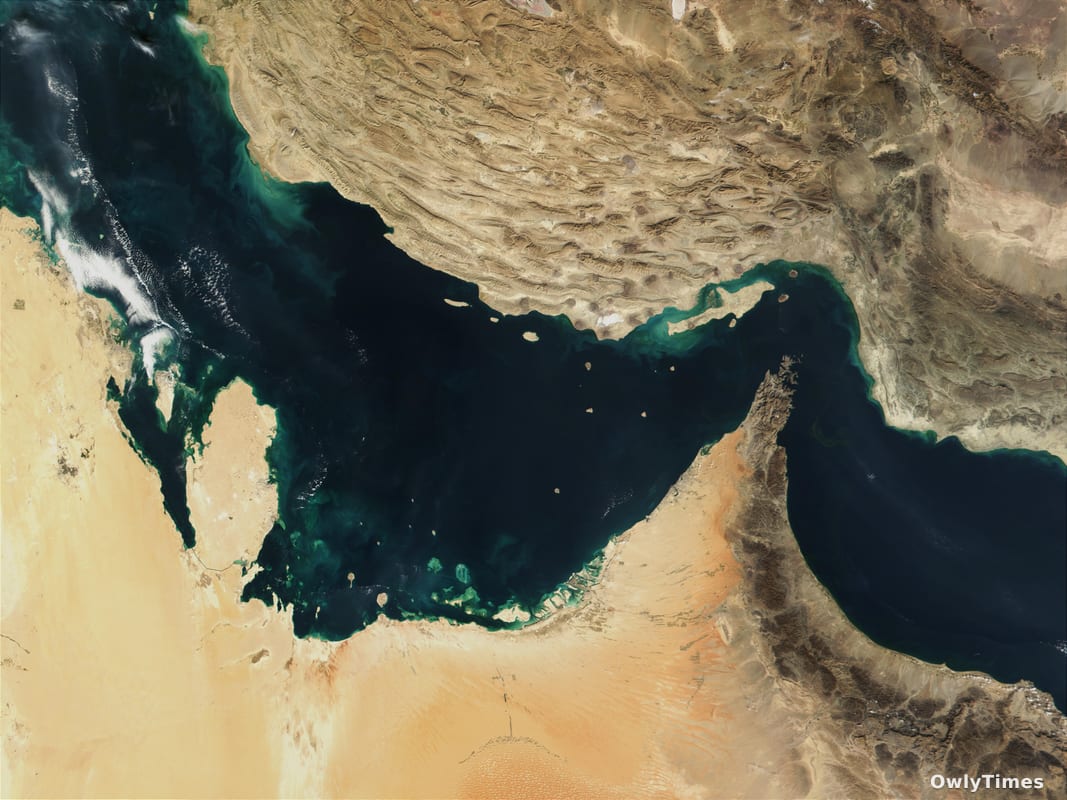

A Calculated Escalation: Iran’s Strait of Hormuz Closure and the Remaking of Energy Security
The declaration by Iran on March 4, 2026, to “close” the Strait of Hormuz isn’t a spontaneous act of aggression, but a meticulously calculated escalation designed to leverage maximum economic disruption in response to sustained military pressure from the United States and Israel. While presented as retaliation for ongoing operations against Iranian interests – operations that began in February 2026 – the move is fundamentally about redrawing the geopolitical lines of energy security and forcing a renegotiation of the regional power balance. The immediate impact, as detailed in the March 11th Congressional Research Service report, is a drastic reduction in shipping traffic, but the long-term implications extend far beyond oil prices. This isn’t simply about controlling the flow of crude; it’s about establishing Iran as the indispensable arbiter of regional stability, a position it has sought for decades.
Source material: news.usni.org.
The Economics of Disruption: Winners and Losers in a Closed Strait
The CRS report accurately notes the concern surrounding oil and natural gas markets, but the analysis needs to go deeper than simply acknowledging price volatility. The immediate losers are, predictably, nations heavily reliant on Middle Eastern energy imports. Japan, which sources over 90% of its oil from the region, faces a potential economic crisis if alternative supply routes cannot be secured quickly. China, despite its diversifying energy portfolio, remains vulnerable, importing roughly 60% of its oil via the Strait. However, the disruption also creates significant, if less publicized, winners. Russia, already benefiting from Europe’s energy crisis stemming from the 2024 Ukrainian conflict, stands to gain market share and increased leverage over European nations. Similarly, Saudi Arabia, while ostensibly aligned with the US against Iran, possesses spare capacity and could potentially fill some of the supply gap – at a price, and with attendant political implications. The United States, while a net energy exporter, isn’t immune; global price spikes inevitably impact American consumers and businesses.
Historical Echoes: From the Tanker War to the South China Sea
The current situation bears a striking resemblance to the “Tanker War” of the 1980s, during the Iran-Iraq War, when both sides targeted oil tankers in the Persian Gulf. Then, as now, the goal wasn’t to conquer territory, but to strangle the opponent’s economy. However, the context is fundamentally different. In the 1980s, the US intervened directly to protect shipping lanes. Today, the Biden administration is pursuing a strategy of calibrated responses and diplomatic pressure, a reflection of war fatigue and a desire to avoid a wider conflict. A more contemporary parallel can be found in China’s assertive actions in the South China Sea, where Beijing has gradually asserted control over vital shipping routes through a combination of military buildup and grey-zone tactics. Iran appears to be adopting a similar playbook, leveraging its geographic position and military capabilities to establish a de facto sphere of influence. The key difference is the direct, overt closure of a critical international waterway, a move that significantly raises the stakes.
Beyond Oil: The Geopolitical Calculus of Iranian Leverage
The focus on oil and gas obscures a crucial element of Iran’s strategy: the disruption of global trade beyond energy commodities. Roughly 20% of global trade passes through the Strait of Hormuz, including vital components for manufacturing and consumer goods. This broader disruption amplifies the economic pain felt by a wider range of nations, increasing pressure on the US and its allies to de-escalate. Furthermore, the closure allows Iran to demonstrate its military capabilities and project power throughout the region. The CRS report’s understated language – “Iranian forces have declared the Strait ‘closed,’ threatening and carrying out attacks on ships” – belies the audacity of the move. It’s a direct challenge to the principle of freedom of navigation, a cornerstone of international maritime law. The question isn’t whether Iran can close the Strait, but whether the US is willing to pay the price – in terms of potential military escalation and economic fallout – to reopen it.
The Next Move: Awaiting the US Response to Iranian Assertiveness
The political chess move to watch isn’t whether Iran will maintain its closure of the Strait – it almost certainly will, at least in the short term. Instead, the critical question is how the Biden administration will respond to the escalating Iranian assertiveness. Will it continue to rely on diplomatic pressure and limited military responses, risking further erosion of US credibility? Or will it authorize more robust military action to ensure the free flow of traffic, potentially triggering a wider regional conflict? A key indicator will be the administration’s willingness to authorize direct military escorts for commercial vessels transiting the Strait, a move that would signal a significant escalation and a direct confrontation with Iran. The coming weeks will reveal whether the US is prepared to challenge Iran’s attempt to reshape the geopolitical landscape of energy security, or whether it will accept a new, more constrained role in the Middle East.