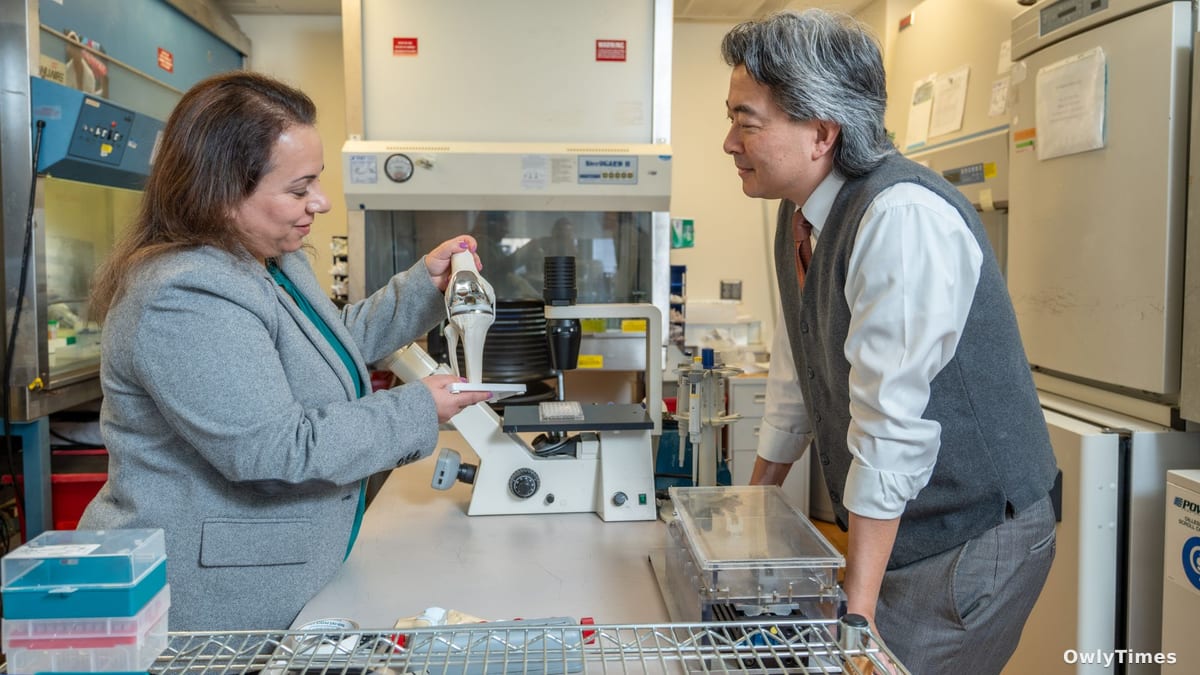

The fundamental challenge in orthopedic surgery is not just replacing a failing joint, but ensuring the patient does not outlive their own hardware. Conventional knee replacements, typically fashioned from metal and plastic, offer a remarkable 15 to 20 years of mobility. Yet, for younger patients, this lifespan often necessitates a high-risk "revision surgery"—a procedure complicated by the loss of bone mass and the difficulty of removing existing implants. Researchers are now shifting the focus from synthetic durability to biological integration, aiming to replace these permanent foreign objects with a "living" alternative.
Clark Hung, a professor and vice chair of the Department of Biomedical Engineering at Columbia University’s School of Engineering, and Nadeen Chahine, a professor of biomedical engineering in orthopedic surgery at the Columbia University Vagelos College of Physicians and Surgeons, are leading the development of NOVAKnee. This 3D-printed implant is a departure from current standards. It consists of a biodegradable scaffold seeded with stem-cell-derived bone and cartilage. The objective is for the scaffold to act as a temporary frame, gradually resorbing into the body as the patient’s own biological tissue regenerates and integrates into the surrounding skeleton.
It is critical to distinguish the team’s research goals from the speculative promises often seen in medical headlines. While the concept of a living knee suggests a revolutionary shift, the technology remains firmly in the research and development phase. The team is currently navigating a five-year, federally funded project under the Novel Innovations for Tissue Regeneration in Osteoarthritis (NITRO) program. This program mandates a rigorous progression: two years of benchtop research, 18 months of large animal studies, and a final 18 months of Phase I safety trials.
The researchers emphasize that they are not yet claiming to have a finished product for human use. One significant limitation to consider is the unknown impact of mechanical loading. While small animal studies have provided initial data on matrix synthesis and biodegradation, the researchers do not yet fully understand how the physical stresses of walking and moving will influence the scaffold's degradation rate and the maturation of new tissue in a human knee. Furthermore, the team is still determining the clinical workflow for selecting between autologous cells—derived from the patient—and allogeneic cells, which are sourced from donors.
Despite these hurdles, the potential for a "last" knee replacement has generated significant public interest. The current design attempts to align with the existing workflows of orthopedic surgeons, ensuring that if the technology reaches the clinic, it remains familiar to those performing the procedures. While the knee is notoriously difficult due to its complex range of motion and high mechanical forces, the developers view the platform as potentially scalable to other joints, including the thumb, which faces increasing wear from modern habits like chronic texting.
The trajectory of this research is tied to the outcomes of upcoming large animal studies. Because NITRO requires these trials to utilize an arthritis model, the data gathered will be essential in simulating how the implant performs in a diseased, rather than healthy, joint environment. If the preclinical data meets the stringent requirements for FDA review, the developers hope to initiate human trials as early as 2028. The next reading of progress within these large animal experiments will be the primary indicator of whether this vision of regenerative orthopedics can successfully transition from the laboratory to the operating room.