
Beyond Convenience: Louisiana’s Unified Patient Portal Addresses a Systemic Access Problem
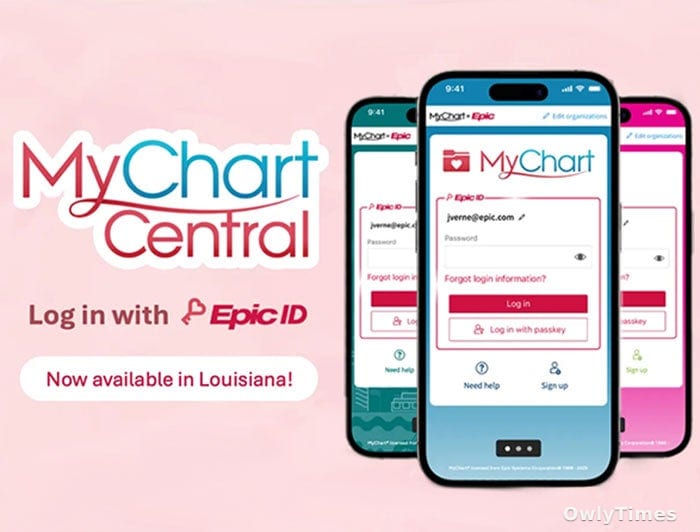
For years, the promise of digital health has centered on empowering patients. Yet, a quiet frustration has simmered beneath the surface of electronic health records (EHRs): the sheer difficulty of accessing that information. While individual hospitals and clinics adopted patient portals like MyChart, the reality for many Louisianans—and patients nationwide—was a patchwork of logins, disparate interfaces, and fragmented medical histories. The recent launch of MyChart Central, a statewide unified portal spearheaded by eight Louisiana health systems, isn’t simply a matter of convenience; it’s a direct response to a fundamental flaw in how healthcare data is currently managed, and a test case for whether interoperability can truly benefit those it’s intended to serve. Louisiana Department of Health Secretary Bruce Greenstein succinctly captured the core issue: “Too often, the burden is placed on the patient.” This initiative, involving Baton Rouge General, Woman's Hospital, Ochsner Health, St. Tammany Parish hospitals, Terrebonne General Health System, LCMC Health, Lake Charles Memorial Health System, and Franciscan Missionaries of Our Lady Health System, aims to shift that burden.
Drawn from aha.org.
The Mechanics of Centralization: How MyChart Central Works
The technical achievement underpinning MyChart Central is significant, though often overlooked in initial reporting. It’s not a brand-new portal built from scratch, but rather a sophisticated integration layer built on top of existing MyChart instances. Each participating health system maintains its own MyChart deployment, but through a secure data exchange framework, patient information is made accessible across the network using a single login. This approach sidesteps the massive undertaking—and cost—of replacing established EHR systems. The systems involved utilize Epic, a dominant EHR vendor, which facilitated this integration. This isn’t a universal solution, however; hospitals utilizing different EHR platforms would require a more complex, and potentially less seamless, integration process. Currently, the rollout benefits the over 2.5 million Louisianans already using MyChart, representing a substantial portion of the state’s population, but leaves out those who haven’t yet adopted the platform. The immediate impact is a reduction in the cognitive load for patients who frequently interact with multiple healthcare providers within the network.
A State-Level Experiment in Data Equity
While the stated goal is improved patient experience, MyChart Central implicitly addresses a growing concern about health equity. Fragmented medical records disproportionately affect individuals with complex health needs who rely on multiple specialists and hospitals, as well as those who move frequently or lack a consistent primary care physician. These populations often face increased risk of medical errors, duplicated tests, and delayed diagnoses due to incomplete information. By consolidating records, MyChart Central aims to level the playing field, providing a more comprehensive view of a patient’s health history regardless of where they receive care. However, it’s crucial to acknowledge that access to the portal itself requires digital literacy and reliable internet access – factors that aren’t evenly distributed across Louisiana. The success of this initiative, therefore, hinges not only on technical implementation but also on addressing the digital divide.
Beyond Access: What MyChart Central Doesn’t Solve
It’s important to temper enthusiasm with a realistic assessment of what MyChart Central doesn’t address. The portal facilitates access to existing data, but it doesn’t inherently improve the quality of that data. Errors, omissions, or inconsistencies within individual EHR systems will still be reflected in the unified view. Furthermore, the portal primarily focuses on data sharing between participating health systems. Information from providers outside the network—independent physicians, out-of-state hospitals—won’t be automatically integrated, creating potential gaps in the patient’s overall record. Greenstein’s statement about easing the burden on patients is accurate, but it’s a partial solution. True patient empowerment requires not just access to data, but also the ability to control it, correct inaccuracies, and share it with providers of their choosing – functionalities that extend beyond the scope of this initial rollout.
The Future of Interoperability: What Louisiana’s Initiative Signals
The launch of MyChart Central is a significant step, but it’s just the beginning. The next crucial phase will involve evaluating the impact of the portal on patient outcomes, provider workflow, and healthcare costs. Researchers will need to assess whether the improved access to information translates into fewer medical errors, reduced hospital readmissions, and more efficient care delivery. Equally important is expanding the network to include more providers and addressing the digital literacy gap. Louisiana’s experience will be closely watched by other states grappling with the challenges of healthcare interoperability. The key question moving forward isn’t simply whether we can connect patient data, but whether we can do so in a way that truly improves health equity and empowers patients to take control of their own care – and whether the benefits outweigh the inherent risks of increased data sharing. Will other states adopt this model, or will the complexities of EHR integration continue to hinder progress towards a truly connected healthcare system?





