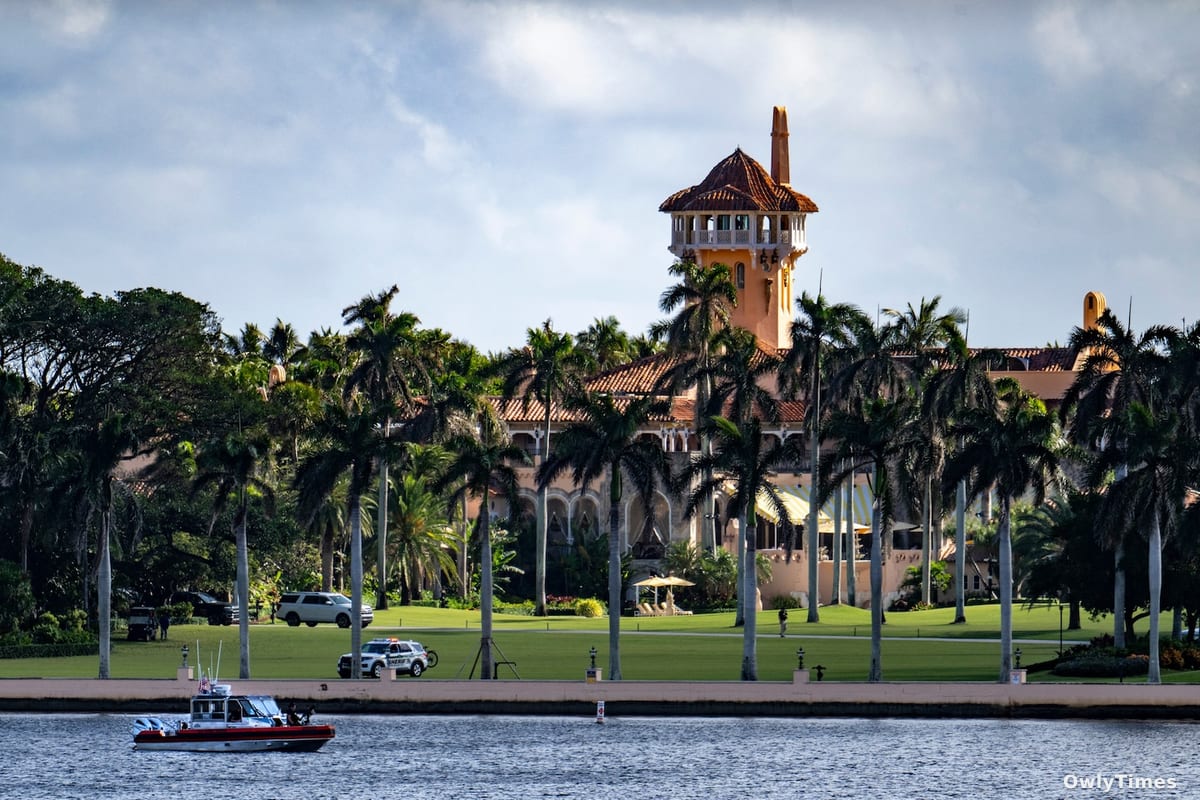

The escalation of force at Mar-a-Lago on February 22nd, 2026, wasn’t simply a security breach; it was a calculated risk assessment playing out in real time, revealing the precarious balance between protecting a former president and managing the volatile political landscape surrounding him. The swift, lethal response to Austin Tucker Martin, a North Carolina resident carrying what authorities described as a shotgun and a fuel can, signals a hardening of security protocols and a willingness to preemptively neutralize perceived threats – a shift with significant implications for political expression and the normalization of force in the post-presidency era. This incident isn’t about a single individual; it’s about the escalating cost of political polarization and the security state’s response to it.
The Calculus of Preemptive Force
The immediate details are stark: Martin was shot and killed after entering the secure perimeter of Mar-a-Lago early Sunday morning. The U.S. Secret Service, alongside a Palm Beach County sheriff’s deputy, carried out the shooting. Crucially, the statement emphasizes that Martin was observed carrying potentially dangerous items – a shotgun and a fuel can – before any direct threat was articulated. This framing is deliberate. It justifies the use of lethal force not as a reaction to an active attack, but as a preventative measure against a potential one. This is a critical distinction. The threshold for preemptive action is demonstrably lower than that for responding to an immediate, ongoing threat, and the precedent it sets is deeply concerning. The speed with which the situation escalated – from observation to lethal force – suggests a zero-tolerance policy is now in effect around Trump, a policy born not of new intelligence, but of a sustained climate of animosity.
Based on the original The Washington Post report.
Who Benefits and Who Loses in the Aftermath?
The immediate beneficiary of this incident is, predictably, the security apparatus surrounding Donald Trump. The swift and decisive action reinforces the narrative of unwavering protection and justifies the substantial resources allocated to his post-presidency security detail. This narrative is politically useful for Trump himself, allowing him to portray himself as a target of political violence and further galvanize his base. However, the long-term consequences are far more complex. Civil liberties advocates will undoubtedly raise concerns about the potential for abuse of power and the chilling effect on legitimate protest. The incident provides ammunition for those arguing that the security state has become overly militarized and operates with insufficient oversight. The Palm Beach County Sheriff’s Office also benefits from the narrative of proactive security, potentially bolstering public confidence in local law enforcement. Conversely, anyone advocating for de-escalation tactics or questioning the necessity of such a heavy security presence around a private citizen loses ground. The incident effectively silences those voices, framing any criticism as sympathy for a potential attacker.
Echoes of Past Protections and Political Violence
The situation at Mar-a-Lago isn’t entirely unprecedented. The security arrangements for former presidents have always been a delicate balance between protection and public access. However, the current climate is markedly different. The January 6th insurrection, the sustained threats against elected officials, and the increasingly vitriolic rhetoric dominating the political discourse have all contributed to a heightened sense of vulnerability. Historically, the protection of former presidents has been reactive, responding to credible threats. The assassination of John F. Kennedy in 1963 led to significant expansions in Secret Service protocols, but those protocols were still largely focused on responding to attacks in progress. The shift towards preemptive action, as demonstrated at Mar-a-Lago, represents a fundamental change in strategy. It mirrors, in some ways, the security measures implemented during periods of heightened political instability, such as the protection of Abraham Lincoln during the Civil War, where perceived threats were often met with swift and decisive action, sometimes blurring the lines between legitimate security and political repression.
The Fuel for Further Escalation
The presence of a fuel can alongside the shotgun is a particularly troubling detail. While authorities haven’t explicitly stated Martin’s intent, the implication is clear: a potential for arson or a more widespread attack. This detail will be used to justify the severity of the response and to reinforce the narrative of a dangerous and unpredictable threat landscape. However, it’s crucial to examine the source of that threat. The relentless demonization of political opponents, the spread of misinformation, and the erosion of trust in democratic institutions all contribute to a climate where individuals feel increasingly alienated and driven to extreme measures. The incident at Mar-a-Lago isn’t an isolated event; it’s a symptom of a deeper societal malaise.
The political chess move to watch next isn’t whether further investigations will be launched – they inevitably will be. It’s whether Donald Trump will leverage this incident to further solidify his narrative of victimhood and to demand even greater security measures, potentially transforming Mar-a-Lago into a fortress and further isolating himself from the public. The question is not simply whether he can do so, but whether the security apparatus, already demonstrably inclined towards preemptive action, will facilitate it.





