
The Calculated Risk of Proximity: Mar-a-Lago and the Escalating Cost of Political Polarization
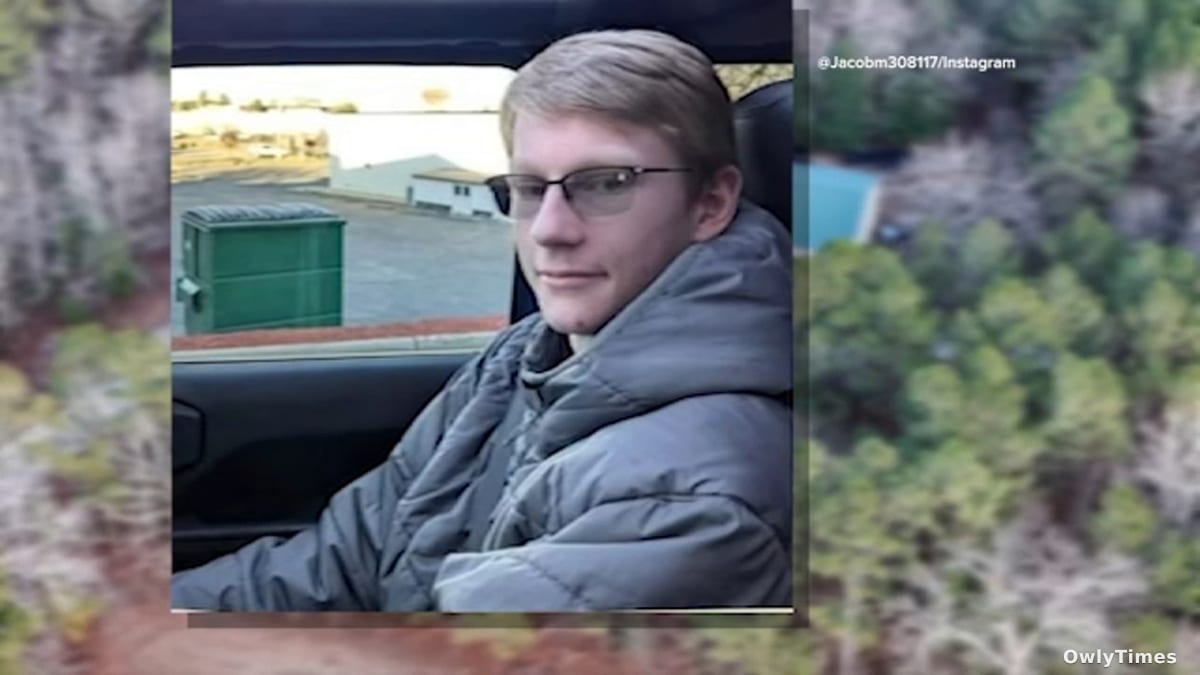
The immediate response to Sunday’s incident at Donald Trump’s Mar-a-Lago resort – a 21-year-old man, Austin Tucker Martin, shot and killed after approaching Secret Service with a shotgun – focuses on security failures and potential threats to the former President. But the strategic calculus at play here isn’t simply about a breach of perimeter; it’s about the escalating cost of proximity to a figure who consistently draws both fervent support and intense animosity, and the willingness of individuals to act on the extremes of that spectrum. The fact that Martin purchased the weapon en route to Florida, as stated by Secret Service spokesperson Anthony Guglielmi, suggests a degree of premeditation, but also a reactive impulse – a decision made in transit, rather than a long-simmering plot.
Reporting from abc7.com informs this analysis.
The details surrounding Martin paint a confounding picture. Described by his cousin, Braeden Fields, as someone “afraid of guns” who “wouldn’t even hurt an ant,” he comes from a family of Trump supporters yet rarely engaged in political discussion. This dissonance is crucial. It suggests Martin’s actions weren’t driven by a clear ideological agenda, but by something more personal and potentially volatile. His recent loss – the death of his sister in a car wreck in 2023 – coupled with a brother serving in the military, hints at underlying emotional pressures. The fact that he registered an LLC, Fresh Sky Illustrations, and created sketches of local golf courses, including those where he worked as a groundskeeper at Pine Needles Lodge & Golf Club, reveals a creative outlet and a desire for quiet pursuits, further complicating the narrative of a politically motivated attacker. Who benefits and who loses here is not a simple equation. Trump’s security apparatus is demonstrably strained, requiring increased resources and scrutiny. The Secret Service faces questions about response time and preventative measures. But the broader loser is the political climate itself, normalizing the idea that direct confrontation – even lethal confrontation – is a viable response to political disagreement.
This incident isn’t isolated. Trump faced two prior attempted attacks during the 2024 campaign, including one near Mar-a-Lago where an individual was found with a rifle. This pattern isn’t unique to Trump, but his polarizing persona undeniably amplifies the risk. Historically, figures who inspire intense devotion also attract equally intense hatred. Consider the repeated attempts on the life of Abraham Lincoln even before his assassination, fueled by the deep divisions of the Civil War era. Or the wave of political violence that plagued Europe in the early 20th century, as extremist ideologies gained traction. The common thread is a breakdown in the norms of political discourse, where disagreement escalates into demonization and ultimately, the justification of violence. The $1.6 billion spent on presidential protection in 2023, a figure likely to increase following these incidents, isn’t simply about safeguarding an individual; it’s a symptom of a society increasingly willing to consider extreme measures.
The fact that Martin was registered as unaffiliated despite coming from a family of Trump supporters is also telling. His early vote in the 2024 general election doesn’t necessarily indicate support for any particular candidate, but rather a participation in the democratic process. This detail underscores the limitations of relying on simple political labels to understand individual motivations. Kelly Miller, president of Pine Needles Lodge & Golf Club, described Martin as “quiet” and “to the point,” highlighting his lack of outward engagement. This internal conflict – a family steeped in Trump support, a personal aversion to firearms, and a quiet demeanor – suggests a complex internal landscape that ultimately led to a tragic and inexplicable act. The investigation into Martin’s drive from Moore County to Florida is crucial, but it’s unlikely to uncover a singular “motive” that neatly explains his actions.
The political chess move to watch next isn’t about enhanced security protocols at Mar-a-Lago, though those will undoubtedly be implemented. It’s about how both parties respond to this incident rhetorically. Will the focus be on de-escalation and a renewed commitment to civil discourse, or will it be used to further inflame partisan tensions? The temptation to exploit this tragedy for political gain will be strong, but the long-term consequences of normalizing political violence far outweigh any short-term advantage. The question is whether either side has the discipline to resist that temptation.