
The increasing frequency of unseasonable warmth isn’t simply a matter of a hot spring; it’s a fundamental shift in atmospheric behavior, and the current heat wave gripping the Western United States offers a stark illustration of how climate change is reshaping our weather patterns. While headlines focus on record-breaking temperatures – and cities like San Jose, Livermore, Napa, and Concord are poised to potentially reach or exceed 90°F in March – the more critical story lies in why these events are becoming more common, and what the underlying atmospheric mechanisms reveal about our changing climate. This isn’t about a single heat wave; it’s about a demonstrable increase in the number of above-average temperature days each spring, a trend that demands a deeper understanding than simply noting the high score on the thermometer.
The Physics of Persistent Heat: How High Pressure Creates Heat Domes
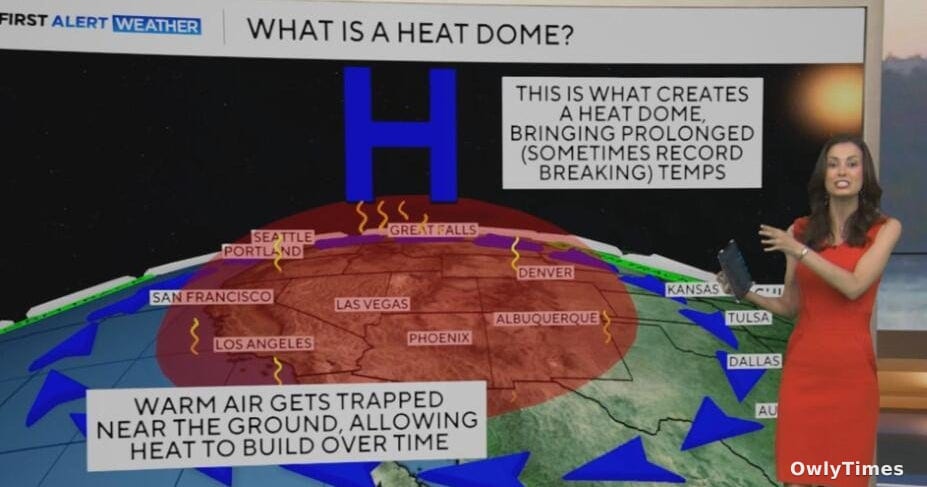
The immediate cause of this week’s heat is a strong area of high pressure settling over California, the Desert Southwest, and the Bay Area. But understanding why high pressure leads to heat requires a look at basic atmospheric physics. As explained by meteorologists at CBS News, high pressure in the upper atmosphere forces air to sink. This isn’t a gentle descent; it’s akin to the downward flow from a ceiling fan. As this air descends, it’s simultaneously compressed and dries out. Compression is key: squeezing air increases its temperature. This process, combined with the lack of moisture, creates a warming effect at the surface. The clockwise spin associated with high-pressure systems further reinforces this pattern by diverting storms and maintaining dry conditions.
See the original CBS News story for the full account.
This isn’t a fleeting phenomenon. When high pressure becomes “stuck” – remaining over a region for an extended period – it creates a feedback loop. The already hot and dry ground heats the air above it, but the sinking air from the high pressure prevents that heat from escaping into the upper atmosphere. This trapping effect forms what’s known as a “heat dome,” essentially a bubble of warm, stagnant air. The current situation exemplifies this process, and it’s a pattern we’re seeing with increasing regularity.
Quantifying the Shift: Decades of Warming Springs
The data reveals a clear trend. Comparing current spring temperatures to those of the 1970s, CBS News reports a significant increase in the number of above-average days. San Francisco now experiences an additional 20 such days each spring, Sacramento sees 14 more, and San Jose experiences seven additional days. These aren’t marginal increases; they represent a substantial shift in the seasonal climate. To put this in perspective, a 20% increase in the number of hot days fundamentally alters the experience of spring, impacting everything from water resources to agricultural cycles. It also strains infrastructure designed for a cooler climate, increasing the risk of power outages and heat-related illnesses. The numbers aren’t just statistics; they represent a tangible change in the lived environment.
Beyond the Dome: What Headlines Don’t Tell You
While the immediate focus is on the heat dome itself, it’s crucial to understand that these events aren’t isolated incidents. They are linked to broader patterns of atmospheric circulation, and increasingly, to the warming of the Arctic. A weakened temperature gradient between the Arctic and mid-latitudes can cause the jet stream to become wavier, allowing high-pressure systems to stall over regions for longer periods. This connection, while complex, is a key area of ongoing research. The current reporting, while accurate in describing the immediate weather, often lacks this crucial context, presenting the heat wave as a singular event rather than a symptom of a larger systemic change.
Limitations to Consider and Future Research
It’s important to acknowledge the limitations of attributing any single weather event solely to climate change. Natural variability plays a role, and disentangling the influence of human activity from natural fluctuations is a complex undertaking. However, the increasing frequency of these events, coupled with the observed trends in atmospheric patterns, strongly suggests a link. Furthermore, localized factors like urban heat island effects can exacerbate the impacts of these heat waves, making it difficult to generalize findings across different regions.
The next critical research steps involve refining climate models to better predict the behavior of high-pressure systems and their interaction with the jet stream. Understanding how Arctic warming influences these patterns is also paramount. But perhaps the most pressing question is: at what point will these increasingly frequent and intense heat waves overwhelm our adaptive capacity? Will infrastructure upgrades and public health initiatives be sufficient to mitigate the risks, or are we facing a future where prolonged heat becomes a defining characteristic of spring in the Western United States? That’s a scenario we need to prepare for, and the data suggests it’s a question we can no longer afford to ignore.





