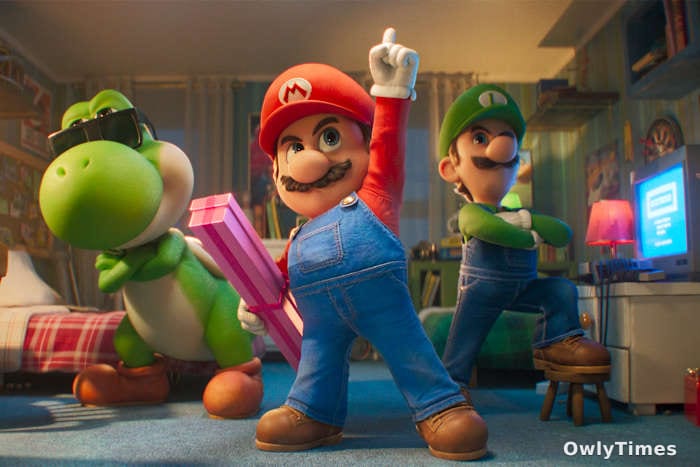

The scent of popcorn hung thick in the air at the AMC Universal CityWalk on Friday night, but it wasn’t the usual pre-movie buzz. It was a full-blown celebration. Families decked out in Mario and Luigi hats streamed into theaters, a generation united by a pixelated plumber and a decades-long nostalgia trip. “The Super Mario Galaxy Movie” didn’t just open to $130.9 million domestically – it detonated, becoming the biggest opening of the year for a Hollywood film and a potent symbol of something shifting in how we consume stories. It’s a win for family entertainment, yes, but beyond the headlines of record-breaking numbers lies a fascinating question: in an era of fractured attention and streaming dominance, what does it take to get people back to the movies?
The $190.1 million five-day haul (and a projected $372.5 million global debut) is particularly striking when you consider the critical reception. A paltry 40% on Rotten Tomatoes would typically spell doom for a blockbuster, but audiences overwhelmingly disagreed, awarding the film an A- on CinemaScore and five stars from family attendees in PostTrak exit polls. This disconnect speaks to a growing chasm between professional critics and the everyday moviegoer. We’re seeing a trend where established review aggregators matter less and less, replaced by word-of-mouth and the perceived “fun factor” – a metric that “The Super Mario Galaxy Movie” clearly excels at. Christopher Meledandri, CEO of Illumination, has now overseen 16 successful films in 16 years, a testament to his understanding of what resonates with broad audiences.
Reporting from click2houston.com informs this analysis.
This isn’t simply about a beloved video game franchise translating to the big screen, though that’s undeniably a major component. It’s about timing. The release strategically capitalized on spring break vacations, a window where families are actively seeking shared experiences. But more fundamentally, it tapped into a cultural hunger for uncomplicated joy. In a world saturated with gritty reboots, complex narratives, and endless sequels, “The Super Mario Galaxy Movie” offered pure, unadulterated escapism. Compare this to the performance of “Project Hail Mary,” the Ryan Gosling-led sci-fi hit that dropped to second place with $30.7 million – a solid number, but dwarfed by the Mario mania. While “Hail Mary” offered intellectual stimulation, Mario offered a vibrant, familiar world.
The success also highlights the power of the theatrical experience itself. Adam Aron, Chairman and CEO of AMC, noted that the film is “exactly the kind of broad, crowd-pleasing release that brings people into theatres.” The film’s impressive $15 million earned from IMAX and premium large format screens underscores this point. People aren’t just buying a ticket to see a movie; they’re buying an event. This is a crucial realization for studios grappling with the rise of streaming. The theatrical window isn’t dead, but it needs to be justified. And a brightly colored, nostalgia-fueled adventure featuring iconic characters seems to be a pretty good justification. The $110 million production cost, while significant, feels like a calculated risk that paid off handsomely.
However, the shadow of “Pegasus 3,” a Chinese film with a slightly higher global debut, looms large. While not a Motion Picture Association release, its success underscores the growing importance of the international market and the potential for non-Hollywood films to disrupt the global box office. Meanwhile, the first “Super Mario Bros. Movie” in 2023 opened to $204 million domestically, a slight dip for the sequel. This suggests that while the franchise has staying power, maintaining momentum will require continued innovation and a willingness to evolve beyond simply replicating the original’s success. The contrasting fortunes of “The Super Mario Galaxy Movie” and the more critically acclaimed, but less commercially successful, A24 release “The Drama,” starring Zendaya and Robert Pattinson, also reveals a bifurcated market. “The Drama” earned an estimated $14.4 million, with a more positive 82% on Rotten Tomatoes but a less enthusiastic B CinemaScore, demonstrating that critical praise doesn’t always translate to box office dominance.
The industry is currently riding high, with the box office up around 30% from last year, according to Paul Dergarabedian of comscore. But the question isn’t whether this momentum will continue, but how. Will studios double down on established IP and family-friendly fare, or will they take risks on original stories and more challenging content? The success of “The Super Mario Galaxy Movie” provides a clear roadmap, but it’s a roadmap that could lead to a creatively homogenous landscape if followed too rigidly. The real test will come in the coming months: can other films replicate this formula, or was Mario a uniquely positioned phenomenon? And, crucially, will audiences continue to prioritize the shared experience of the cinema, or will the convenience of streaming ultimately prevail?